CSWS Annual Review

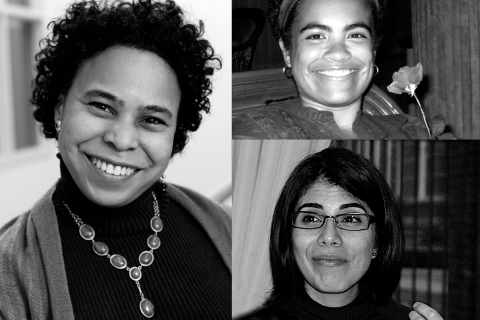
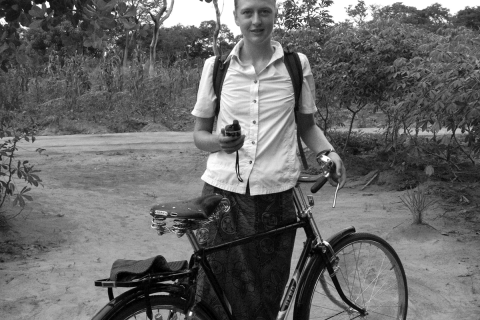
Elizabeth Miller

Raising Chickens: Women and the Emergence of Poultry Production

by Elizabeth C. Miller, ABD, Department of Sociology
Prior to receiving the CSWS Graduate Student Research Grant I’d spent six months conducting ethnographic fieldwork on two large-scale, industrialized chicken farms. This always led to interesting reactions when people asked what I did for a living. Many people expressed disgust, curiosity, surprise, or they just cut to the chase and asked if I was now a vegan. As a social scientist, I am always looking for patterns in people’s behavior, but I found no correlations between people’s responses to my work and their identities. In fact, people’s responses to my project seemed quite random, except for one group of people: backyard chicken keepers.
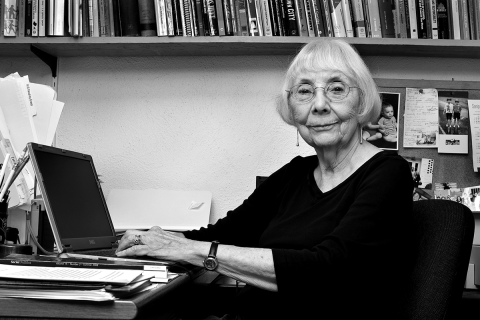
Elizabeth Wheeler

HandiLand: Nature, Disabililty and the Magic Kingdom

by Elizabeth A. Wheeler, Associate Professor, Department of English
My fall 2015 CSWS Faculty Research Grant proved crucial to the development of my book, HandiLand: The Crippest Place on Earth. HandiLand explores representations of disability in young adult and children’s literature since 1990. In recent decades, new rights laws worldwide have allowed young people with disabilities to infiltrate many spheres of public space. Literature for young readers reflects this new public presence—and also maps how far we still need to go to achieve equality.
Yoko Matsuoka McClain at the University of Oregon, 1952.  / Photo Credits: McClain Family Private Collection.

The Forgotten Story of Japanese Women Who Studied in the United States, 1949-1966

by Alisa Freedman, Associate Professor, Japanese Literature and Film, Department of East Asian Languages and Literatures
Between 1949 and 1966, at least 4,713 Japanese students studied at American universities with the best-known fellowships at the time—GARIOA (Government Account for Relief in Occupied Areas [1949 through 1951]) and Fulbright (established in 1952)—along with a few private scholarships. This group included 651 women. Among them were future leaders in fields as diverse as literature, medicine, economics, athletics, and political science.
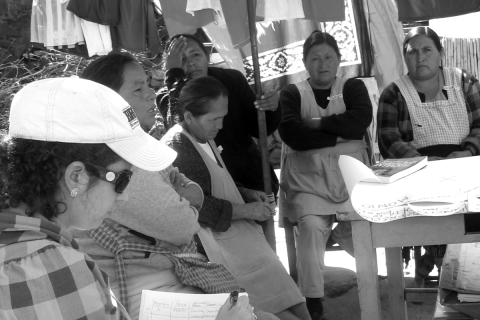
Analisa records notes while talking with Beatriz Mijangos Zenteno. The extraordinary life stories of Doña Bety and Koh María, Chan K'in Viejo's youngest wife and Nuk's mother, are beautifully conveyed in Gayle Walker and Kiki Suarez’ book of interviews with women in Chiapas, Every Woman is a World (U of Texas Press, 2008).

Daughters of the Moon: True Life Stories from the Lacandon Rain Forest

by Analisa Taylor, Associate Professor of Spanish, Department of Romance Languages
In Entre anhelos y recuerdos, the late Marie-Odile Marion interweaves the vivid and wistful life stories told to her by six Lacandon Maya women, representing three generations, with her own anguished reflections on her ethical responsibility toward them as their welfare became increasingly fragile toward the close of the twentieth century. Their stories reflect an erosion of the centuries-old kinship networks and symbolic order that had previously shaped Lacandon Mayan women’s identities and livelihoods throughout each stage of their lives.
This young woman is wearing bridal finery and is announcing her pending marriage to encourage the relatives of her husband-to-be to contribute to the bridewealth / photos by Aletta Biersack

Women in Papua New Guinea: Gendered Transformations in the Ipili Mining Era

by Aletta Biersack, Professor, Department of Anthropology
Between late March and the end of July 2015, I resumed my research on gender in the Porgera and Paiela valleys of Enga Province, Papua New Guinea (PNG). PNG achieved independence from Australia in 1975. Gold has been mined in the Porgera valley since the mid-1940s, but it was not until 1990, when hard rock mining operations replaced alluvial mining, that these two valleys underwent rapid change. I went to PNG to see for myself what had changed. I was especially interested in impacts on women.
Movie poster for Princess Ka‘iulani (2009)

The Afterlife of Princess Ka‘iulani

by Stephanie Teves, Assistant Professor, Departments of Ethnic Studies and Women’s and Gender Studies
Acting as a subtle form of resistance to settler colonialism, a film and play about a Hawaiian Kingdom princess who died more than a hundred years ago allows Native Hawaiians to honor Ka‘iulani by thinking about her life and that of the Kingdom critically.
Tití (L) and Neus Catalá, after their liberation from the Nazi camp at Ravensbruck / BDIC.

Voices of the Vanquished: Spanish Women on the Left between Franco and Hitler

by Gina Herrmann, Associate Professor of Spanish, Romance Languages
On April 14, 1945, the very day the Allied troops liberated the Ravensbrück Nazi camp for women, inmate 43225, Mercedes Núñez Targa (1911-1986), had been slated for transport to the camp gas chamber. Núñez Targa’s route to Ravensbrück had begun in 1931 with the declaration of Spain’s progressive Second Republic. Mobilized in youth organizations along with hundreds of thousands of women who supported the Republic, Núñez Targa eventually took up a post as the head of the Spanish Communist Party in her native region of Galicia.
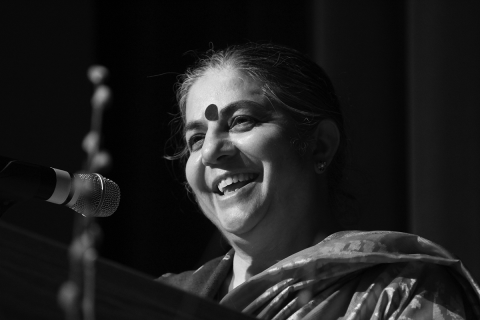
Michelle McKinley

CSWS Has a New Director: An Interview with Michelle McKinley

When Michelle McKinley applied for the position of CSWS director earlier this year, an academic colleague exclaimed in ironic surprise: “But you hate administration!” It seems a fair question, then, to ask Dr. McKinley—law school professor, human rights lawyer, cultural anthropologist, mother of four children, caretaker of her own father, and an obviously busy and committed human being—why she took on the administration of an academic research center.
Photograph by Gladys Gilbert in The Oregonian (April 18, 1937), from the Lewis & Clark Special Collections, YWCA Collection / image provided by Olivia Wing.

For a Good Cause: Chinese and Japanese American Girl Reserve Fundraising in 1930s Portland

By Olivia G. Wing, PhD Candidate, Department of History
In the late 1930s, Portland’s Chinese Girl Reserves and Japanese Girl Reserves each hosted a variety of fund-raising events to support causes of their choosing. Fundraisers were not unusual for a service organization sponsored by the YWCA. In the late 1930s, however, the Chinese and Japanese Girl Reserves each chose to sponsor seemingly diverging causes: war relief for Chinese refugees and summer camp, respectively.
Ruby Amanda Oboro-Offerie

Trust in Women’s Organizations: Evaluating Gender Gap and State Characteristics

by Ruby Amanda Oboro-Offerie, PhD Student, Department of Sociology
Public trust in institutions has long been a focus of social science research, yet most studies have concentrated on political institutions (Van Der Meer 2010), banks (Fungáčová et al. 2019), and regional (Ron and Crow 2015) and international organizations (Torgler 2008; Hessami 2011). In contrast, limited attention has been paid to trust in women’s organizations (e.g., women’s rights/empowerment groups or feminist movements), despite their growing role in civil society, global gender advocacy, and transforming social norms and gender power relations (Hassim 2006).