CSWS Annual Review

Oyster harvesting off the coast of Apalachicola, Florida / photo provided by Megan Hayes

How to Love an Oyster: Chemistry, Slippage, and Attachment

by Megan Hayes, PhD Candidate, Environmental Studies Program

It was oysters who taught me about tides. Or, more precisely, it was oysters who taught me to give better attention to the tides. An oyster is a kind of bivalve, and bivalves are a class of aquatic mollusks that have, in the collective poetic descriptive of Wikipedia, “laterally compressed soft bodies,” which are enclosed in calcified exoskeletons made up of a hinged pair of half-shells, or valves.

Back of a bronze mirror showing a decorative design, from storage at the Seattle Art Museum / photo by Yuan Fang

It All Started with a Mirror: Questioning How We Assign Sex in Ancient Tombs

by Yuan Fang, PhD Candidate, Department of Anthropology
One summer break back home in China, I visited the Henan Museum and found myself drawn to a bronze mirror on display. I had seen many before, but something about this one stopped me. Its delicate designs were beautiful, but I couldn’t stop thinking about what it meant. I pictured a Tang dynasty court lady using it for daily grooming—the familiar image often used to represent bronze mirrors as feminine tools tied to beauty.
“Palestine is a Feminist Struggle” by Urenna Evuleocha, a Feminist Front: Movement Artwork (2023) / image provided by Tali Bitton.

Social Reproduction and Palestine

by Tali Bitton, PhD Candidate, Department of Philosophy
For many colonized women, gender-based violence (GBV) is never solely about their being women. When considering GBV within Palestine and Israel, like other forms of political violence, GBV functions as a mechanism of male supremacy within and across both peoples as much as a mechanism of settler colonization. But whereas Israel has a long history of documented GBV against Palestinians (as the UN has found occurred systematically in Israel’s current genocidal campaign in Gaza), the view of GBV within Israel is often presented in inverted form.
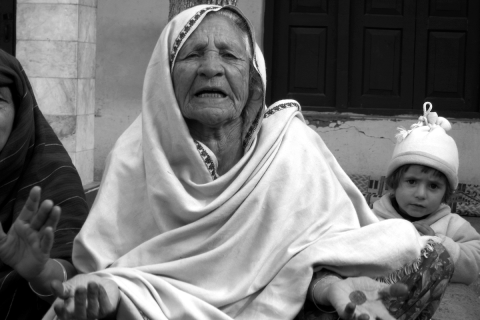
Guatemalan Maya women prepare a meal of traditional foods / photo provided by Liesl Cohn De León.

Migrant Memories: Community and Identity Building in a New Territory

By Liesl Cohn De León, PhD Student, Department of Anthropology

The Guatemalan migrant population in the United States has been growing in the last few decades. Although Guatemalans started coming to the US in the 1980s during the Guatemalan Civil War (1960–1996), between 2010 and 2020 the Guatemalan population increased by about 60%.1 According to the 2020 Census, about 1,683,093 Guatemalans live in the United States. However, there are estimates2 of at least 3,256,047 people from Guatemala living in the US.

Nat Ivy

Gender, Social Politics, and Media Sensationalism in 19th-Century American Murder Ballads

by Nat Ivy, Master’s Student, Folklore and Public Culture Program
Murder ballads have been around for centuries. A murder ballad is a narrative song that tells the story of murder. However, as with any vernacular tradition, there’s a lot more to them than that. American murder ballads are most associated with Appalachian folk music, emerging in the early 19th century as Scottish and Irish immigrants made new homes in North America. As the century progressed, these Appalachian songs blended with African musical traditions, producing blues ballads.
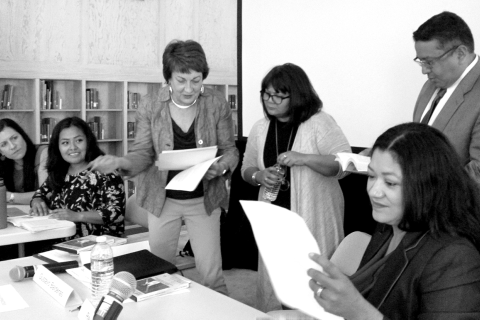
Malvya Chintakindi (center) interviews three of her participants on a recent trip to Hyderabad, India / photo provided by Chintakindi.

Dreams Deferred: Navigating Aspiration and Constraint in Urban India’s Margins

by Malvya Chintakindi, PhD Candidate, Department of Anthropology

At age 33, Renuka’s face carried the weathering of a life spent crossing multiple thresholds—between others’ homes and her own, between caste boundaries that marked her as both essential and polluting, between dreams of education and the harsh reality of survival.

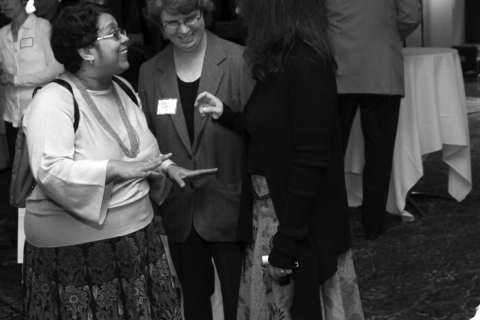
Image provided by Rhiannon Lindgren.

The Necessity of Oppositional Care for Transnational Feminist Politics

by Rhiannon Lindgren, PhD Candidate, Department of Philosophy
When one defines an activity as a “labor of love,” we are often referring to an experience that combines feelings of joy, difficulty, fatigue, and gratitude. While the labor of love is a sacrifice, the prepositional qualifier of “love” indicates the motivation for such a sacrifice. One labors out of a sense of love that is both inspiration and reward for a tiresome endeavor.
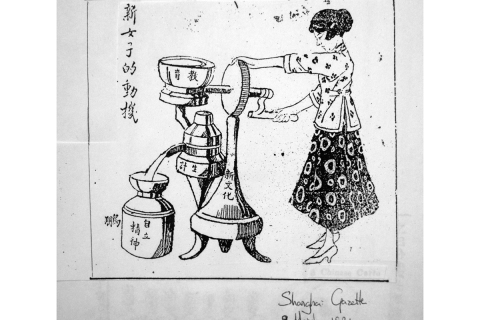
Cover page of Micah Bazant’s TimTum—A Trans Jew Zine (1999) / image provided by Miriam Chorley-Schulz

A Queer History of Yiddish

by Miriam Chorley-Schulz, Assistant Professor, German and Scandinavian Studies
In their zine TimTum—A Trans Jew Zine (1999), Micah Bazant introduced an affirmative layer to the history of who is referred to in Yiddish as timtum (or tumtem). According to Bazant, a timtum is “a sexy, smart, creative, productive Jewish genderqueer.” This was not always the case.
Over the course of ten days, Anthony Schrag and Marjorie Celona (pictured left) created several works from Edie X.’s career at the Out of the Blue Drill Hall in Edinburgh / photo provided Celona.

Finding Edie X. A Writer Explores Gender, Motherhood, and Disability through Art

by Jori Celona, Associate Professor, Creative Writing Program
My third novel, The Year of X, begins with Edie X., a mid-career artist, leaving her husband to attend a yearlong artist residency in upstate New York, bringing her young daughter, Lou, along for the ride. Her proposed project is a reimagining of Rembrandt’s The Anatomy Lesson of Dr. Nicolaes Tulp, in which she plans to document her own top surgery in a series of photographs. But shortly after arriving at the residency, she begins to have bizarre seizures, which hijack her life and art, and alter her sense of personhood in the world.
A collage of Miriam M. Johnson among 5 of her paintings that were donated to the CSWS.

Johnson Paintings Gifted to CSWS

CSWS is honored to have the paintings of sociologist and CSWS co-founder Miriam M. Johnson (1928–2007), who was known as Mimi by her friends and colleagues, on view throughout our offices in Hendricks Hall. The paintings were donated to the Center after the passing of Mimi’s husband, Ben Johnson, in 2024.