Faculty Research Grant

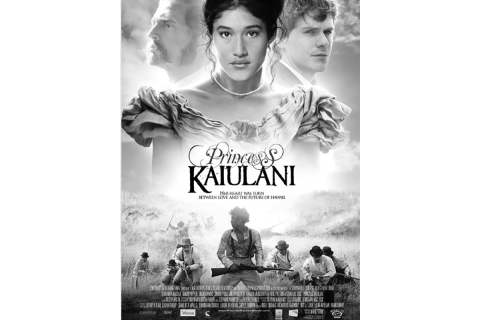
Movie poster for Princess Ka‘iulani (2009)

The Afterlife of Princess Ka‘iulani

by Stephanie Teves, Assistant Professor, Departments of Ethnic Studies and Women’s and Gender Studies
Acting as a subtle form of resistance to settler colonialism, a film and play about a Hawaiian Kingdom princess who died more than a hundred years ago allows Native Hawaiians to honor Ka‘iulani by thinking about her life and that of the Kingdom critically.
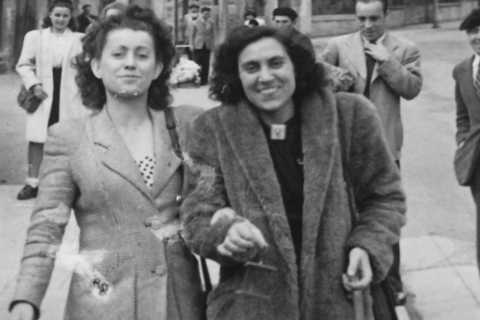
Tití (L) and Neus Catalá, after their liberation from the Nazi camp at Ravensbruck / BDIC.

Voices of the Vanquished: Spanish Women on the Left between Franco and Hitler

by Gina Herrmann, Associate Professor of Spanish, Romance Languages
On April 14, 1945, the very day the Allied troops liberated the Ravensbrück Nazi camp for women, inmate 43225, Mercedes Núñez Targa (1911-1986), had been slated for transport to the camp gas chamber. Núñez Targa’s route to Ravensbrück had begun in 1931 with the declaration of Spain’s progressive Second Republic. Mobilized in youth organizations along with hundreds of thousands of women who supported the Republic, Núñez Targa eventually took up a post as the head of the Spanish Communist Party in her native region of Galicia.
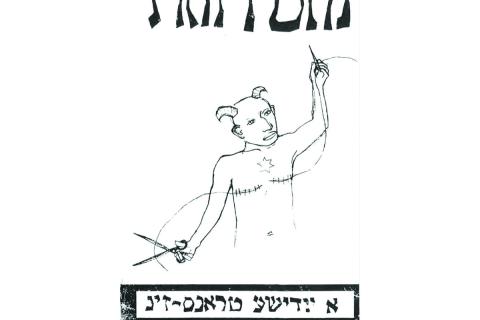
Cover page of Micah Bazant’s TimTum—A Trans Jew Zine (1999) / image provided by Miriam Chorley-Schulz

A Queer History of Yiddish

by Miriam Chorley-Schulz, Assistant Professor, German and Scandinavian Studies
In their zine TimTum—A Trans Jew Zine (1999), Micah Bazant introduced an affirmative layer to the history of who is referred to in Yiddish as timtum (or tumtem). According to Bazant, a timtum is “a sexy, smart, creative, productive Jewish genderqueer.” This was not always the case.
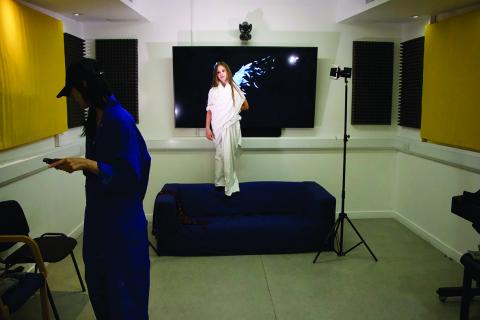
Over the course of ten days, Anthony Schrag and Marjorie Celona (pictured left) created several works from Edie X.’s career at the Out of the Blue Drill Hall in Edinburgh / photo provided Celona.

Finding Edie X. A Writer Explores Gender, Motherhood, and Disability through Art

by Jori Celona, Associate Professor, Creative Writing Program
My third novel, The Year of X, begins with Edie X., a mid-career artist, leaving her husband to attend a yearlong artist residency in upstate New York, bringing her young daughter, Lou, along for the ride. Her proposed project is a reimagining of Rembrandt’s The Anatomy Lesson of Dr. Nicolaes Tulp, in which she plans to document her own top surgery in a series of photographs. But shortly after arriving at the residency, she begins to have bizarre seizures, which hijack her life and art, and alter her sense of personhood in the world.
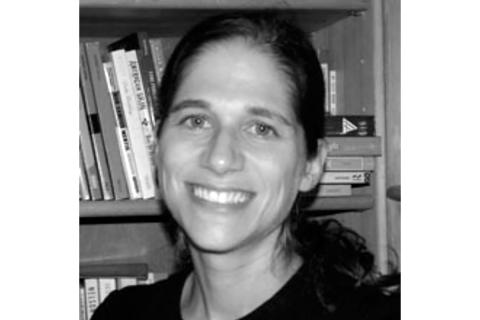
Courtney Thorsson

Revolutionary Foodways: a Set of Paths and Practices

by Courtney Thorsson, Assistant Professor, UO Department of English

My first book, Women’s Work: Nationalism and Contemporary African American Women’s Novels, has one chapter on cooking as a practice of nationalism in the works of poet, playwright, and novelist Ntozake Shange. When that chapter became twice as long as any other, I realized I had a second project on my hands and began compiling the notes and stacks of books that became the skeleton for my new project, Revolutionary Recipes: Foodways and African American Literature.

Two women in a literacy class.

Women, Development, and Geographies of Insecurity in Post-conflict Southeast Turkey

by Jessie Clark, Instructor, UO Department of Geography

The landscape of Southeast Turkey today looks starkly different than it did fifteen years ago. From 1984 to 1999, much of the Southeast region was caught up in a civil war between the Kurdish-separatist group the PKK and the Turkish military. Approximately 4,000 villages were burned, 40,000 people killed, and approximately 900,000–4 million individuals displaced (numbers vary depending on the source).