
Faculty Research Grant

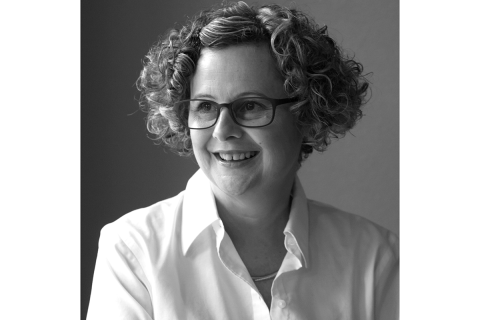
Christopher Minson

Hormone Therapy: Research in the Department of Human Physiology is Designed to Help Improve Women’s Cardiovascular Health

by Christopher Minson, Ph.D., Associate Professor and Department Head, Human Physiology
Millions of women use hormone therapy for treatment of menopausal symptoms and gynecological syndromes, contraception, assisted reproductive techniques, and combating osteoporosis. Early reports on the use of estrogen replacement therapy were very promising in terms of improving cardiovascular and bone health, but the results of two major clinical trials were disappointing and alarming, resulting in millions of women stopping hormone therapy.
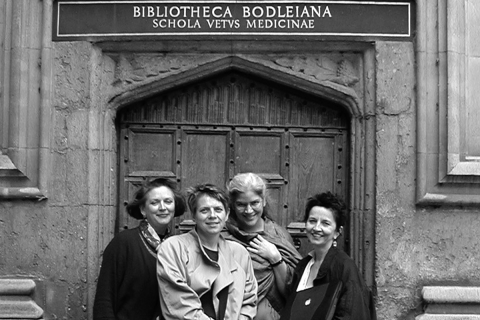
Bodleian Library, 2001—From left: Louise Bishop; Barbara Altmann, UO Professor of French, Romance Languages; Gina Psaki, UO Professor of Italian, Romance Languages; and Jan Emerson, Feminist Humanities Project staff member.

Paean to CSWS: for Giving Me a Career and a Book

by Louise M. Bishop, Associate Professor of Literature, Robert D. Clark Honors College
I’m of a generation—maybe there are others of you, and maybe it’s not as generational as I might think—where we “made do” with whatever sorts of academic career we could cobble together. Sometimes it could mean trailing a spouse, sometimes it could mean working in a non-tenure-track position, sometimes both; always it seemed to mean that there was no local automatically—and immediately—available berth to support the intellectual growth and research that a PhD seemed to promise.
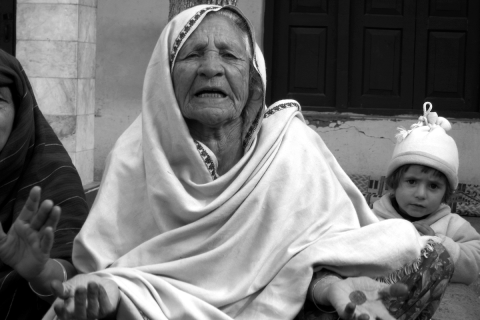
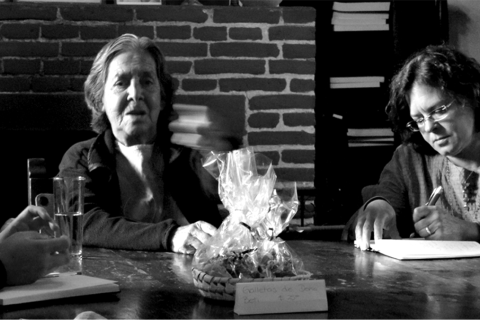
An elderly Swati woman telling her experiences to Anita Weiss.

Pakistan: Gathering Stories of Women in the Valley of Swat

by Anita Weiss, Professor and Head, Department of International Studies
The majestic Valley of Swat has endured many challenges and transformations in its storied history, but none may have the lasting impact on space and society as the occupation of the area by the Pakistan Taliban in the mid-2000s and the subsequent invasion by the Pakistan military to root them out in May 2009. The winding road to Swat, up through the Malakand Pass in the Provincially Administered Tribal Area (PATA) of the Khyber Pakhtunkhwa province, makes for a formidable barrier from the rest of Pakistan.
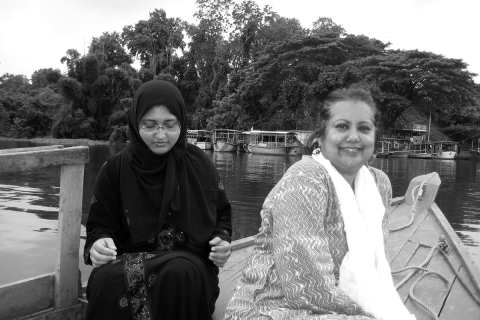
Lamia Karim (r), with research assistant Farzana, in Rangamati, Bangladesh (2009).

Heavenly Desires: Tablighi Jama’at and the Regulation of Women in Bangladesh

by Lamia Karim, Associate Professor, Department of Anthropology, and Associate Director, Center for the Study of Women in Society
In 2009, I went to Bangladesh with a National Science Foundation research grant to conduct four months of ethnographic research among a group of women who belonged to a pietist movement known as Tablighi Jama’at. The Tablighi Jama’at is a global missionary movement that was started by Muhammad Ilyas in 1926 in India. It is a spiritual movement that seeks to bring Muslim conduct in line with the life and teachings of Prophet Muhammad.
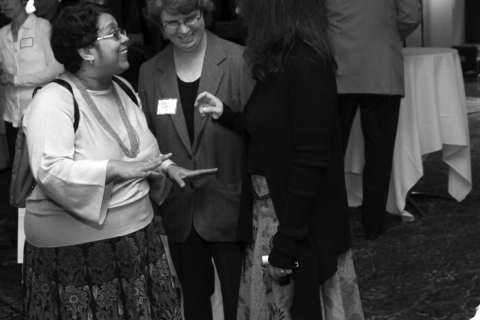
At a 2010 CSWS reception, Sangita Gopal (left) talks to colleagues Gabriela Martínez and Cecelia Enjuto Rangel while her daughter, Mohini, looks on (photo by Jack Liu).

Studying Bollywood: An Interview with Sangita Gopal

Sangita Gopal, recently tenured associate professor of English, grew up in Calcutta and moved to the United States to attend graduate school at the University of Rochester in upstate New York, where she studied literary theory and film studies. She joined the University of Oregon faculty in 2004. Her book Conjugations: Marriage and Form in New Bollywood Cinema, is due out in fall 2011 from the University of Chicago Press. She coedited the book Global Bollywood: Travels of Hindi Song and Dance (Gopal & Moorti, University of Minnesota Press, 2008).
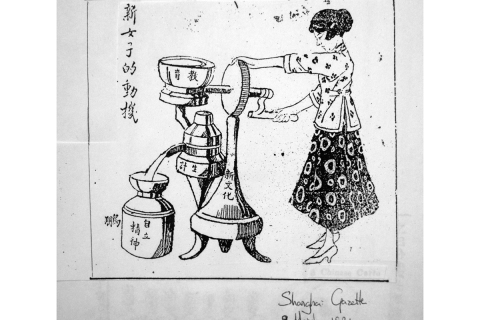
1921 Shanghai newspaper cartoon illustrating the mechanism for producing a new woman: education, new culture, employment, and self-sufficiency.

Capitalism, Politics, and Gender: A Suicide in Shanghai

by Bryna Goodman, Professor of History and Director of Asian Studies
On September 8, 1922, a mysterious and inexplicable suicide took place in Shanghai’s International Settlement, the Anglo-American-dominated foreign enclave that constituted one territorial authority in a city of multiple and fragmented jurisdictions. A young female secretary who worked at the liberal, politically outspoken Shanghai Chinese newspaper, the Journal of Commerce, was found hanged on the premises. Discovering her missing at an office dinner, a coworker summoned her family members and pushed open the office door, finding her dangling from the cord of an electric teakettle that had been looped around a window frame.
Elizabeth Wheeler

HandiLand: Nature, Disabililty and the Magic Kingdom

by Elizabeth A. Wheeler, Associate Professor, Department of English
My fall 2015 CSWS Faculty Research Grant proved crucial to the development of my book, HandiLand: The Crippest Place on Earth. HandiLand explores representations of disability in young adult and children’s literature since 1990. In recent decades, new rights laws worldwide have allowed young people with disabilities to infiltrate many spheres of public space. Literature for young readers reflects this new public presence—and also maps how far we still need to go to achieve equality.
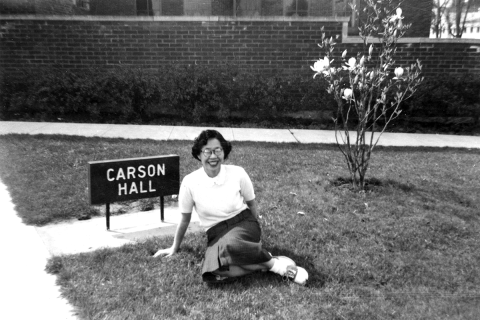
Yoko Matsuoka McClain at the University of Oregon, 1952.  / Photo Credits: McClain Family Private Collection.

The Forgotten Story of Japanese Women Who Studied in the United States, 1949-1966

by Alisa Freedman, Associate Professor, Japanese Literature and Film, Department of East Asian Languages and Literatures
Between 1949 and 1966, at least 4,713 Japanese students studied at American universities with the best-known fellowships at the time—GARIOA (Government Account for Relief in Occupied Areas [1949 through 1951]) and Fulbright (established in 1952)—along with a few private scholarships. This group included 651 women. Among them were future leaders in fields as diverse as literature, medicine, economics, athletics, and political science.
Analisa records notes while talking with Beatriz Mijangos Zenteno. The extraordinary life stories of Doña Bety and Koh María, Chan K'in Viejo's youngest wife and Nuk's mother, are beautifully conveyed in Gayle Walker and Kiki Suarez’ book of interviews with women in Chiapas, Every Woman is a World (U of Texas Press, 2008).

Daughters of the Moon: True Life Stories from the Lacandon Rain Forest

by Analisa Taylor, Associate Professor of Spanish, Department of Romance Languages
In Entre anhelos y recuerdos, the late Marie-Odile Marion interweaves the vivid and wistful life stories told to her by six Lacandon Maya women, representing three generations, with her own anguished reflections on her ethical responsibility toward them as their welfare became increasingly fragile toward the close of the twentieth century. Their stories reflect an erosion of the centuries-old kinship networks and symbolic order that had previously shaped Lacandon Mayan women’s identities and livelihoods throughout each stage of their lives.
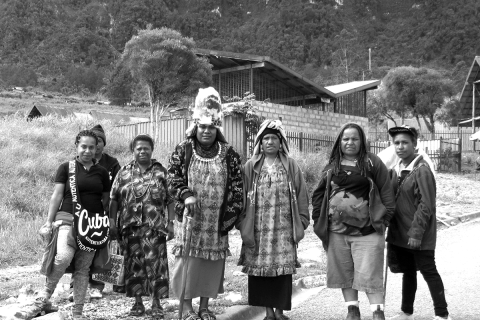
This young woman is wearing bridal finery and is announcing her pending marriage to encourage the relatives of her husband-to-be to contribute to the bridewealth / photos by Aletta Biersack

Women in Papua New Guinea: Gendered Transformations in the Ipili Mining Era

by Aletta Biersack, Professor, Department of Anthropology
Between late March and the end of July 2015, I resumed my research on gender in the Porgera and Paiela valleys of Enga Province, Papua New Guinea (PNG). PNG achieved independence from Australia in 1975. Gold has been mined in the Porgera valley since the mid-1940s, but it was not until 1990, when hard rock mining operations replaced alluvial mining, that these two valleys underwent rapid change. I went to PNG to see for myself what had changed. I was especially interested in impacts on women.