CSWS Graduate Student Research Grant

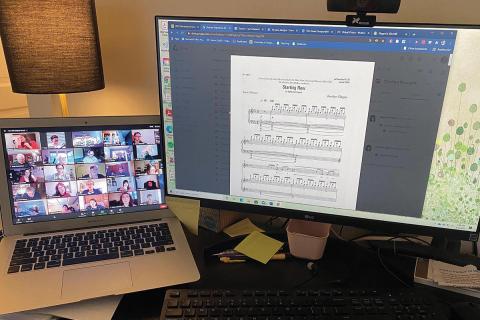
Choir practice over Zoom / photo provided by Molly McBride.

Tempos of Zoom Ethnography: Singing with a Women’s Chorus in the Pandemic

by Molly McBride, PhD Candidate Department of Anthropology

My research with Sistrum, a women’s chorus from Lansing, Michigan, unfolded in surprising ways over the past year. Supported by a CSWS Graduate Student Research Grant, I had originally proposed to look at the sexual politics of the chorus: how gender, race, sexual orientation, and class are performed in the chorus, both at an individual level and at a group level, as the chorus brings together many voices into one. With the onset of the COVID-19 pandemic, it was difficult to reconceptualize my project. Luckily, Sistrum pivoted to Zoom rehearsals, so I, too, pivoted to digital ethnography.
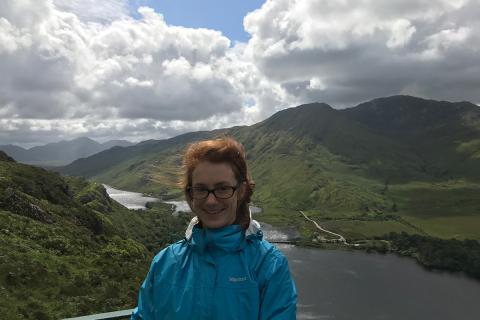
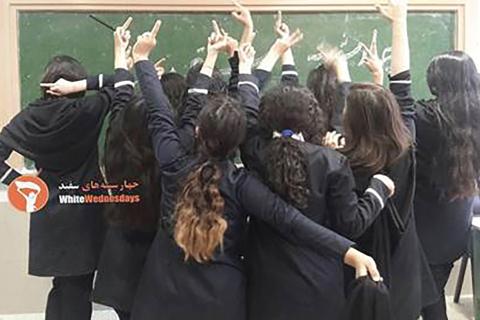
Photo provided by Parichehr Kazemi

“My Stealthy Freedom” Feminist Resistance Through Social Media in Iran

by Parichehr Kazemi, PhD Candidate, Department of Political Science

In 2014, Masih Alinejad, an exiled Iranian journalist, posted on Facebook an image of herself running through a London street with her curly locks lifted in the air, captioning it: “When I run and feel the wind in my hair, I am reminded that I come from a country which kept my hair hostage for thirty years” (Mohseni, 2015). Little did Alinejad know at the time, this small, subversive act to reclaim agency in her new home would pave the way for thousands of Iranian women to do the same, but in the context of a regime bent on restricting them at every turn.
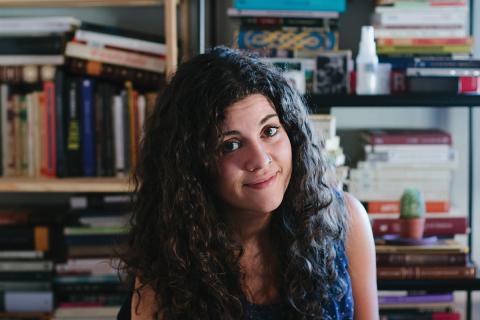
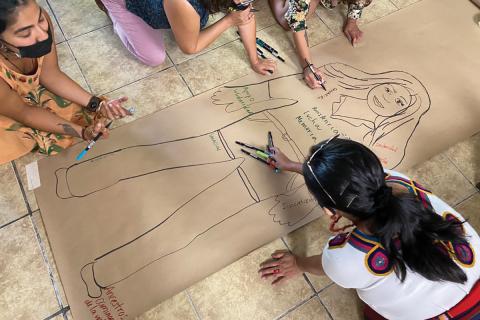
"Fieldwork" conducted from home during the pandemic included getting critical feedback along the way from my research assistant, Sebastián Serna Patterson.

M(other)work of Survival and the Pandemic as Teacher

by Cristina Faiver-Serna, MPH, PhD, Department of Geography

One spring morning in 2011, I left my home in the Los Angeles Harbor region to drive to a community meeting in Long Beach, California. I was to present on the “Bridge to Health” program, a promotora de salud-led asthma education program funded by the Port of Long Beach. Merging onto the 710 freeway my car became sandwiched between big-rig diesel trucks hauling cargo from the Port of Long Beach. The 710 freeway is the main truck route from the Port to inland distribution centers in San Bernardino County. Together, with the Port of Los Angeles, more than 40 percent of goods imported into the continental U.S. come by way of the Los Angeles Harbor.
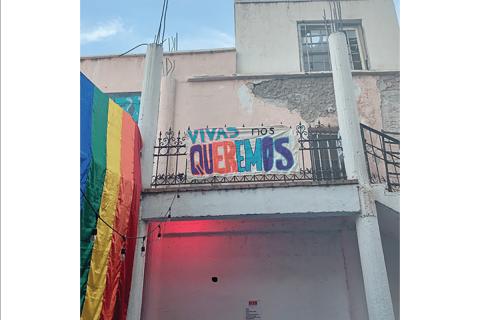
Melissa L. Barnes

Examining Gendered and Racialized Violence Toward the Black Community

by Melissa L. Barnes, PhD Candidate, Department of Psychology The nation held an unofficial day of remembrance for George Floyd on May 25, 2021, one year after he was murdered by a police officer. If we held a day of honor for all of the Black men, women, transgender, and nonbinary folks who have been physically or sexually assaulted by police officers, we would mourn and remember every day of the year. On March 30, we would mourn Mya Hall; July 13 would be Sandra Bland’s day; August 9 would honor Abner Louima; and at least 13 days would be reserved for each of Daniel Holtzclaw’s sexual assault victims.
Zeinab Nobowati

Toward a Multi-Directional Feminist Critique of Gender Oppression in the Global South

by Zeinab Nobowati, PhD Candidate, Department of Philosophy

Do Muslim women need freedom? Perhaps at the first glance, most feminists would be inclined to respond with a “yes,” given that most of us believe that all women, and all human beings, need freedom in some sense. In the history of philosophy, especially during modernity, freedom has been defined as one of the most valuable ideals that humans pursue in the hope of overcoming alienating and oppressive social norms and structures and in order to flourish. But when it comes to the question of freedom and emancipation of Muslim women, the issue becomes more complicated because it is a question that has become increasingly politicized in our time.
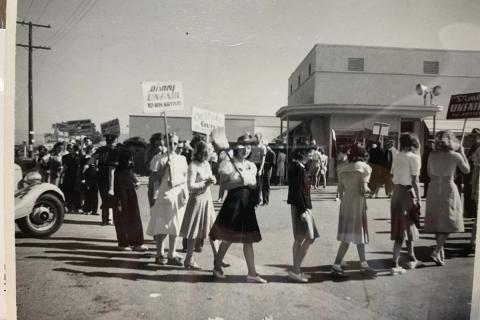
A historical advert depicting a male white settle selling soap to caricatures of Native American men.

A Critique of Whiteness as Cleanliness

By Annalee Ring, PhD Candidate, Department of Philosophy

This research project takes up a genealogical method that unearths taken-for-granted assumptions regard-ing contemporary beliefs and practices surrounding cleanliness. Today cleanliness practices are enacted and are treated as “normal” without considering how they have been shaped by vectors of contingent influences including social and political institutions, technological developments, global politics, and power discrepancies. Further, we surveil and discipline ourselves and one another to enact cleanliness practices that have been normalized.
Hayward Field

Collegiate Performances at Historic Hayward Field

by Ola Adeniji, PhD Candidate, Department of Human Physiology

Historic Hayward Field has been home to record-breaking performances set by athletes at many levels. Located on the University of Oregon campus in Eugene, Hayward Field has hosted over two dozen elite and collegiate championship track and field meets. The highly touted 2021 NCAA Track and Field Championships, followed by the rescheduled 2020 US Olympic Track and Field Trials, were both held in June of last year in the newly renovated stadium. This summer brought athletes and track fans across the globe to participate in and witness the 2022 Oregon World Championships, the first held on US soil.
Pictured are Robin Okumu, left, and Marie Darrieussecq / photo provided by Robin Okumu.

Paradise as a Way of Being: Rethinking Relations in Three French Feminist Authors

by Robin Okumu, PhD, Department of Comparative Literature

On January 26, 2022, in the thick of the Omicron wave of COVID-19 in both France and the US, I met French author Marie Darrieussecq for an interview at her home in Paris’ 15th arrondissement. I sat across from her—unmasked—in the very chair at the desk where she does her writing, while she sat cross-legged on a twin bed that nearly filled the rest of the small room. During a delightful hour and a half, we discussed (in French) to what extent we can read utopian “moments” amidst the dystopian realities in her fiction.