

Editor's note: CSWS faculty research fellow Alisa Freedman is featured in the latest issue of CAS Connection. Below is an excerpt from that story.
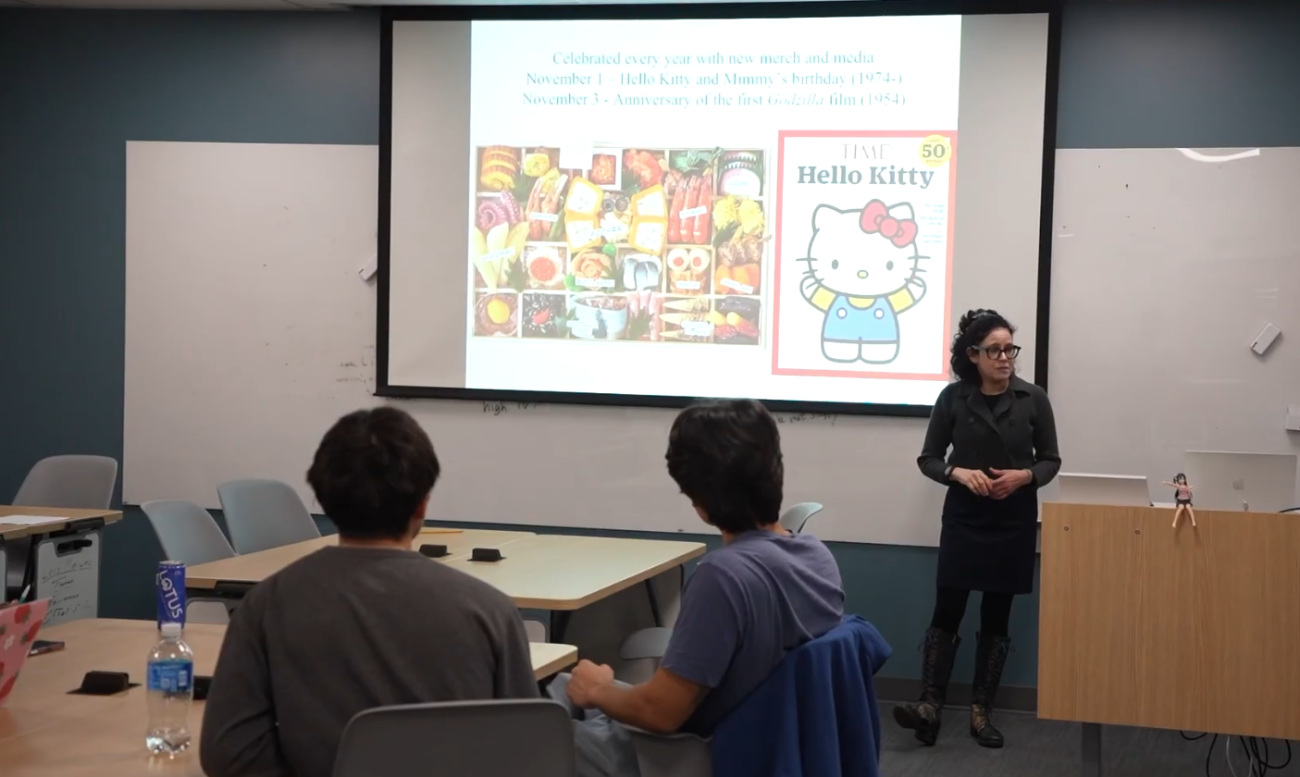
Japanese pop culture is all around you. It includes fashion, games, manga, anime, toys and music. What makes Japanese popular culture so fascinating? How are cute characters like Hello Kitty — arguably the most recognized icon in the world — and games like Pokémon — the world’s highest grossing franchise — transforming global politics and the ways people construct their own identities? Students in ASIA 399: Japanese Popular Culture and the World explore these same questions and were excited to show off their favorite pop culture items when CAS Communications visited class for the video featured above.
Japanese Popular Culture and the World is a well-attended class in the College of Arts and Sciences (CAS) taught by Alisa Freedman, professor of Japanese literature and culture. She created the class a decade ago to help students better understand the trends they love, their culture and social meanings, and the patterns of globalization they represent.
“The class was inspired by my research and teaching interests in how culture and people flow between Japan and the US, creating new practices in the process,” she said. “It was also inspired by discussions with UO students about how they make Japanese popular culture part of their lives in Oregon.”
Since its inception, the class has grown from a freshman seminar where new students could form communities and gain academic skills to a large enrollment 300-level class that counts toward many majors and includes students from all grade levels.
Freedman finds that popular culture provides an accessible means to talk about topics otherwise difficult to approach.
“The appeal of popular culture lies in its escapism and easy consumption without having to think deeply,” said Freedman. “But when we do think about it, it teaches about society, business, politics, globalization, identity, media, communication, art, psychology and so much more.”