CSWS Graduate Student Research Grant

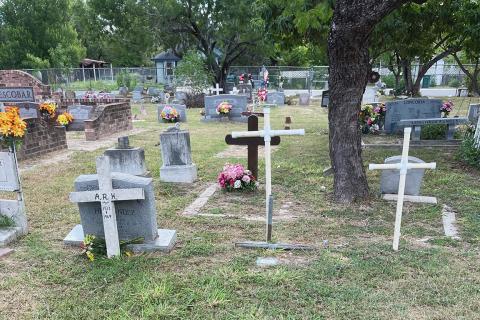
The Hernández family plot in the Guadalupe Cemetary / photo provided by Teresa Hernández-Reed.

Mapping the Decolonial

by Teresa Hernández-Reed, PhD, Department of English

There are few writers who stir in me what Cisneros has across my life, career, and scholarship, and I knew I could not write my dissertation project without her. To that end, the CSWS research grant has made possible the work I engage with in my forthcoming essay, “Mapping the Decolonial,” in the first critical companion to Sandra Cisneros’s oeuvre, ‘¡Ay Tú!’: Critical Essays on the Work and Career of Sandra Cisneros (University of Texas Press). In addition, I pair my reading of her work alongside a community mapping project in Hidalgo County (Texas) of the pioneer Guadalupe Cemetery, which was the first cemetery in South Texas to “permit” the burial of “newcomers,” Mexican immigrants.
Photo by Joojo Cobbinah.

Masculinization of Maternal Reproductive Health in Rural Ghana

by Elinam Balimenuku Amevor PhD, School of Journalism and Communication

In 2015, the United Nations passed the 2030 Agenda, a set of 17 Sustainable Development Goals (SDGs) that provide the framework that all member states have pledged to achieve. Among these is the need for good health and well-being for all regardless of their gender. This has reinforced global equity principles that require that women and men have equal opportunities to realize their health potential.
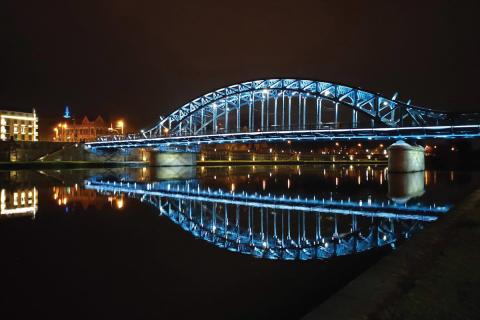
The Vistula River in Cracow, Poland / photo by Jagoda Dulba.

The Danger of a Metaphor: The Female Body and Land in Polish Theatre and Performance

by Anna Dulba-Barnett, PhD Candidate, Department of Theatre Arts

I enrolled in UO’s Department of Theatre Arts in 2018 to study ecodramaturgy under the guidance of Professor Theresa May who coined the term and has significantly contributed to the emerging field. She defines the theoretical concept as “play-making (script development and production) that puts ecological reciprocity and community at the centre of its theatrical and thematic intent.” My PhD dissertation will apply this theoretical frame to the study of dramatic literature and performance from Poland, my home country.
A drawing of the interior of an Indian home with a woman cooking, children playing, and family members resting.

Informal Labor Blues: Gendered Effects of COVID-19 and Beyond on Backward Caste Women in India

by Malvya Chintakindi, PhD Candidate, Department of Anthropology

These quotes illustrate the lived experiences of women I have worked with in the past two years. They belong to backward caste communities—engaged in informal labor economy working jobs as manual scavengers, domestic help, construction labor, cleaners—in India. They constitute a whopping 90 percent of India’s working population, neither regulated nor protected by the state. My research delves into the short-term and potential long-term effects of COVID-19 on women belonging to backward castes engaged in informal labor work in the city of Hyderabad, state of Telangana, India.
An image from Jaramillo's CSWS Noon Talk / illustration provided by Jon Jaramillo.

Viral Bodies: AIDS and Other Contagions in Latin American Narrative

by Jon Dell Jaramillo, PhD Candidate Department of Romance Languages

My dissertation analyzes examples of viral bodies which materialize in the works of three Latin American authors who wrote about HIV/AIDS in the 1990s: Reinaldo Arenas (Cuba), Pedro Lemebel (Chile), and Pablo Pérez (Argentina). In many ways, my dissertation responds to the Marxist legal sociologist Boaventura de Sousa Santos, who in his book La cruel pedagogía del virus (2020) calls for new strategies of contamination to overcome pandemics, natural disasters, financial collapses, the triumphant resurgence of authoritarian exceptionalism, and the technical circumvallation of patriarchal capitalist power that now leads the world toward catastrophe—strategies that enter the lives of citizens “por la puerta trasera” (14).
A screen capture of the South Korean television drama "Love and Truth"

Revisiting Korean TV Drama "Love and Truth"

by Jeongon Choi, PhD Candidate, Department of East Asian Languages & Literatures

The market success of South Korean television dramas in Asian countries during the 2000s was termed Hallyu 1.0, and their narrative trend centered on Cinderella stories. So-called candy girl characters who charm aristocratic men with their cheerful and hard-working attitude still define K-drama now, and even though these Cinderella romances usually end up in the acceptance of patriarchal ideology, the candy girl story is not merely a fantasy about longing for upward marriage.
Brooke Burns, PhD Candidate, Department of Philosophy

Sylvia Wynter and the New Seville Project

By Brooke Burns, PhD Candidate, Department of Philosophy

After witnessing the cruelty inflicted upon the Indigenous Arawak peoples of the Caribbean islands in 1514, Spanish priest Bartolemé de Las Casas underwent a “conversion experience” that would take him on a journey across the Atlantic Ocean to first meet with King Ferdinand II and later with the co-regents of Charles V. There, he argued for the abolition of the encomienda system, and as a replacement for labor proposed the importation of 4,000 African people into the Caribbean islands.
Isabella Clark, PhD Candidate, Department of Sociology

Too Sensitive? Living with Multiple Chemical Sensitivity

By Isabella Clark, PhD Candidate, Department of Sociology

My dissertation examines multiple chemical sensitivity (MCS), a condition where people experience physical symptoms in response to “normal” doses of everyday chemicals. These symptoms vary and include brain fog, rashes, headaches, respiratory problems, nausea, and fatigue, amongst other things. MCS is a contested illness; its material reality is often dismissed in favor of a psychological explanation by both doctors and lay people.
Memory Museum in Huamanga, Ayacucho, Perú / photo by Gloria Macedo-Janto.

Gender Roles in the Testimonial Narratives of Andean Women

by Gloria Macedo-Janto, PhD Student, Department of Romance Languages

To better understand a 20-year period of political violence in Peru, in this project I analyze the testimonies of Andean women, especially from the Ayacucho area, to make visible their contribution to the reconstruction of an important part of Peruvian history. In accordance with their worldview and their roles as women, in their tragic and painful testimonies they tell how they suffered ethnic and gender discrimination, and it is observed that they are capable of recalling many details and telling their experiences from different perspectives and with their own narrative.