Faculty Research Grant

A health outreach worker at an encampment in Eugene / photo by Mackenzie VanLaar.

A Multi-Stakeholder Analysis of Women’s Houselessness in Eugene, Oregon

by Lesley Jo Weaver, Associate Professor, Department of Global Studies, and Mackenzie VanLaar, PhD, Department of Anthropology

Elsie, a woman in her mid-twenties who is struggling with opioid dependency on the streets of Eugene, Oregon, spiraled out earlier this year when police swept her camp, cutting her off from the mentor and friend she refers to as her “street dad.” “Like, my dad, my street dad—he’s somebody that really helped me,” she explains from the doorway of her tent. She begins crying. “Without him, now I’m crashing and burning even more because I can’t just go see him, you know what I mean? Some people are really, really big influences on what people do in their life—like, they make a huge difference.”
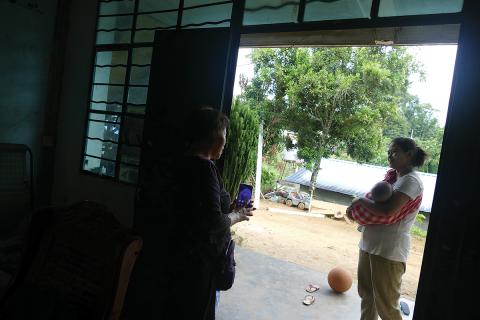
A chat with a Myanmar Jingo wife, who holds a baby on the left side / photo provided by Xiaobo Su

Aliens at Home: Myanmar Wives and the Exercise of Border Biopolitics in Yunnan, China

by Xiaobo Su, Professor, Department of Geography

In August 2023, at the entrance of Muke village, an ethnic Jingpo (equivalently, Kachin in Myanmar) village one kilometer away from the China–Myanmar border, I and my interpreter parked our car and stopped by a snack shop to learn where to find the village head for more information about cross-border marriage. The female owner, Ruishan, was a Myanmar wife originally from Kachin state, just across the border.
Lana Lopesi

Care: Samoan Feminism, Care Work, and Immaterial Labor

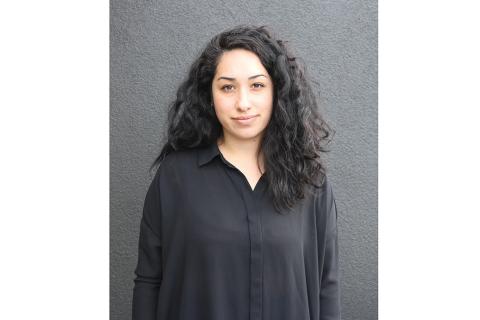
by Lana Lopesi, Assistant Professor, Department of Indigenous, Race, and Ethnic Studies

Two years ago, I moved from Aotearoa, New Zealand, to take up my current role as an assistant professor in the Department of Indigenous, Race, and Ethnic Studies. When we first made the move, the key word was “adjust,” and the mission was to adjust to a new country and to a new academic context, while carving out my own space here. Now that Kalapuya Ilihi is growing in familiarity, I have delved into new research projects, including one tentatively titled “Care: Samoan Feminism, Care Work, and Immaterial Labor.”
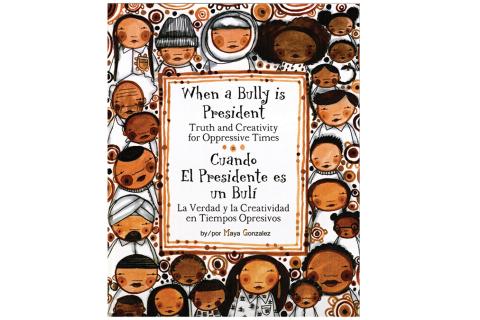
The cover of Maya Gonzalez's picture book, "When a Bully is President: Truth and Creativity for Oppressive Times"

Illustrating Resilience: Children’s Picture Books for Oppressive Times

How might children’s literature help us respond to our current political climate? While all literature is politically (or at the very least, ideologically) motivated, a picture book that exemplifies political content for children is Maya Gonzalez’s When a Bully is President: Truth and Creativity for Oppressive Times. Not only is it an indirect comment on Trump but it also reframes US history through bully discourse in its reflections on colonization, slavery, war, and xenophobia. When read as political texts, picture books have the potential to inspire collective action or activism.