Jane Grant Dissertation Fellowship

Jenée Wilde

The BiSciFi Project: Researching Speculative Fictions and Bisexual Lives

by Jenée Wilde, PhD candidate, UO Department of English (Folklore)

As a PhD candidate, my research has resulted in part from frustrations I have felt with the lack of serious treatment given to bisexuality as a position from which to theorize sexual knowledge within humanistic scholarship. While studies of gay, lesbian, and transgender communities and cultural production have dramatically increased over the past two decades, research on bisexuality remains highly undervalued in much of the humanities and social sciences.
Jenée Wilde

Bisexuality: Materials for Class

by Jenée Wilde, PhD, Department of English (Folklore)

My graduate work was shaped in part by a noticeable absence. In my gender and queer studies courses, I read theoretical and sociological studies of lesbian, gay, transgender, and queer people, often shorthanded as LGBTQ. Wait a minute . . . something is missing. What happened to the “B” in all this theory and research?

"Fieldwork" conducted from home during the pandemic included getting critical feedback along the way from my research assistant, Sebastián Serna Patterson / photo by Cristina Faiver-Serna.

M(other)work of Survival and the Pandemic as Teacher

by Cristina Faiver-Serna, MPH, PhD, Department of Geography

One spring morning in 2011, I left my home in the Los Angeles Harbor region to drive to a community meeting in Long Beach, California. I was to present on the “Bridge to Health” program, a promotora de salud-led asthma education program funded by the Port of Long Beach. Merging onto the 710 freeway my car became sandwiched between big-rig diesel trucks hauling cargo from the Port of Long Beach. The 710 freeway is the main truck route from the Port to inland distribution centers in San Bernardino County. Together, with the Port of Los Angeles, more than 40 percent of goods imported into the continental U.S. come by way of the Los Angeles Harbor.
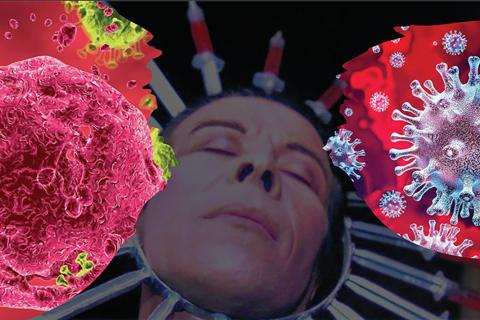
An image from Jaramillo's CSWS Noon Talk / illustration provided by Jon Jaramillo.

Viral Bodies: AIDS and Other Contagions in Latin American Narrative

by Jon Dell Jaramillo, PhD Candidate Department of Romance Languages

My dissertation analyzes examples of viral bodies which materialize in the works of three Latin American authors who wrote about HIV/AIDS in the 1990s: Reinaldo Arenas (Cuba), Pedro Lemebel (Chile), and Pablo Pérez (Argentina). In many ways, my dissertation responds to the Marxist legal sociologist Boaventura de Sousa Santos, who in his book La cruel pedagogía del virus (2020) calls for new strategies of contamination to overcome pandemics, natural disasters, financial collapses, the triumphant resurgence of authoritarian exceptionalism, and the technical circumvallation of patriarchal capitalist power that now leads the world toward catastrophe—strategies that enter the lives of citizens “por la puerta trasera” (14).
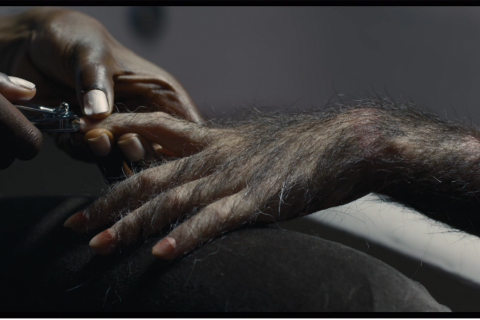
A still image from the film Good Manners (2017)

‘Feeling With’ Other Bodies: The Posthuman in Latin American Cinema

By Marena Fleites Lear, PhD Candidate, Department of Comparative Literature

Over the last several decades, feminist philosophers have given us different frameworks for understanding how individual and collective bodies are made vulnerable to sociopolitical forces, but also how bodies in turn shape those networks of power. They remind us that our bodies (differentially marked by racism, colonialism, ableism, etc.) are the very stuff of politics.

CSWS announces 2023-24 grant awardees

The Center for the Study of Women in Society (CSWS) is thrilled to announce funding awards for AY 2023-24 of $78,000 to support scholarship, research, and creative work on women and gender at the University of Oregon. A total of 21 research grants were given to 16 graduate students and five faculty members. 

Read More