

Modern Girls on the Go
by Alisa Freedman, Assistant Professor of Japanese Literature and Film

by Alisa Freedman, Assistant Professor of Japanese Literature and Film
by Priscilla Yamin, Assistant Professor, Political Science
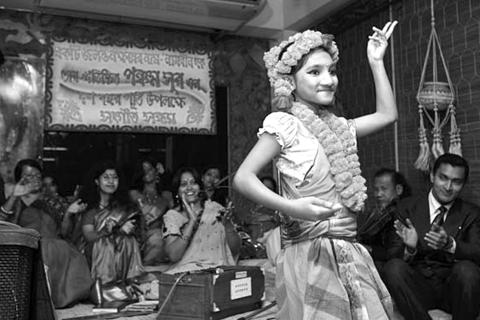
A cultural anthropologist, CSWS’s new associate director researches women’s lives in global Asia.
Q: Tell us about growing up in Bangladesh. Who shaped your early views on feminism?
by Yvonne Braun, Assistant Professor
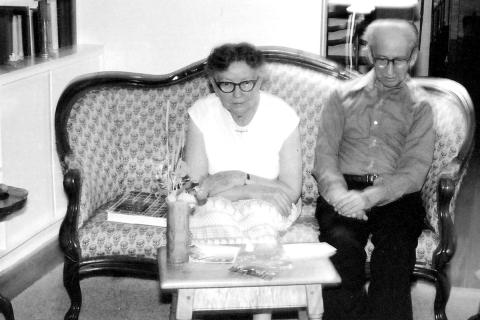
Made possible by the gift of Madge and Val Lorwin, the inaugural Lorwin Lectureship will focus on Women’s Rights in a Global World. But who were the Lorwins? A conversation with UO history professor George Sheridan.
Q: You taught in the same department as Val Lorwin. How well did you know Val and Madge Lorwin?
Val interviewed me. I am Val’s successor in his job. I went there in 1976. I moved into their place, I think it was 1978. And then I stayed there until I got married, which was in 1986. So I was there through all that time.
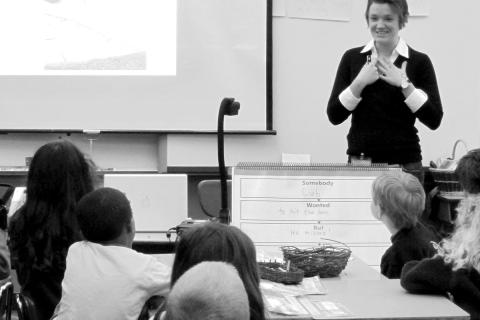
CSWS played an active community role in celebrating Women’s History Month in March by sending UO graduate students and professors into the Eugene School District 4J classrooms. The scholars spoke to the 2010 theme of the National Women’s History Project, “Writing Women Back Into History.” A team of CSWS scholars selected the graduate student presenters from a pool of applicants.
by Katie Rodgers, Graduate Student, Sociology

by Maggie Evans, PhD candidate, Department of English
The final lines of Marge Piercy’s “The Woman in the Ordinary” exemplify a familiar strain of contemporary American women’s poetry:
In her bottled up is a woman peppery as curry,
a yam of a woman of butter and brass,
compounded of acid and sweet like a pineapple,
like a handgrenade set to explode,
like goldenrod ready to bloom.
by Laura Massengale, MA, Department of International Studies