CSWS Annual Review

Science fiction is one of Carol Stabile’s areas of research. She will be teaching a course on feminist science fiction during AY 2013-14 / photo by Alice Evans.

Funding Feminist Futures

by Carol Stabile, Director , Center for the Study of Women in Society, Professor, UO School of Journalism and Communication and the Department of Women’s and Gender Studies

Kathryn Allan (l) chats with Jenée Wilde, then-CSWS development GTF, at the CSWS 40th Anniversary Celebration in Nov. 2013

“The Other Lives”—Locating Dis/Ability in Utopian Feminist Science Fiction

by Alice Evans, CSWS Dissemination Specialist

CSWS interviewed Kathryn Allan, inaugural winner of the Le Guin Feminist Science Fiction Fellowship, during her CSWS-supported visit to do research at the UO Libraries Special Collections and University Archives. Allan immersed herself in the archives, reading the letters of Ursula K. Le Guin, Joanna Russ, and other feminist science fiction authors, seeking out conversations about disability and utopia, and delighting in her discoveries.

Jenée Wilde

The BiSciFi Project: Researching Speculative Fictions and Bisexual Lives

by Jenée Wilde, PhD candidate, UO Department of English (Folklore)

As a PhD candidate, my research has resulted in part from frustrations I have felt with the lack of serious treatment given to bisexuality as a position from which to theorize sexual knowledge within humanistic scholarship. While studies of gay, lesbian, and transgender communities and cultural production have dramatically increased over the past two decades, research on bisexuality remains highly undervalued in much of the humanities and social sciences.

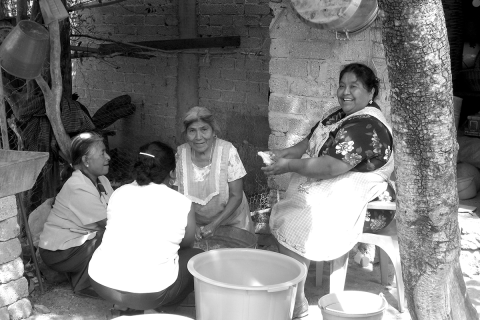
Two women in a literacy class.

Women, Development, and Geographies of Insecurity in Post-conflict Southeast Turkey

by Jessie Clark, Instructor, UO Department of Geography

The landscape of Southeast Turkey today looks starkly different than it did fifteen years ago. From 1984 to 1999, much of the Southeast region was caught up in a civil war between the Kurdish-separatist group the PKK and the Turkish military. Approximately 4,000 villages were burned, 40,000 people killed, and approximately 900,000–4 million individuals displaced (numbers vary depending on the source). 

Gabriela Martínez speaks at the CSWS 40th Anniversary Celebration

Media, Democracy, and the Construction of Collective Memory: A Conversation with Gabriela Martínez

by Alice Evans, CSWS Dissemination Specialist

CSWS last interviewed Gabriela Martínez for the Annual Review in summer 2012, when she was the incoming associate director of CSWS. Now entering her third and final year as associate director, Martínez talks about her research, documentary filmmaking, and teaching; her tenure at CSWS; and her upcoming year as a resident scholar at the Wayne Morse Center for Law and Politics.

On location for a new documentary project in Oaxaca, Mexico, Sonia De La Cruz (right) looks over notes with collaborator Gabriela Martínez (summer 2014)

A Documentary Experience: Reflections on Weaving 40 Years of Feminist History into a 52-minute Film

The documentary Agents of Change: A Legacy of Feminist Research, Teaching and Activism at the University of Oregon (2013) recounts the struggles of women scholars, students, and leaders who fought to institute the Center for the Study of Women in Society (CSWS) on campus. This intricate story is told in the voices and from the perspective of the individuals who over the last forty years have been involved with CSWS...
A graphic for “"The Status of Women in Philosophy at the University of Oregon and Beyond"

Creating Visibility for Feminist Philosophy

by Megan M. Burke, PhD candidate, UO Department of Philosophy

In the world of academic philosophy, feminist philosophers occupy a marginalized space. This, of course, is not unique to philosophy as most academic disciplines give marginal status to those working on issues of gender and its intersections with sexuality, class, and race.