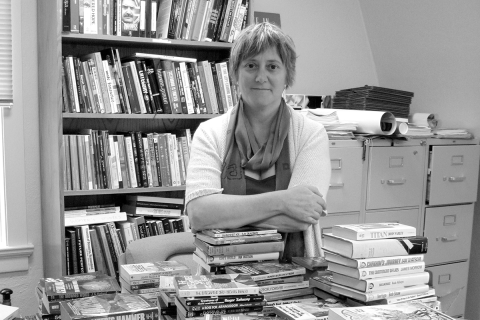
An Interview with Director Michael Hames-García
by Jenée Wilde, PhD candidate, UO Department of English (Folklore)

by Jenée Wilde, PhD candidate, UO Department of English (Folklore)
by Samantha King, PhD candidate, Department of Anthropology, University of North Carolina at Chapel Hill
The Commonwealth of Dominica is a rural island nation in the Eastern Caribbean in which most households depend upon agriculture, both for subsistence and exchange. Production is dominated by small family farms that supply global export markets as well as the intra- and inter-island trading networks that comprise a robust yet poorly-understood local food economy.
by Kristen M. Reinhardt, M.S., PhD candidate, Department of Psychology (Clinical Psychology)
by Kristine Riley, master’s graduate, Conflict and Dispute Resolution Program
by Kathryn Miller, PhD candidate, Department of Political Science
by Iván Sandoval-Cervantes, PhD candidate, Department of Anthropology
by Megan M. Burke, PhD, Department of Philosophy
My research is a reflection on how sexual violence is encrusted into bodily life and norms of gender.
by Jenée Wilde, PhD, Department of English (Folklore)
My graduate work was shaped in part by a noticeable absence. In my gender and queer studies courses, I read theoretical and sociological studies of lesbian, gay, transgender, and queer people, often shorthanded as LGBTQ. Wait a minute . . . something is missing. What happened to the “B” in all this theory and research?
by Michelle McKinley, Bernard B. Kliks Associate Professor of Law, School of Law
In 1672, Catalina Conde, a mulata slave, asked the ecclesiastical court in Lima, Peru, to issue censuras, summoning any witnesses who possessed knowledge or evidence about her paternity. Catalina used the process of censuras—akin to spiritual subpoenas—to strengthen her case against her father’s widow, who refused to honor her husband’s promise to free Catalina after his death.
by Debra Eisert, Associate Professor, College of Education and Haidee Copeland, PhD