

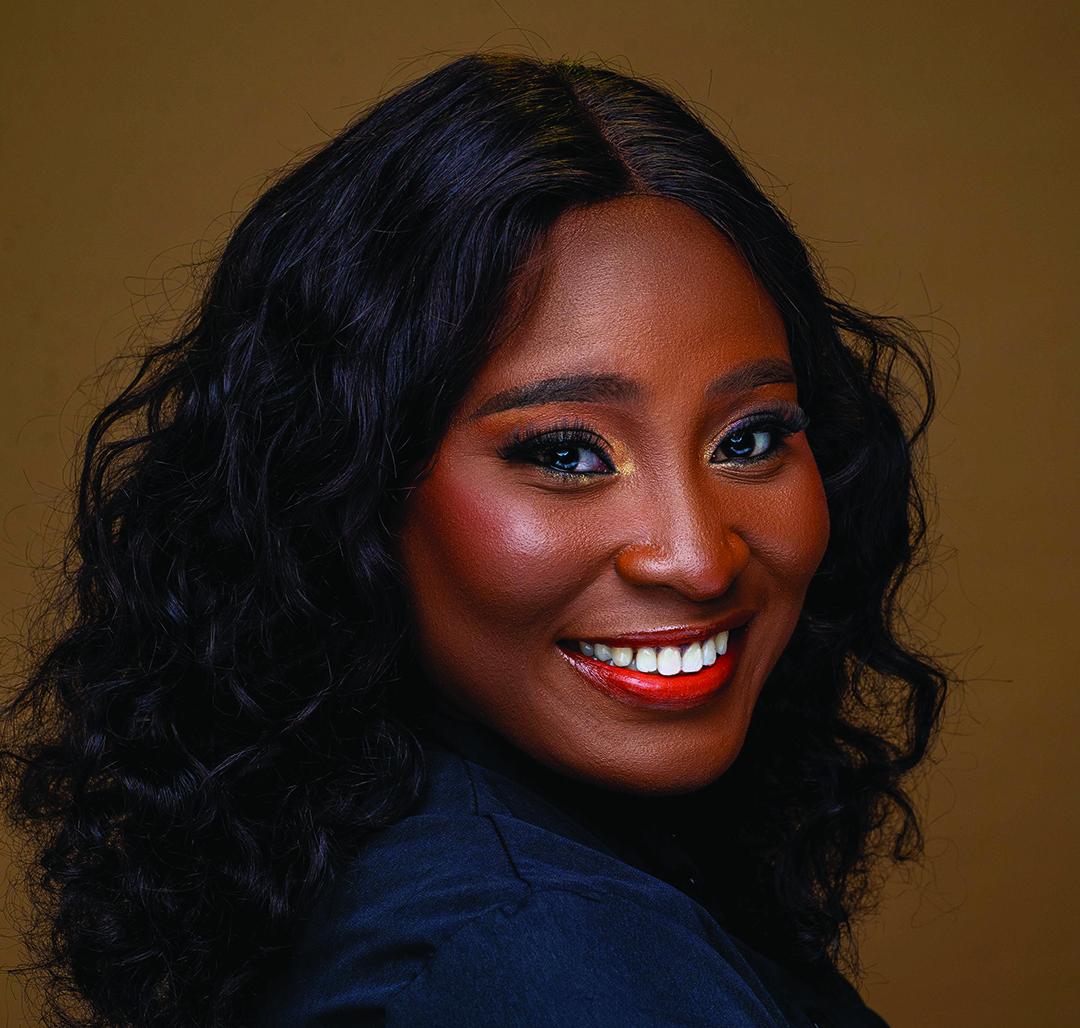
by Precious Adejumobi, PhD Candidate, Department of Anthropology
“They said the ‘dirty blood’ will come out when I give birth,” 33-year-old Fola (pseudonym) shared with fresh realization of the false hope she was offered about 20 years ago. She anticipated childbirth as a potential source of relief from her debilitating menstrual cramps, but experienced disappointment when confronted with infertility, another symptom of endometriosis.
In my work on the lived experiences of women who have endometriosis in Nigeria, I “collect” women’s illness narratives to interrogate the sociocultural and gendered dimensions of the disease, how medicine and culture intersect to shape women’s lives, and how women enact their agency as they pursue care and cure. I suggest that endometriosis is currently viewed through what I call a “Reproductive Gaze”—a lens through which women’s diseases are understood and treated solely in relation to women’s reproductive capacities. Why, in Fola’s case for instance, was endometriosis not considered as a possible diagnosis for over two decades? Why did she have to experience infertility to get diagnosed? How did the disease come to be reduced to “bad blood”? Why was her pain dismissed and why was her healing hinged on her future reproductive capacity?
Endometriosis is a severely underdiagnosed chronic, systemic, inflammatory disease with over 10 percent prevalence rate among reproductive-age women globally. It occurs when tissue similar to the uterine lining grows outside the uterus: in the pelvic area or farther away on different organs like the diaphragm, the brain, the skin, and elsewhere. Its most common symptoms include heavy and painful menstruation, chronic pelvic pain, infertility, chronic fatigue, painful urination, painful bowel movement, and cyclical chest pain. More than 190 million women are affected globally, many of whom do not get diagnosed for up to 11 years (Tragantzopoulou 2024).
Women experience the disease differently depending on the surrounding culture, access to healthcare, availability of experts and treatment technologies, and several other factors (Mecha et al. 2022). In Nigeria, women’s experiences are shaped by the lingering effects of the myth that endometriosis does not affect Black women, by inept medical systems, and by local cultures that normalize women’s pain through silence and stigma and prioritize pregnancy and childbirth over women’s quality of life. In fact, many Nigerian women only get diagnosed with endometriosis when they experience infertility, as deeply held taboos around women’s bodies and menstruation discourage women from talking about their symptoms (Fawole et al. 2015).
With generous support from CSWS through the Graduate Student Research Grant, I conducted preliminary research in Nigeria and had the opportunity to listen to the stories of women who live with this difficult disease in the country. Based on these encounters with Fola and other women, I came to recognize illness narratives as sites of knowledge production, women’s storytelling as a form of resistance, and our shared conversations as moments of relief. As our conversations moved from storytelling to venting, confiding, mourning, reflection, meaning-making, and, at times, hopeful conclusions, I began to situate women’s individual experiences within the broader biomedical and cultural structures that silence, dismiss, and stigmatize such expressions. Nigerian women’s narratives produce subjective and embodied knowledge that biomedicine has failed to generate and are a counter-narrative to problematic biomedical disease theories about endometriosis. These include longstanding assumptions that endometriosis primarily affected “intelligent” and “perfectionist” White women who chose their careers over getting pregnant early, and not Black women who were presumed to reproduce early and frequently. These ideas were prevalent until the late 1970s (Aimakhu and Osunkoya 1971; Kistner 1979).
By sharing their stories and naming actors and systems that contributed to their prolonged suffering, Nigerian women enact narrative resistance against cultures of silence around women’s health and redirect focus from reductionist views of endometriosis as a mere reproductive issue. So, when I invite a woman to tell me about her life with endometriosis, she may choose like Fola to describe her experience with menstruation, pain, dismissal, gaslighting, painful sexual intercourse, expectations of endurance, job loss, betrayal, gossip, infertility, reproductive pressures, stigma, anxiety, depression, support, diagnosis, treatment, and any other subject she considers important, even if society deems it a taboo. It is in the deep exhales, the wordless smiles, and the long embraces that follow our conversations that I recognize relief from the burden of silence many women living with endometriosis bear in addition to chronic bodily and social suffering.
—Precious Adejumobi received a 2025 CSWS Graduate Student Research Grant for this project.
References:
Aimakhu, V. E., and Osunkoya, B. O. 1971. “Endometriosis externa in Ibadan, Nigeria.” American Journal of Obstetrics and Gynecology 110 (4): 489–493. https://doi.org/10.1016/0002-9378(71)90689-2.
Fawole, Adeniran O., Folasade A. Bello, Olayinka Ogunbode, Akin-Tunde A. Odukogbe, Gerald C. Nkwocha, Kelechi E. Nnoaham, Krina T. Zondervan, Adesina Akintan, Rukiyat A. Abdus‐Salam, and Michael A. Okunlola. 2015. “Endometriosis and associated symptoms among Nigerian women.” International Journal of Gynecology & Obstetrics 130 (2):190–194.
Kistner, Robert W. 1979. Gynecology: Principles and Practice. 3rd ed. Chicago: Year Book Medical Publishers.
Mecha, Ezekiel O., Joseph N. Njagi, Roselydiah N. Makunja, Charles O. A. Omwandho, Philippa T. K. Saunders, and Andrew W. Horne. 2022. “Endometriosis among African Women.” Reproduction and Fertility 3 (3): 40-43.
Tragantzopoulou, Panagiota. 2024. “Endometriosis and Stigmatization: A Literature Review.” Journal of Endometriosis and Pelvic Pain Disorders 16 (2): 117–122.