graduate student research

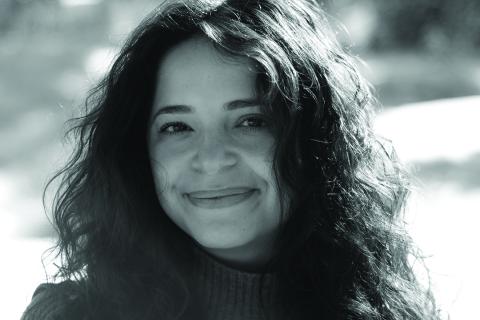
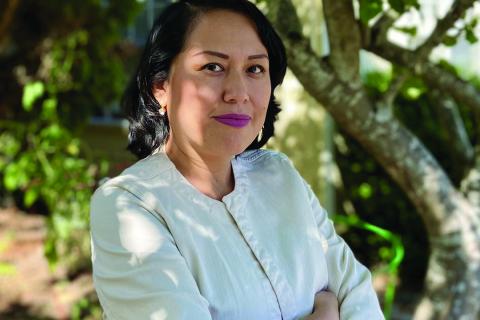
Gloria Macedo-Janto

Andean Women with No Future: Gender Stereotypes in the Literature of Political Violence in Peru

by Gloria Macedo-Janto, PhD candidate, Department of Romance Languages
During the years of internal armed conflict in the Andean country of Peru (1980–2000), as the Truth and Reconciliation Commission (TRC) concluded, Andean women were victimized because of their gender and ethnicity. They played a significant role in the search for the disappeared and in caring for the survivors. However, their contributions have been recognized only from a paternalistic perspective, positioning them as minor heroines of their Andean communities. For this reason, their voices have not been included or taken into account in constructing the overarching narrative of the 20 years of political violence. 

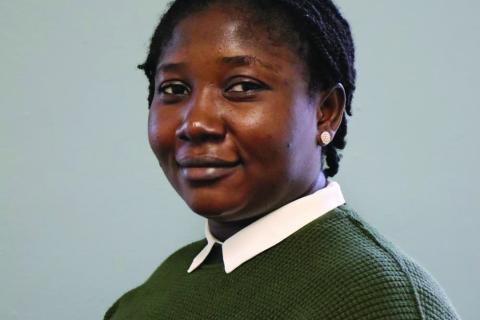
Precious Adejumobi

Beyond the Reproductive Gaze: Producing Knowledge, Resistance, and Relief through Nigerian Women's Narratives of Endometriosis

by Precious Adejumobi, PhD Candidate, Department of Anthropology
“They said the ‘dirty blood’ will come out when I give birth,” 33-year-old Fola (pseudonym) shared with fresh realization of the false hope she was offered about 20 years ago. She anticipated childbirth as a potential source of relief from her debilitating menstrual cramps, but experienced disappointment when confronted with infertility, another symptom of endometriosis.
Nicolette Molina

Changing How We Look at Postpartum Mental Health

by Nicolette Molina, PhD Candidate, Clinical Psychology
When people think about the postpartum period, they often picture joy, bonding, and new beginnings. For many people, that is part of the experience. Yet the months after childbirth can also bring exhaustion, isolation, financial strain, shifting identity, and emotional pain difficult to name out loud. For some, this distress becomes life-threatening. In 2022, mental health conditions accounted for more than one-quarter of pregnancy-related deaths, and nearly half of those mental health-related deaths were suicides.
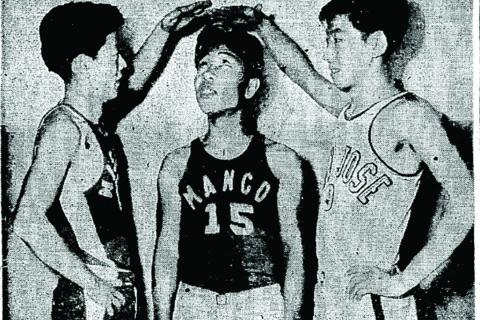
A newspaper clipping of players in the Oriental-American National Basketball Tournament in Seattle.

Courting a Pan–Asian American Masculinity: Seattle’s 1947 Oriental–American National Basketball Tournament

by Olivia G. Wing, PhD Candidate, Department of History
In 1947, eight Asian American men’s basketball teams traveled from California, Oregon, Utah, Illinois, Hawaii, and British Columbia to Seattle, Washington to play ball in the first Oriental–American National Basketball Tournament (OANBT). The four-day tournament concluded with a social dance honoring the victorious team and runners-up, as well as an Outstanding Player award to an individual player. The goal of the tournament was purportedly simple: to identify the most gifted Asian men’s basketball team in the United States.
Oyeintarimoboere Azebi

Feminist Environmental Justice in Practice: Women as Agents of Change in the Niger Delta's Oil Conflict

by Oyeintarimoboere Azebi, Master of Arts, Department of Global Studies
In 2002, in an oil field in the Niger Delta, 200 to 300 women, farmers, mothers, and grandmothers from the Ijaw and Itsekiri villages walked onto a Chevron exploration site and simply refused to leave. They had no weapons. Their only threat was one that struck terror into the company’s representatives: they undressed, and, in their culture, for a woman to bare herself before men who have wronged her community is an act of profound, irreversible shame upon those men. This demonstration lasted ten days, after which Chevron promised to build new schools, clinics, and provide jobs for their husbands and sons. By 2003, none had materialized.
Dreamlike collage images from the multimodal dissertation of anthropology PhD candidate Kaito Campos de Novais are created from historic photographs of the administration buildings.

When the English breaks: art y etnografia in the margins of the state

by Kaito Campos de Novais, PhD Candidate, Anthropology
The more I encounter other Latine artistas, more I learn about what is possible to say, write, and create under political precarity. There is a common force affecting both our crafts (arte and etnografia) which is state repression. With these interlocutors I share not only vivências of diaspora, but also the struggle to self-express under conditions of silencing. During interviews and daily interactions, I am constantly listening to stories that never quite finish, hesitations, and... Something unclear, often called “climate,” “news,” “what’s happening,” something hunting us, about to knock our doors, about to stop us on traffic, something I can’t quite name, gets disappeared.
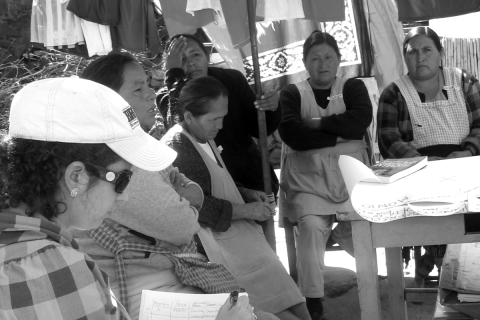
Alejandra Garcia helps facilitate a focus group session with microfinance clients in Sucre, Bolivia.

Bolivian Entrepreneurs, Water Rights, and Roller Derby

Gender Roles in Rural Entrepreneurship: A Bolivian Experience
Presenter: Alejandra Garcia, master’s student, UO Department of Planning, Public Policy and Management; M.A. Gender and Women Studies, Armstrong Atlantic State University.
The focus of my research is to bring to light the efforts and struggles of indigenous Bolivian women in rural areas. I provide testimony of some of the inequalities along gender lines in Bolivia. In particular, I focus on women’s struggle to become more independent by being entrepreneurs while still being able to be good wives and mothers.

2023 Annual Review

  • Women’s Visual Protest Movements in Iran: A Conversation with Parichehr Kazemi by Jenée Wilde, Senior Instructor, Department of English
  • Haunting Ecologies by Jenée Wilde, Senior Instructor, Department of English
  • An Invitation from the Director of CSWS by Sangita Gopal, Associate Professor, Department of Cinema Studies
  • Reflections on Gender, Sexuality, and Power
  • New Faculty Reception
Publication Year
2023