

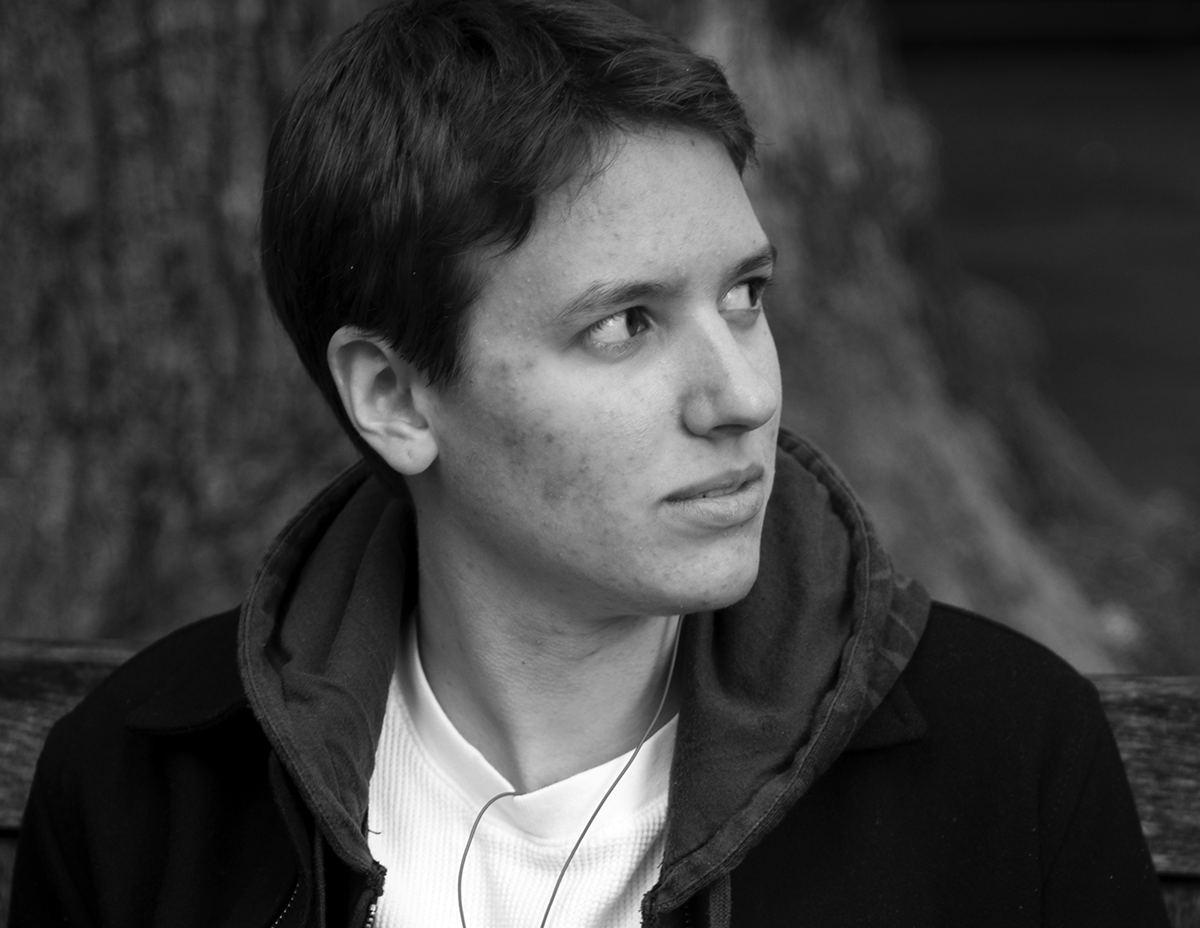
This is the winning essay of the first-ever CSWS Diversity Initiative research interest group’s undergraduate essay contest on the topic of gender. The question: “How has gender in combination with issues related to diversity and/or mental health featured in your own pathway toward academic or other personal achievement?”
June 26 1989. The time was 12:16 p.m., and into this world came a screaming child, adjusting to new surroundings. The doctor examined the child, confirmed good health and announced it to be a healthy baby girl. The parents, so excited to enter a daughter into the family and a sister for their son, relished the moment. And within that moment, with hopes of little pink clothing, painted nails, and beautiful hair, that family would soon get a surprise they were not expecting. Fast forward to the summer of 1994: the little five-year-old daughter was already disagreeing with what everyone told her. On a hot summer day the daughter witnessed her father remove his shirt while working outside. The daughter followed suit, only to be stopped halfway by her mother. When the confused daughter asked why her mother stopped her, the mother replied, “Because you are a girl; girls cannot do that.” To which the daughter answered, “No, I am not a girl; I am like dad.”
The daughter continued to grow up, and learned quickly not to speak out loud of the confusion as to why everyone called her “she” and not “he.” And only in the privacy of her bedroom could she wear her older brother’s clothes and feel at peace with the outer appearance, and what was felt on the inside. Finally in July 2006, the girl listened intently to a presentation from the Sexual Minority Youth Resource Center explaining the phrase “LGBTQ.” As the presenter explained each of the letters and what it meant, she heard “transgender,” the term used to describe people whose gender identity is not adequately described by the sex they were assigned at birth. Relief, joy, frustration, and acceptance were just a few of the emotions that swarmed through her. Finally, a definition that described what had been felt since the beginning.
This was only the beginning of my story. Born into a mildly conservative family, I knew I was the oddball out. Given that I was very athletic and involved heavily in sports, I was seen as a tomboy. But I disagreed. I was not a tomboy, I was a boy, just like my best friend was a boy, and just like my brother and father are boys. I see that an individual’s gender is actually which gender’s characteristics they match up with. When I look into a mirror, or imagine myself, I see the male characteristic that society so heavily normalizes through media and rewards through acceptable social interactions.
I grew up with immense confusion, and I routinely faced rejection from my family when I tried to come out to them. Depression and suicidal thoughts were common throughout the initial transition—giving up my attempts to be the daughter my parents wanted me to be, to become the man I feel I am. Since entering college and embracing myself fully, I have found a state of mental peace with the image in the mirror.
I have learned a great deal from my experience being outside the norm of society. Contrary to popular belief, gender is not a binary, fixed, one-way-or-the-other concept. Gender is a continuum that allows for interpretation for what is means to be male and what it means to be female. That is why when one walks down the street, no two males look the same. Some males are large and burly with longer hair and beards, and some are clean-shaven and smaller in stature, along with everything in between. Diversity is said to be an acceptance of all that is different.
I have experienced female gender expectations and am now experiencing the pressures of male gender expectations. But no matter what gender I am, I know that I have become myself. A resident assistant, I am pursuing a Ph.D. in counseling psychology and am a member of the dance community on campus. My story and my experiences are what motivate my goals and ambitions. Just as diversity is expanding and being rewritten to include all new forms, so is my story. I am changing and growing with the new experiences that I encounter.