

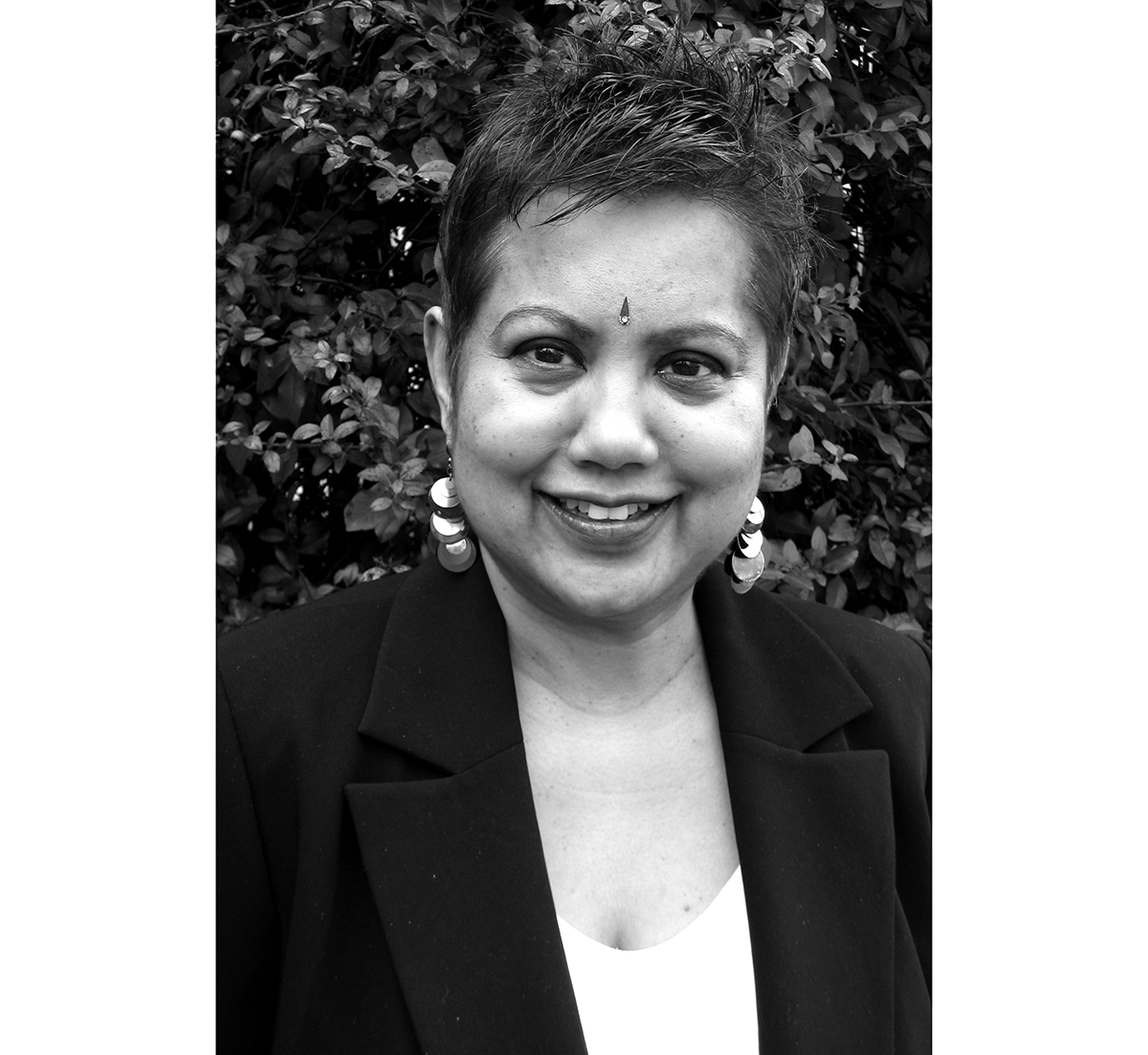
Lamia Karim, recently tenured associate professor of anthropology, received CSWS support for her work on feminist legal reform in Bangladesh. The National Science Foundation also funds her research.
Q: What is the focus of your research?
My project examines the role of feminists as reformers in the encounter between democratic and Islamic laws. Bangladeshi feminists have approached the question of human security through laws that protect women’s rights and legal clinics that assist women to access the judicial system.
I examine to what extent feminists have been able to empower women at the grass roots to gain the rights that are guaranteed to them under the constitution. I anticipate that the results from this project will provide new information related to bottlenecks that women face in accessing democracy and human rights in Bangladesh, and will assist feminist scholars, activists, and policymakers to develop more culturally specific policies to increase the human security of Muslim women.
Q: Have you published some of the results?
I wrote a paper, “Democracy, Legal Reform, and Religion in Bangladesh,” that I presented at the American Ethnological Society meetings in Vancouver, Canada, in May 2009. The paper will be published in an edited volume on gender and class. In June, I was a plenary speaker on global human rights at the annual meeting of the National Council for Research on Women in New York. This paper examines two emergent trends within middle-class Bangladeshi women’s movements—a secular feminist movement informed by the nineteenth-century Hindu Brahmo Samaj movement, and a late twentieth-century women’s movement that operates within a pietist tradition.
While feminists advocate women’s education and public roles within a secular paradigm, women leaders belonging to the pietist movement limit public roles of women within an Islamic framework and the subordination of women’s desires to their culturally important roles as “good” Muslim mothers. This paper explores some of the contestations between these two polarities of middle-classness that animate women’s roles in contemporary Bangladesh, and explores the conditions that trouble the feminist movement in Bangladesh.
Q: Who are the feminists in Islamic countries?
Feminists working within the model of human rights in the majority of Islamic countries are largely drawn from elite families with political connections. While their elite status and Western education give them access to transnational networks and global forums, their status also circumscribes their roles as social reformers within their own countries, where they are often labeled as “Western” and out of touch with local norms. Moreover, in the aftermath of the U.S. war on terror, feminists in Islamic countries face the added risk of being labeled as “traitors within” for bringing international attention to gendered violence against Muslim women. Thus, feminists in Islamic societies have to straddle a dangerous political terrain when negotiating for women’s rights and liberties.
Q: What does feminism mean in Bangladesh?
It is important to scale the global feminist discourse to the situation on the ground, that is, Bangladeshi Muslim women and their encounter with democracy and human rights. The government of Bangladesh has emphasized women’s equal citizenship as a goal within an Islamic national framework. And although Bangladesh has legislated equality, it is far from ensuring equality for female citizens. Bangladesh has signed the Convention for the Elimination of All Forms of Discrimination against Women with reservations. Bangladeshi Islamic political parties have unsuccessfully attempted to pass a blasphemy bill in parliament since 1998. In Bangladesh, family courts dispense Muslim personal laws in accordance with national laws. Yet in rural areas, the clergy run their own informal sharia adjudications that lie outside the control of the courts.
These decisions are extra-judicial and were declared illegal in 2001 by the highest court in the country. However, the clergy commands social power and its judgments remain morally binding on rural communities.
Q: Feminism and religion are a dangerous mix?
The task of feminists is to ensure that religion does not constrain women’s legal rights. Since most societies, whether in the United States or Bangladesh, are informed by their religious beliefs, feminists face a formidable challenge. But I remain hopeful.