

Gendered Internal Migration in Oaxaca, Mexico
by Iván Sandoval-Cervantes, PhD candidate, Department of Anthropology

by Iván Sandoval-Cervantes, PhD candidate, Department of Anthropology

by Jenée Wilde, PhD, Department of English (Folklore)
My graduate work was shaped in part by a noticeable absence. In my gender and queer studies courses, I read theoretical and sociological studies of lesbian, gay, transgender, and queer people, often shorthanded as LGBTQ. Wait a minute . . . something is missing. What happened to the “B” in all this theory and research?

By Yi Yu, PhD candidate, Department of Geography

by Cristina Faiver-Serna, MPH, PhD, Department of Geography
One spring morning in 2011, I left my home in the Los Angeles Harbor region to drive to a community meeting in Long Beach, California. I was to present on the “Bridge to Health” program, a promotora de salud-led asthma education program funded by the Port of Long Beach. Merging onto the 710 freeway my car became sandwiched between big-rig diesel trucks hauling cargo from the Port of Long Beach. The 710 freeway is the main truck route from the Port to inland distribution centers in San Bernardino County. Together, with the Port of Los Angeles, more than 40 percent of goods imported into the continental U.S. come by way of the Los Angeles Harbor.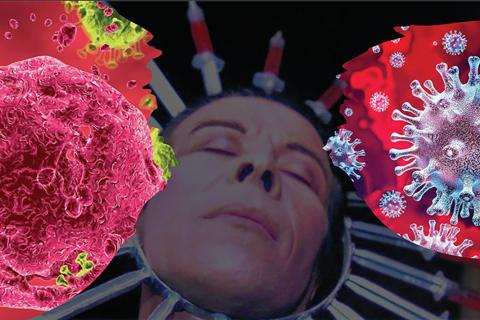
by Jon Dell Jaramillo, PhD Candidate Department of Romance Languages
My dissertation analyzes examples of viral bodies which materialize in the works of three Latin American authors who wrote about HIV/AIDS in the 1990s: Reinaldo Arenas (Cuba), Pedro Lemebel (Chile), and Pablo Pérez (Argentina). In many ways, my dissertation responds to the Marxist legal sociologist Boaventura de Sousa Santos, who in his book La cruel pedagogía del virus (2020) calls for new strategies of contamination to overcome pandemics, natural disasters, financial collapses, the triumphant resurgence of authoritarian exceptionalism, and the technical circumvallation of patriarchal capitalist power that now leads the world toward catastrophe—strategies that enter the lives of citizens “por la puerta trasera” (14).