

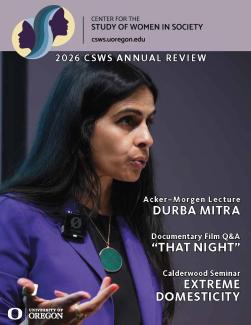
File
Contents:
- A Year in Review by Sangita Gopal, Professor, Department of Cinema Studies
- What If Gathering Together Liberated Us? reflections by Anu Sugathan, Maia Wellborn, and Nishat Parvez
- Multimedia Spotlight
- “That Night” by Jenée Wilde, Associate Teaching Professor, Department
of English - Extreme Domesticity: The Labor of Care in Literary and Visual Culture by Jenée Wilde, Associate Teaching Professor, Department of English
- Ducks Rise to Support Undergraduate STEAM Fellowships at CSWS by Jenée Wilde, Associate Teaching Professor, Department of English, Claire Jones, and Michelle Rogers
Faculty Research:
- Gender and Resistance: Recuperating Brazil’s Black Past by Lanie Millar, Associate Professor, Department of Romance Languages
Graduate Student Research:
- When the English breaks: art y etnografia in the margins of the state by Kaito Campos de Novais, PhD Candidate, Department of Anthropology
- Feminist Environmental Justice in Practice: Women as Agents of Change in the Niger Delta's Oil Conflict by Oyeintarimoboere Azebi, Master of Arts, Department of Global Studies
- Courting a Pan–Asian American Masculinity: Seattle’s 1947 Oriental–American National Basketball Tournament by Olivia G. Wing, PhD Candidate, Department of History
- Changing How We Look at Postpartum Health by Nicolette Molina, PhD Student, Clinical Psychology
- Beyond the Reproductive Gaze: Producing Knowledge, Resistance, and Relief through Nigerian Women's Narratives of Endometriosis by Precious Adejumobi, PhD Candidate, Department of Anthropology
- Andean Women with No Future: Gender Stereotypes in the Literature of Political Violence in Peru by Gloria Macedo-Janto, PhD Candidate, Department of Romance Languages
Highlights from the Academic Year:
- Thank You to Our 2025–26 Donors
- 2026–27 Research Award Winners
- News & Updates
- Research Interest Groups
- End-of-Year Celebration
- Looking at Books
Publication Year
2026
Articles
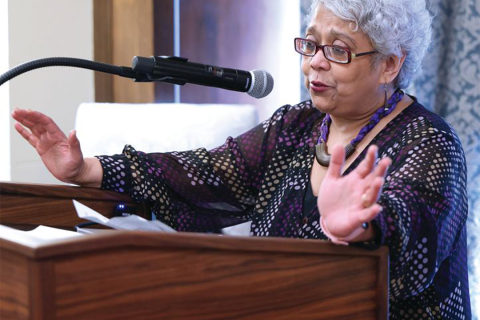
A Year in Review: 2025-2026
My thoughts are with Dolly Parton, who has left us to shine in the sweet hereafter. I feel wonder at this woman, who for five decades crafted a unique career as an artist, philanthropist, and businesswoman, and who was adored across the ideological silos that seem to ceaselessly divide us. I first encountered her as a young girl in the song “9 to 5” and distinctly remember being mesmerized by the small frame, big hair, and that potent combination of toughness and joy that radiated from her.
What If Gathering Together Liberated Us?
reflections by Anu Sugathan, Maia Wellborn, and Nishat Parvez
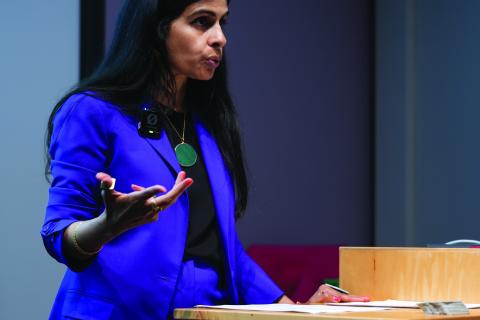
The Ford Lecture Hall is buzzing as students and faculty chat animatedly, plates of food and drinks in hand. At the front of the high-ceilinged room in the Jordan Schnitzer Museum of Art, guest of honor Dr. Durba Mitra chats amiably with CSWS Director Sangita Gopal. There’s a delay while museum staff work to fix the podium’s microphone, but no one is in a rush. Here in this windowless lecture hall, friends and colleagues catch up, laugh at jokes, and talk excitedly about their latest research. There’s a communal feeling in this space that reflects the focus of tonight’s talk: What if gathering together liberated us?
The Ford Lecture Hall is buzzing as students and faculty chat animatedly, plates of food and drinks in hand. At the front of the high-ceilinged room in the Jordan Schnitzer Museum of Art, guest of honor Dr. Durba Mitra chats amiably with CSWS Director Sangita Gopal. There’s a delay while museum staff work to fix the podium’s microphone, but no one is in a rush. Here in this windowless lecture hall, friends and colleagues catch up, laugh at jokes, and talk excitedly about their latest research. There’s a communal feeling in this space that reflects the focus of tonight’s talk: What if gathering together liberated us?
"That Night"
by Jenée Wilde, Associate Teaching Professor, Department of English
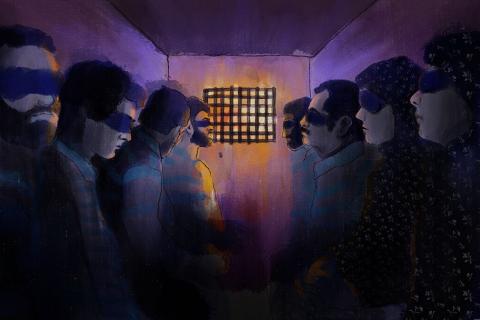
In 2025, Hoda Sobhani received a CSWS Graduate Student Research Grant to complete her award-winning animated documentary That Night. The short film takes viewers inside Iran’s notorious Evin Prison for political prisoners from the perspective of Neda, a friend who was imprisoned there for protesting the death of Mahsa Jina Amini in September 2022. Neda was among the thousands of protesters arrested as the Woman, Life, Freedom movement erupted across Tehran, resulting in one of Evin’s most congested periods in modern Iranian history. That Night delves into the harrowing experiences of inmates when a major fire broke out in the prison.
In 2025, Hoda Sobhani received a CSWS Graduate Student Research Grant to complete her award-winning animated documentary That Night. The short film takes viewers inside Iran’s notorious Evin Prison for political prisoners from the perspective of Neda, a friend who was imprisoned there for protesting the death of Mahsa Jina Amini in September 2022. Neda was among the thousands of protesters arrested as the Woman, Life, Freedom movement erupted across Tehran, resulting in one of Evin’s most congested periods in modern Iranian history. That Night delves into the harrowing experiences of inmates when a major fire broke out in the prison.
Extreme Domesticity: The Labor of Care in Literary and Visual Culture
by Jenée Wilde, Associate Teaching Professor, Department of English
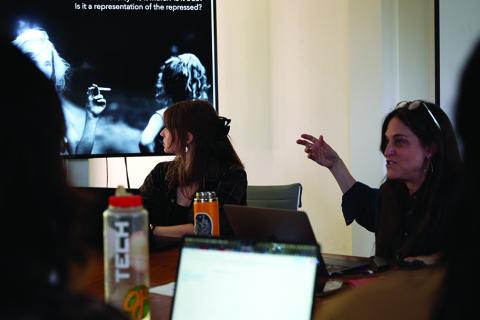
What did students learn in a CSWS Calderwood Seminar last spring focused on our domestic lives? The experimental course, COLT 399 Extreme Domesticity: The Labor of Care in Literary and Visual Culture, was developed by Dawn Marlan, teaching professor and director of undergraduate studies for comparative literature, as one of our CSWS Calderwood Seminars in Public Writing.
What did students learn in a CSWS Calderwood Seminar last spring focused on our domestic lives? The experimental course, COLT 399 Extreme Domesticity: The Labor of Care in Literary and Visual Culture, was developed by Dawn Marlan, teaching professor and director of undergraduate studies for comparative literature, as one of our CSWS Calderwood Seminars in Public Writing.
Ducks Rise to Support Undergraduate STEAM Fellowships at CSWS
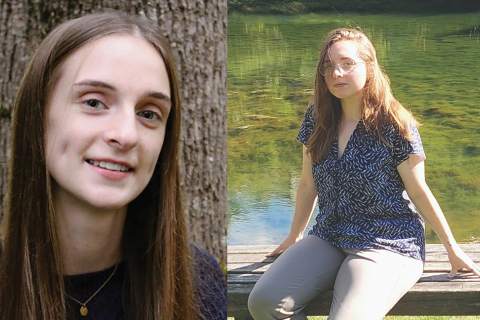
Through a competitive application process, CSWS selected biochemistry major Claire Jones and dance major Michelle Rogers as our 2026 STEAM Fellows. A senior majoring in biochemistry and minoring in bioengineering, Jones conducted summer research for the project “Understanding Female–Specific Factors in Osteoarthritis” under the supervision of Associate Professor Nick Willett in the Willett Lab at the Phil and Penny Knight Campus for Accelerating Scientific Impact. A junior majoring in dance and minoring in chemistry, Rogers conducted summer research for the project, “Partitions for Performance: A Summative Model for Analyzing Gendered Connotations in Dance” under the supervision of Assistant Professor Amy Swanson in the School of Music and Dance.
Gender and Resistance: Recuperating Brazil’s Black Past
by Lanie Millar, Associate Professor, Department of Romance Languages
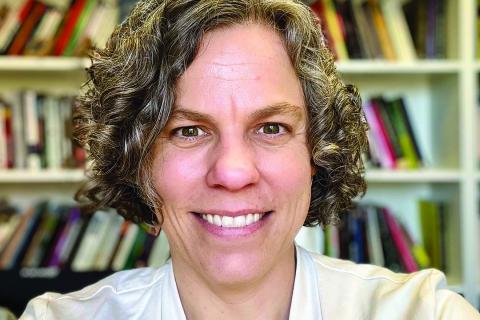
In August, 2025, I descended from a tour bus into a misty morning on top of the Serra da Barriga, a mountain in Alagoas, Brazil. I was there as part of a tour of the Quilombo dos Palmares Memorial Park, a national heritage site commemorating the largest known community of fugitives from slavery (quilombos) in the Americas, which flourished throughout the 17th century. Before setting off on the tour, our guide, Mestre Gil, sat us in a circle. “How many of you know the story of Palmares? About Brazil’s quilombos?”
In August, 2025, I descended from a tour bus into a misty morning on top of the Serra da Barriga, a mountain in Alagoas, Brazil. I was there as part of a tour of the Quilombo dos Palmares Memorial Park, a national heritage site commemorating the largest known community of fugitives from slavery (quilombos) in the Americas, which flourished throughout the 17th century. Before setting off on the tour, our guide, Mestre Gil, sat us in a circle. “How many of you know the story of Palmares? About Brazil’s quilombos?”
When the English breaks: art y etnografia in the margins of the state
by Kaito Campos de Novais, PhD Candidate, Anthropology
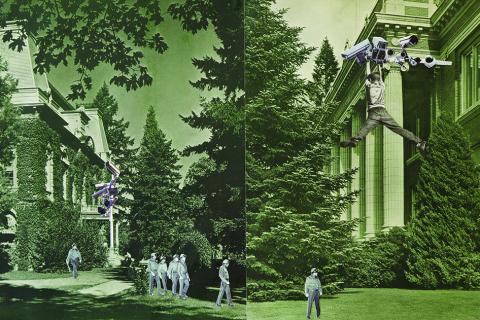
The more I encounter other Latine artistas, more I learn about what is possible to say, write, and create under political precarity. There is a common force affecting both our crafts (arte and etnografia) which is state repression. With these interlocutors I share not only vivências of diaspora, but also the struggle to self-express under conditions of silencing. During interviews and daily interactions, I am constantly listening to stories that never quite finish, hesitations, and... Something unclear, often called “climate,” “news,” “what’s happening,” something hunting us, about to knock our doors, about to stop us on traffic, something I can’t quite name, gets disappeared.
The more I encounter other Latine artistas, more I learn about what is possible to say, write, and create under political precarity. There is a common force affecting both our crafts (arte and etnografia) which is state repression. With these interlocutors I share not only vivências of diaspora, but also the struggle to self-express under conditions of silencing. During interviews and daily interactions, I am constantly listening to stories that never quite finish, hesitations, and... Something unclear, often called “climate,” “news,” “what’s happening,” something hunting us, about to knock our doors, about to stop us on traffic, something I can’t quite name, gets disappeared.
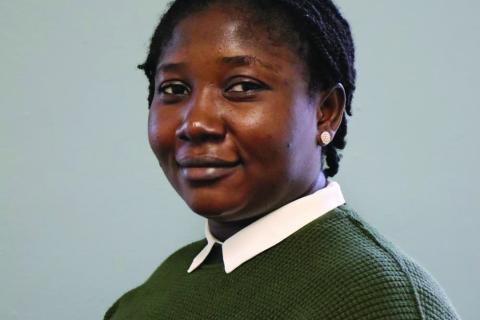
Feminist Environmental Justice in Practice: Women as Agents of Change in the Niger Delta's Oil Conflict
by Oyeintarimoboere Azebi, Master of Arts, Department of Global Studies
In 2002, in an oil field in the Niger Delta, 200 to 300 women, farmers, mothers, and grandmothers from the Ijaw and Itsekiri villages walked onto a Chevron exploration site and simply refused to leave. They had no weapons. Their only threat was one that struck terror into the company’s representatives: they undressed, and, in their culture, for a woman to bare herself before men who have wronged her community is an act of profound, irreversible shame upon those men. This demonstration lasted ten days, after which Chevron promised to build new schools, clinics, and provide jobs for their husbands and sons. By 2003, none had materialized.
In 2002, in an oil field in the Niger Delta, 200 to 300 women, farmers, mothers, and grandmothers from the Ijaw and Itsekiri villages walked onto a Chevron exploration site and simply refused to leave. They had no weapons. Their only threat was one that struck terror into the company’s representatives: they undressed, and, in their culture, for a woman to bare herself before men who have wronged her community is an act of profound, irreversible shame upon those men. This demonstration lasted ten days, after which Chevron promised to build new schools, clinics, and provide jobs for their husbands and sons. By 2003, none had materialized.
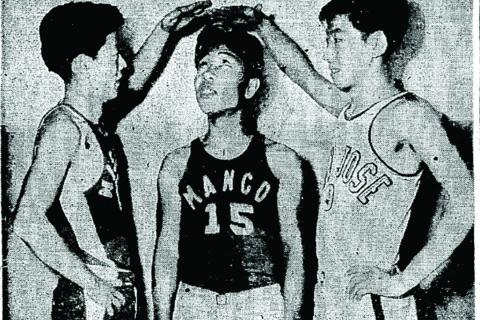
Courting a Pan–Asian American Masculinity: Seattle’s 1947 Oriental–American National Basketball Tournament
by Olivia G. Wing, PhD Candidate, Department of History
In 1947, eight Asian American men’s basketball teams traveled from California, Oregon, Utah, Illinois, Hawaii, and British Columbia to Seattle, Washington to play ball in the first Oriental–American National Basketball Tournament (OANBT). The four-day tournament concluded with a social dance honoring the victorious team and runners-up, as well as an Outstanding Player award to an individual player. The goal of the tournament was purportedly simple: to identify the most gifted Asian men’s basketball team in the United States.
In 1947, eight Asian American men’s basketball teams traveled from California, Oregon, Utah, Illinois, Hawaii, and British Columbia to Seattle, Washington to play ball in the first Oriental–American National Basketball Tournament (OANBT). The four-day tournament concluded with a social dance honoring the victorious team and runners-up, as well as an Outstanding Player award to an individual player. The goal of the tournament was purportedly simple: to identify the most gifted Asian men’s basketball team in the United States.
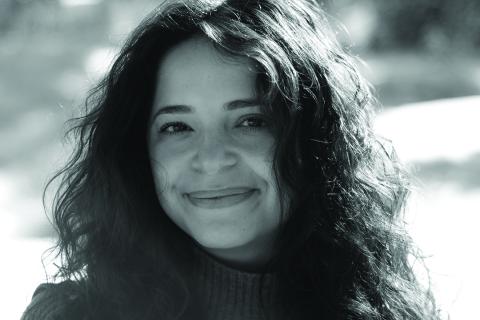
Changing How We Look at Postpartum Mental Health
by Nicolette Molina, PhD Candidate, Clinical Psychology
When people think about the postpartum period, they often picture joy, bonding, and new beginnings. For many people, that is part of the experience. Yet the months after childbirth can also bring exhaustion, isolation, financial strain, shifting identity, and emotional pain difficult to name out loud. For some, this distress becomes life-threatening. In 2022, mental health conditions accounted for more than one-quarter of pregnancy-related deaths, and nearly half of those mental health-related deaths were suicides.
When people think about the postpartum period, they often picture joy, bonding, and new beginnings. For many people, that is part of the experience. Yet the months after childbirth can also bring exhaustion, isolation, financial strain, shifting identity, and emotional pain difficult to name out loud. For some, this distress becomes life-threatening. In 2022, mental health conditions accounted for more than one-quarter of pregnancy-related deaths, and nearly half of those mental health-related deaths were suicides.

Beyond the Reproductive Gaze: Producing Knowledge, Resistance, and Relief through Nigerian Women's Narratives of Endometriosis
by Precious Adejumobi, PhD Candidate, Department of Anthropology
“They said the ‘dirty blood’ will come out when I give birth,” 33-year-old Fola (pseudonym) shared with fresh realization of the false hope she was offered about 20 years ago. She anticipated childbirth as a potential source of relief from her debilitating menstrual cramps, but experienced disappointment when confronted with infertility, another symptom of endometriosis.
“They said the ‘dirty blood’ will come out when I give birth,” 33-year-old Fola (pseudonym) shared with fresh realization of the false hope she was offered about 20 years ago. She anticipated childbirth as a potential source of relief from her debilitating menstrual cramps, but experienced disappointment when confronted with infertility, another symptom of endometriosis.
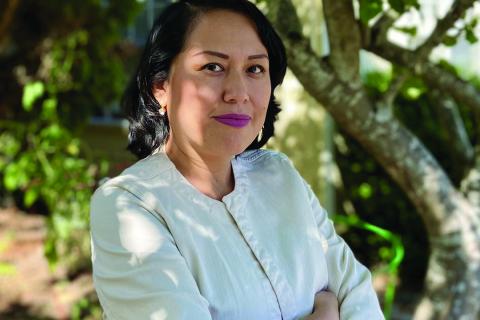
Andean Women with No Future: Gender Stereotypes in the Literature of Political Violence in Peru
by Gloria Macedo-Janto, PhD candidate, Department of Romance Languages
During the years of internal armed conflict in the Andean country of Peru (1980–2000), as the Truth and Reconciliation Commission (TRC) concluded, Andean women were victimized because of their gender and ethnicity. They played a significant role in the search for the disappeared and in caring for the survivors. However, their contributions have been recognized only from a paternalistic perspective, positioning them as minor heroines of their Andean communities. For this reason, their voices have not been included or taken into account in constructing the overarching narrative of the 20 years of political violence.
During the years of internal armed conflict in the Andean country of Peru (1980–2000), as the Truth and Reconciliation Commission (TRC) concluded, Andean women were victimized because of their gender and ethnicity. They played a significant role in the search for the disappeared and in caring for the survivors. However, their contributions have been recognized only from a paternalistic perspective, positioning them as minor heroines of their Andean communities. For this reason, their voices have not been included or taken into account in constructing the overarching narrative of the 20 years of political violence.