CSWS Annual Review

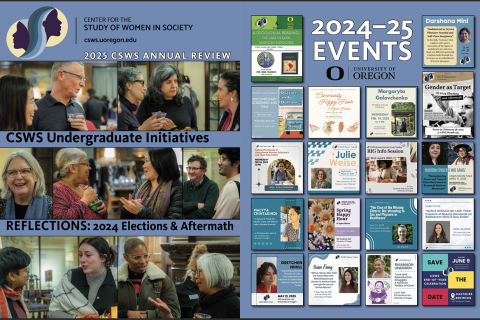
2025 Annual Review now available
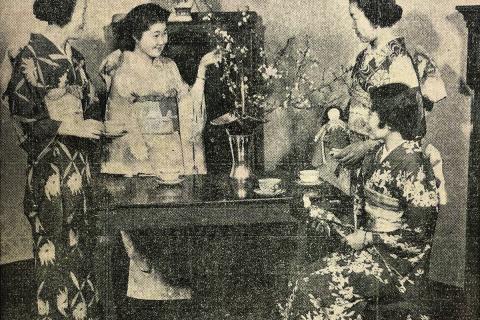
For a Good Cause: Chinese and Japanese American Girl Reserve Fundraising in 1930s Portland
In the late 1930s, Portland’s Chinese Girl Reserves and Japanese Girl Reserves each hosted a variety of fund-raising events to support causes of their choosing. Fundraisers were not unusual for a service organization sponsored by the YWCA. In the late 1930s, however, the Chinese and Japanese Girl Reserves each chose to sponsor seemingly diverging causes: war relief for Chinese refugees and summer camp, respectively.
Trust in Women’s Organizations: Evaluating Gender Gap and State Characteristics
Public trust in institutions has long been a focus of social science research, yet most studies have concentrated on political institutions (Van Der Meer 2010), banks (Fungáčová et al. 2019), and regional (Ron and Crow 2015) and international organizations (Torgler 2008; Hessami 2011). In contrast, limited attention has been paid to trust in women’s organizations (e.g., women’s rights/empowerment groups or feminist movements), despite their growing role in civil society, global gender advocacy, and transforming social norms and gender power relations (Hassim 2006).
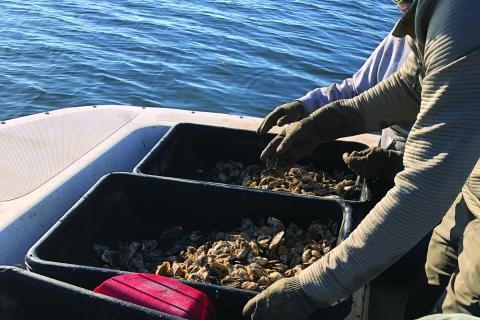
How to Love an Oyster: Chemistry, Slippage, and Attachment
by Megan Hayes, PhD Candidate, Environmental Studies Program
It was oysters who taught me about tides. Or, more precisely, it was oysters who taught me to give better attention to the tides. An oyster is a kind of bivalve, and bivalves are a class of aquatic mollusks that have, in the collective poetic descriptive of Wikipedia, “laterally compressed soft bodies,” which are enclosed in calcified exoskeletons made up of a hinged pair of half-shells, or valves.
It All Started with a Mirror: Questioning How We Assign Sex in Ancient Tombs
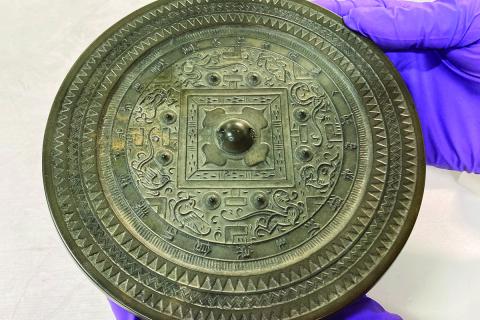
One summer break back home in China, I visited the Henan Museum and found myself drawn to a bronze mirror on display. I had seen many before, but something about this one stopped me. Its delicate designs were beautiful, but I couldn’t stop thinking about what it meant. I pictured a Tang dynasty court lady using it for daily grooming—the familiar image often used to represent bronze mirrors as feminine tools tied to beauty.
Social Reproduction and Palestine
For many colonized women, gender-based violence (GBV) is never solely about their being women. When considering GBV within Palestine and Israel, like other forms of political violence, GBV functions as a mechanism of male supremacy within and across both peoples as much as a mechanism of settler colonization. But whereas Israel has a long history of documented GBV against Palestinians (as the UN has found occurred systematically in Israel’s current genocidal campaign in Gaza), the view of GBV within Israel is often presented in inverted form.
Migrant Memories: Community and Identity Building in a New Territory
By Liesl Cohn De León, PhD Student, Department of Anthropology
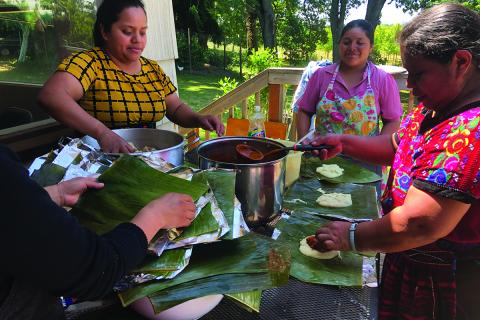
The Guatemalan migrant population in the United States has been growing in the last few decades. Although Guatemalans started coming to the US in the 1980s during the Guatemalan Civil War (1960–1996), between 2010 and 2020 the Guatemalan population increased by about 60%.1 According to the 2020 Census, about 1,683,093 Guatemalans live in the United States. However, there are estimates2 of at least 3,256,047 people from Guatemala living in the US.
Gender, Social Politics, and Media Sensationalism in 19th-Century American Murder Ballads
Murder ballads have been around for centuries. A murder ballad is a narrative song that tells the story of murder. However, as with any vernacular tradition, there’s a lot more to them than that. American murder ballads are most associated with Appalachian folk music, emerging in the early 19th century as Scottish and Irish immigrants made new homes in North America. As the century progressed, these Appalachian songs blended with African musical traditions, producing blues ballads.
Dreams Deferred: Navigating Aspiration and Constraint in Urban India’s Margins
by Malvya Chintakindi, PhD Candidate, Department of Anthropology
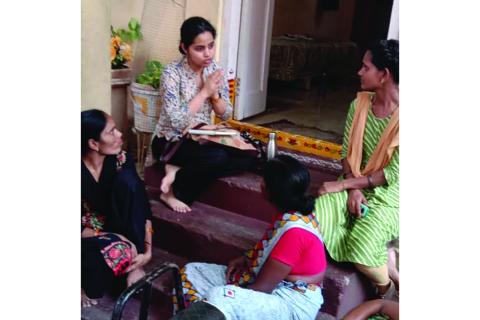
At age 33, Renuka’s face carried the weathering of a life spent crossing multiple thresholds—between others’ homes and her own, between caste boundaries that marked her as both essential and polluting, between dreams of education and the harsh reality of survival.