CSWS Annual Review

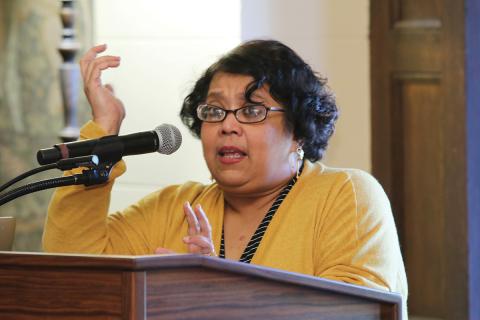
(From left) Karla FC Holloway and Ulrick Casimir

Writing A Death in Harlem: A Conversation with Karla FC Holloway

Interview by Ulrick Casimir, Career Instructor, Department of English Nella Larsen’s classic novel Passing (1929) features one hell of an ending. We know that one of its main characters, Clare Kendry, lies dead after falling from a window, but we don’t know whether she was pushed by her friend Irene Redfield or simply slipped and fell. We know what may have led Irene to do what she may or may not have done, but we don’t know whether the betrayal Irene suspects, between her husband and Clare, even occurred. We know the broad strokes and terminus of the connection between these two women—but the novel ends without the hinted-at intimate dimensions of their relationship ever finding air.
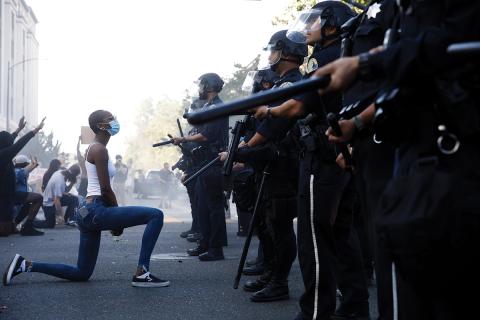
San Jose George Floyd Protests: A protester takes a knee in front of San Jose Police officers during a protest on East Santa Clara Street in San Jose, Calif., on May 29, 2020, after the death of George Floyd in Minneapolis. / Photo by Dai Sugano, MediaNews Group, The Mercury News via Getty Images

2019-2020 Year in Review: A Letter from the Director

Dear Friends,

The year in review feature is generally an easy column for the Director to write. As the title suggests, I look back with a sense of pride and satisfaction at a year of successful events, celebrate our guest speakers who sparked insightful conversations, and chronicle our community-building activities that strengthened our bonds as feminist scholars on campus. This year suspends all expectations. I even tried to find a "natural" point of pause to begin this retrospective. There simply wasn't an end to the daily onslaught of misery in these times.

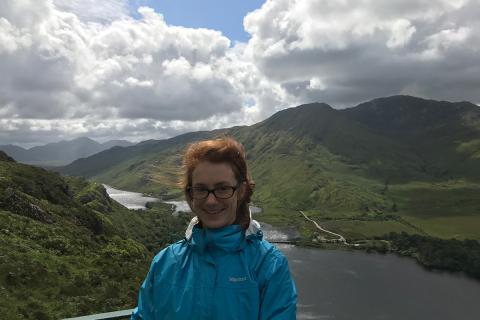
Photo provided by Katherine Huber

Urgent Pauses: A Reflection on My Renewed Commitment to Rigorous Research

By Katherine M. Huber, PhD Candidate, Department of English

COVID-19 confronted us all with an uncomfortable present. The fear for the health and safety of family and colleagues, the inability to make plans in the midst of ongoing economic and political uncertainty, shifting safety guidelines, racial and income disparity in healthcare, and imposed isolation all brought the immense injustices pervasive in U.S. society into sharp relief. The national uprisings and resurgence of the Black Lives Matter movement that followed the murders of George Floyd and Breonna Taylor made the meticulous work of research seem both urgently necessary and totally out of touch.
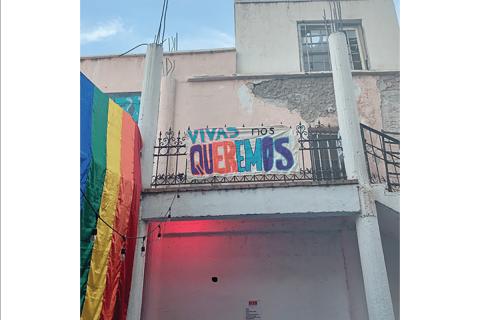
Beside the rainbow flag, a sign states "we want us alive." The image is from Polet's fieldwork, pre-pandemic / photo by Polet Campos-Melchor.

El Noa Noa: Strategies of Love and Care at the U.S.–México Border

by Polet Campos-Melchor , PhD Candidate, Department of Anthropology

The title, “El Noa Noa,” was inspired by Juan Gabriel’s nod to an infamous bar in Ciudad Juarez that burned down in 2004. The bar once hosted queer artists and was a reminder of the music and spirit of Juan Gabriel, the angel of the city. After my 2019 summer fieldwork at Respetttrans, a trans asylum seeker shelter in Ciudad Juarez, I was inspired to celebrate the lives of trans women through my research and practice.
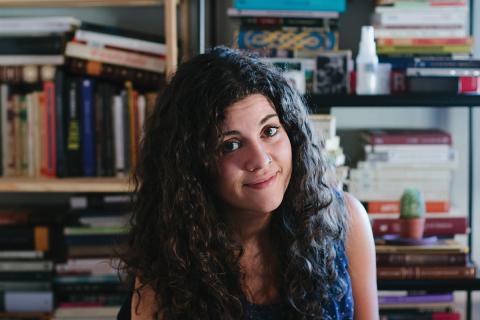
Lara Boyero Agudo

“Soy mujer, latina e inmigrante”: An Intersectional Study of Linguistic Capital among Latina Women Immigrants in Oregon

by Lara Boyero Agudo, PhD Candidate, Department of Romance Languages

Oregon’s Latino population has kept growing during the last three decades. According to the Migration Policy Institute, the percentage of Latinx immigrants doubled from 25.8% in 1990 to 42% in 2017. Despite Oregon’s multiculturalism, there is a political and cultural environment where xenophobia has been accepted, and there is a tendency to dehumanization that creates isolation and fear among the Latinx community.
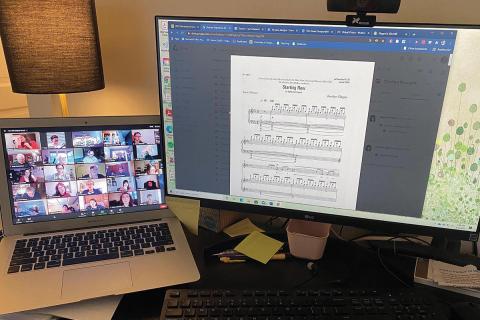
Choir practice over Zoom / photo provided by Molly McBride.

Tempos of Zoom Ethnography: Singing with a Women’s Chorus in the Pandemic

by Molly McBride, PhD Candidate Department of Anthropology

My research with Sistrum, a women’s chorus from Lansing, Michigan, unfolded in surprising ways over the past year. Supported by a CSWS Graduate Student Research Grant, I had originally proposed to look at the sexual politics of the chorus: how gender, race, sexual orientation, and class are performed in the chorus, both at an individual level and at a group level, as the chorus brings together many voices into one. With the onset of the COVID-19 pandemic, it was difficult to reconceptualize my project. Luckily, Sistrum pivoted to Zoom rehearsals, so I, too, pivoted to digital ethnography.
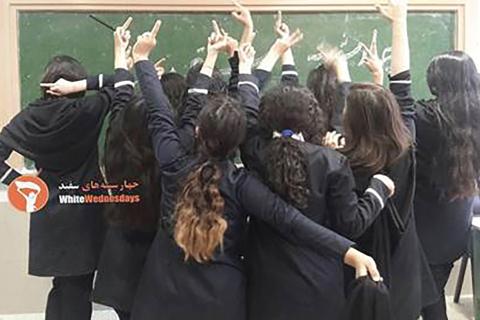
Photo provided by Parichehr Kazemi

“My Stealthy Freedom” Feminist Resistance Through Social Media in Iran

by Parichehr Kazemi, PhD Candidate, Department of Political Science

In 2014, Masih Alinejad, an exiled Iranian journalist, posted on Facebook an image of herself running through a London street with her curly locks lifted in the air, captioning it: “When I run and feel the wind in my hair, I am reminded that I come from a country which kept my hair hostage for thirty years” (Mohseni, 2015). Little did Alinejad know at the time, this small, subversive act to reclaim agency in her new home would pave the way for thousands of Iranian women to do the same, but in the context of a regime bent on restricting them at every turn.