CSWS Annual Review

Amna Javed

In the Name of Honor?: Evaluating the Impact of Weather Variability on “Honor” Killings in Pakistan

by Amna Javed, PhD Candidate, Department of Economics 

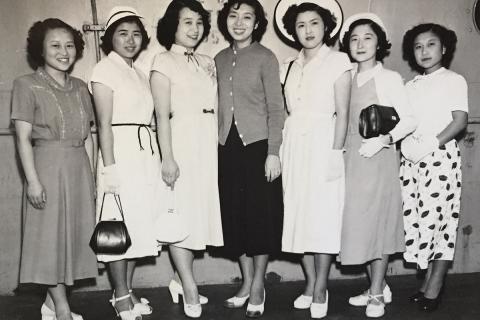
Every year, approximately 5,000 women are murdered globally in the name of honor. These crimes, labeled as “honor” killings, are meant to punish transgressing individuals who are believed to have brought shame to their families by overstepping social boundaries regarding acceptable sexual freedoms. In Pakistan’s context, where the “purity” of a woman is crucial to ensuring a successful arranged marriage, dishonor might result from, among other reasons, coming home late, having an alleged affair, or eloping. 
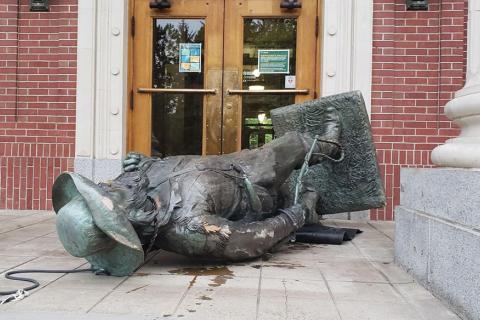
In June, protesters tore down the Pioneer statue and used it to block the entrance to Johnson Hall / photo by Carrington Powell, Daily Emerald.

“Two Sides of the Same Story”: Colonial Violence and Erasure in the University of Oregon’s (Fallen) Pioneer Statues

by Marc J. Carpenter, Doctoral Candidate, Department of History
When listening to Native students and community members talk about the “Pioneer” statues at the University of Oregon, I have heard the phrase “two sides of the same story” often enough that I do not know whom to credit. Until June 13, 2020, the Pioneer and Pioneer Mother monuments looked down from their pedestals on anyone passing either side of the President’s office at Johnson Hall. Both crafted by the same sculptor, each statue celebrated a different element of the colonial conquest of Oregon.
Marcio Freitas’ “Nunca Me Calarei” (I Will Never be Silenced) features the faces of women who have experienced gender-based violence in Brazil  / photo by Emily Masucci.

"The Struggle Continues": Gender-Based Violence and the Politics of Justice and Care in Brazil

by Emily Masucci, PhD Candidate, Department of Anthropology For many historically marginalized women, the state and its institutions are not perceived as reliable. State-sponsored violence against women—low-income, afro-descendant, and indigenous women in particular—is a weapon with which the Brazilian state was founded and has maintained power since. The fabric of Brazil is stained by histories of forced sterilization of indigenous and afro-descendant women, of brutal rapes of young women students by military officials during the dictatorship, and recently by the calculated political feminicide of Rio de Janeiro city councilwoman Marielle Franco. Given this legacy, survivors of gender-based violence (GBV) are justifiably apprehensive of appealing to state institutions as they pursue safety and redress.
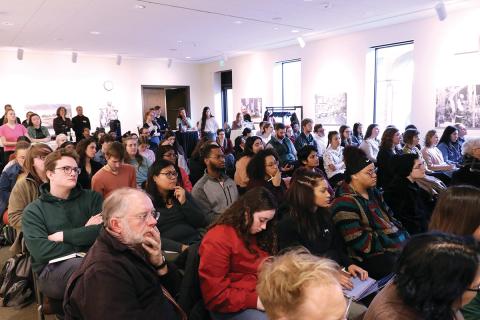
Audience at Tina Campt's Lorwin Lecture

Reflections on Gender, Power, and Grief: The 2019-2020 Lorwin Lectureship on Civil Rights and Civil Liberties

In 2019-20, CSWS launched the theme of “Gender, Power, and Grief” for our Lorwin Lectures and other speaker events. On a daily basis, we bear witness to the state-sponsored violence that renders the loss of certain lives and communities unworthy of grief. Immigrant communities are terrorized and families torn apart or imprisoned for exercising their basic human rights. Our speakers and programming sought to both honor the process of grief and the cultural practices of bereavement.