

File
Features:
- "Old Media . . . New Media," by Carol A. Stabile, Director, CSWS
- "Promoting and Diversifying Leadership," by Lynn Fujiwara, Associate Professor, Women’s and Gender Studies
Profiles:
- Being a Part of Radical Change: A Conversation with Joan Acker
- A Wonderful Journey: An Interview with Scott Coltrane
Research:
- "Making Scholarship a Productive Adventure," by the CSWS Americas RIG
- "Feminism in Bangladesh," interview with Lamia Karim
- "Hormone Therapy: Research in the Department of Human Physiology is Designed to Help Improve Women’s Cardiovascular Health," by Christopher Minson, Ph.D., Associate Professor and Department Head, Human Physiology
- "Social Citizenship in a Neoliberal Era," by Jennifer Erickson, Ph.D. candidate, Department of Anthropology
- "From War to Hurricane Katrina," interview with Gennie Thi Nguyen by Alice Evans
Women’s and Gender Studies:
- "A Long Time Coming," by Ellen Scott, Department Head, WGS
- "Two Seniors Comment on Their Experiences with WGS," interview with Rebecca Sprinson and Robyn Singleton by Alice Evans
- "Gender Continuum: Coming to Peace with the Image in the Mirror," by Jake Clausen
- Looking at Books
Publication Year
2009
Articles

Old Media...New Media
by Carol A. Stabile, Director, CSWS
I suspect that I sound like a dinosaur when I talk to my students about typing my undergraduate honors thesis on a Smith-Corona electric typewriter—a model that boasted a cartridge with built-in correcto-tape. I was reminded of the gap between my students’ experiences of media and mine last year, when I showed my students an episode of the sitcom The Goldbergs from 1951, and Gertrude Berg made a sales pitch for RCA televisions based on the product’s ability to eliminate “snow.”
I suspect that I sound like a dinosaur when I talk to my students about typing my undergraduate honors thesis on a Smith-Corona electric typewriter—a model that boasted a cartridge with built-in correcto-tape. I was reminded of the gap between my students’ experiences of media and mine last year, when I showed my students an episode of the sitcom The Goldbergs from 1951, and Gertrude Berg made a sales pitch for RCA televisions based on the product’s ability to eliminate “snow.”
Promoting and Diversifying Leadership
by Lynn Fujiwara, Associate Professor, Women’s and Gender Studies
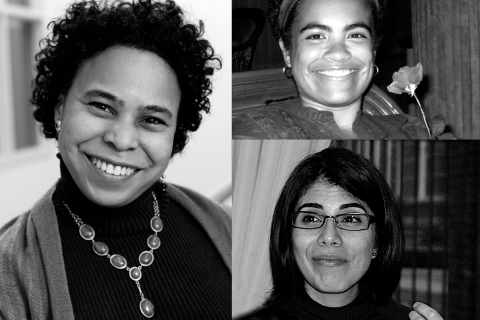
In March 2008, CSWS was awarded a Ford Foundation grant from the National Council for Research on Women (NCRW). The aim of the grant, “Diversifying the Leadership of Women’s Research Centers,” was to promote the leadership of women of color from historically underrepresented groups in the United States within NCRW and within its women’s research, policy, and advocacy member centers. The project specifically designed for CSWS was to address the current and historical absence of women of color in leadership positions at the center.
In March 2008, CSWS was awarded a Ford Foundation grant from the National Council for Research on Women (NCRW). The aim of the grant, “Diversifying the Leadership of Women’s Research Centers,” was to promote the leadership of women of color from historically underrepresented groups in the United States within NCRW and within its women’s research, policy, and advocacy member centers. The project specifically designed for CSWS was to address the current and historical absence of women of color in leadership positions at the center.
Being a Part of Radical Change: A Conversation with Joan Acker
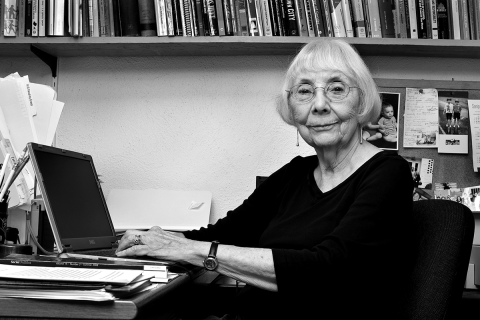
Q: You grew up in Indiana—where?
Indianapolis. I went to Shortridge High School, then to DePauw University in Greencastle for one year and couldn’t stand it so I dropped out. The war started and it was much more interesting to work. I worked in a radio station; I was the person who chose the music for the disc jockeys. I had several hundred dollars to spend. What I did was go to the record stores and buy records. That was the end of my career in that regard. Then I moved to New York. I really did not like Indiana; I found it racist, although I did not know much about racism yet.
Indianapolis. I went to Shortridge High School, then to DePauw University in Greencastle for one year and couldn’t stand it so I dropped out. The war started and it was much more interesting to work. I worked in a radio station; I was the person who chose the music for the disc jockeys. I had several hundred dollars to spend. What I did was go to the record stores and buy records. That was the end of my career in that regard. Then I moved to New York. I really did not like Indiana; I found it racist, although I did not know much about racism yet.
A Wonderful Journey: An Interview with Scott Coltrane
Q: How would you characterize your research?
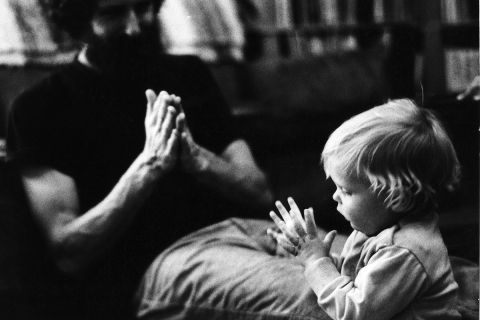
I studied with feminists in an era in the ’80s when feminist scholarship was coming of age and being accepted in the academy. I was lucky to be a man interested in gender issues when it was a relatively new thing to do. The theoretical and methodological tools were there. So it was not a hard transition, to be able to apply that lens and these informed theories and methods to the examination of men’s lives. That was a fruitful coincidence of timing.
I studied with feminists in an era in the ’80s when feminist scholarship was coming of age and being accepted in the academy. I was lucky to be a man interested in gender issues when it was a relatively new thing to do. The theoretical and methodological tools were there. So it was not a hard transition, to be able to apply that lens and these informed theories and methods to the examination of men’s lives. That was a fruitful coincidence of timing.
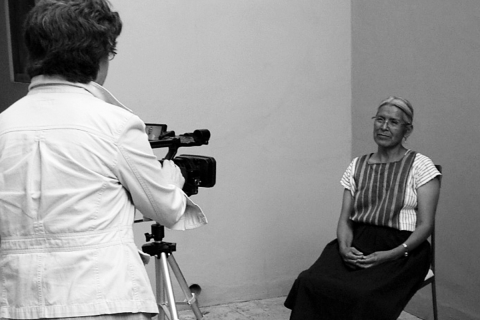
Making Scholarship a Productive Adventure
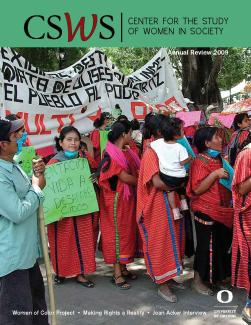
When members of the CSWS Americas research interest group (RIG) traveled to Oaxaca, Mexico, in 2006, they knew they would be witnessing social protest. But they did not know it would erupt into violence—or flower into a media takeover by women. As scholars of various academic disciplines—including anthropology, history and journalism—they experienced the social uprising through different professional filters. But for each of them, the Oaxaca social movement of 2006 inspired their research and motivated a response.
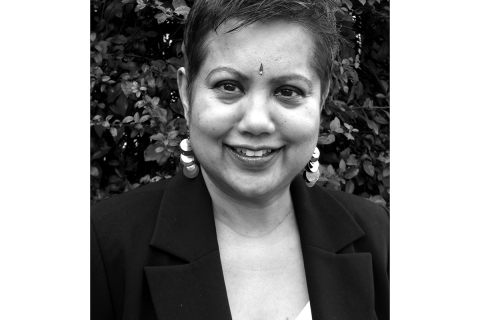
Feminism in Bangladesh
Lamia Karim, recently tenured associate professor of anthropology, received CSWS support for her work on feminist legal reform in Bangladesh. The National Science Foundation also funds her research.
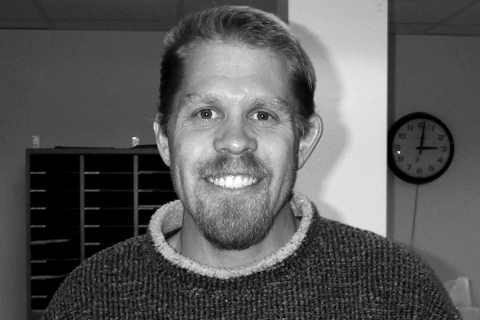
Hormone Therapy: Research in the Department of Human Physiology is Designed to Help Improve Women’s Cardiovascular Health
by Christopher Minson, Ph.D., Associate Professor and Department Head, Human Physiology
Millions of women use hormone therapy for treatment of menopausal symptoms and gynecological syndromes, contraception, assisted reproductive techniques, and combating osteoporosis. Early reports on the use of estrogen replacement therapy were very promising in terms of improving cardiovascular and bone health, but the results of two major clinical trials were disappointing and alarming, resulting in millions of women stopping hormone therapy.
Millions of women use hormone therapy for treatment of menopausal symptoms and gynecological syndromes, contraception, assisted reproductive techniques, and combating osteoporosis. Early reports on the use of estrogen replacement therapy were very promising in terms of improving cardiovascular and bone health, but the results of two major clinical trials were disappointing and alarming, resulting in millions of women stopping hormone therapy.
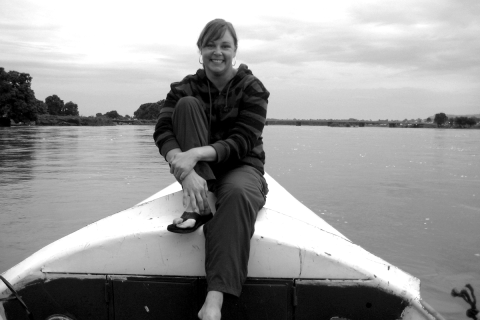
Social Citizenship in a Neoliberal Era
by Jennifer Erickson, Ph.D. candidate, Department of Anthropology
Scholars show that welfare policies affect women and men differently due to gender-based relationships with the state, which involve, for example, expectations about child rearing and shifting expectations regarding paid labor. Welfare policies negatively affect many refugee and immigrant groups in the United States by pushing them into the lowest paid sector of the economy. As a cultural project, neoliberal agendas have broadly succeeded in shaping public opinion toward an increased reliance on individual merit, consumerism, volunteerism, and distrust of government.
Scholars show that welfare policies affect women and men differently due to gender-based relationships with the state, which involve, for example, expectations about child rearing and shifting expectations regarding paid labor. Welfare policies negatively affect many refugee and immigrant groups in the United States by pushing them into the lowest paid sector of the economy. As a cultural project, neoliberal agendas have broadly succeeded in shaping public opinion toward an increased reliance on individual merit, consumerism, volunteerism, and distrust of government.
From War to Hurricane Katrina
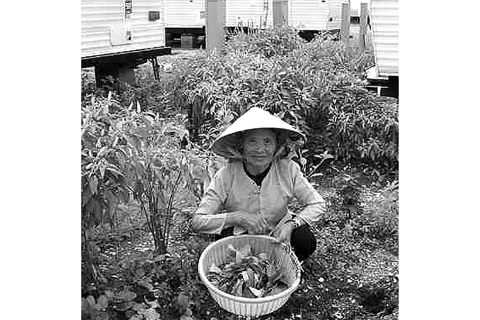
Graduate student Gennie Thi Nguyen’s old neighborhood was flooded by as much as nine feet of water after Hurricane Katrina pounded the Gulf Coast in August 2005. For Nguyen, like other Vietnamese Americans of her generation who grew up in New Orleans, the destruction of vast areas of her city became a trauma shared with parents and their generation, and opened up new areas of communication, she said.
A Long Time Coming
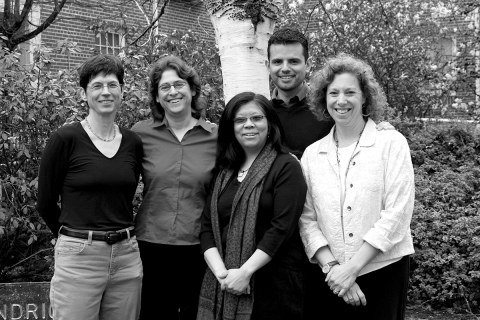
Women’s and Gender Studies is happy to announce that it has finally become a department. Benefiting from the political work of ethnic studies and its struggle to become a department as well as the unconditional support of our new dean, Scott Coltrane, in winter 2009 Women’s and Gender Studies was finally recognized as a fully legitimate, autonomous, interdisciplinary intellectual space.
Two Seniors Comment on Their Experiences with WGS
Rebecca Sprinson
Q: What is the topic of your thesis?
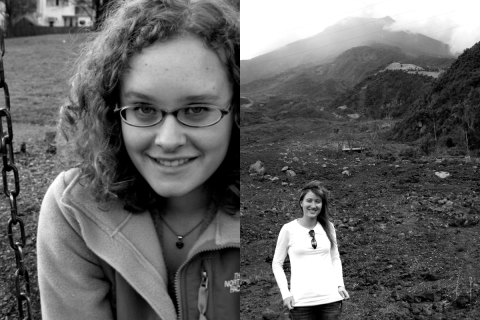
My thesis is titled “This Land Is Our Land: The Ideological Construction of a Lesbian Feminist Utopia in Southern Oregon, 1970–1990.” I’m examining the magazines and newsletters produced by women who lived on women-only farms, collectives, and communes in southern Oregon, which was a nexus of the lesbian-feminist back-to-the-land movement.
Q: What is the topic of your thesis?
My thesis is titled “This Land Is Our Land: The Ideological Construction of a Lesbian Feminist Utopia in Southern Oregon, 1970–1990.” I’m examining the magazines and newsletters produced by women who lived on women-only farms, collectives, and communes in southern Oregon, which was a nexus of the lesbian-feminist back-to-the-land movement.

Gender Continuum: Coming to Peace with the Image in the Mirror
This is the winning essay of the first-ever CSWS Diversity Initiative research interest group’s undergraduate essay contest on the topic of gender. The question: “How has gender in combination with issues related to diversity and/or mental health featured in your own pathway toward academic or other personal achievement?”