CSWS Annual Review

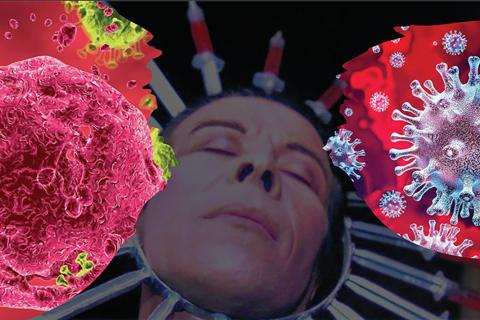
An image from Jaramillo's CSWS Noon Talk / illustration provided by Jon Jaramillo.

Viral Bodies: AIDS and Other Contagions in Latin American Narrative

by Jon Dell Jaramillo, PhD Candidate Department of Romance Languages

My dissertation analyzes examples of viral bodies which materialize in the works of three Latin American authors who wrote about HIV/AIDS in the 1990s: Reinaldo Arenas (Cuba), Pedro Lemebel (Chile), and Pablo Pérez (Argentina). In many ways, my dissertation responds to the Marxist legal sociologist Boaventura de Sousa Santos, who in his book La cruel pedagogía del virus (2020) calls for new strategies of contamination to overcome pandemics, natural disasters, financial collapses, the triumphant resurgence of authoritarian exceptionalism, and the technical circumvallation of patriarchal capitalist power that now leads the world toward catastrophe—strategies that enter the lives of citizens “por la puerta trasera” (14).
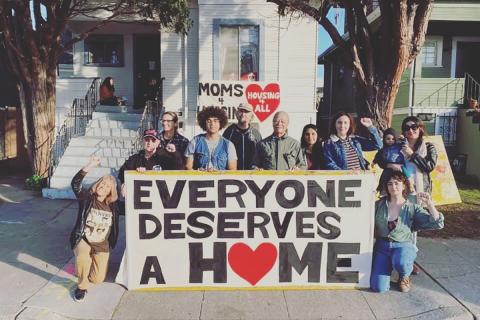

Oakland: Moms4Housing activists in front of the house they took over and eventually purchased / photo provided by. Claire Herbert.

Resisting and Reclaiming: Housing Occupations by Homeless Mothers in Three US Cities

by Claire Herbert, PhD, and Amanda Ricketts, MA, Department of Sociology

Amidst growing economic inequality and rising housing costs in the US, more people are rent-burdened, homeless, or living in over-crowded, substandard, or unstable conditions. This crisis cleaves along pervasive axes of inequality, disproportionately impacting the well-being of women of color and their children, leading to the feminization of homelessness and other housing problems (Bullock et al. 2020; Desmond 2016). Research also highlights the way mothers, and impoverished Black communities, navigate various obstacles to survive and thrive, using informal strategies and networks, or by engaging in what scholars call “activist mothering” (Pittman and Oakley 2018).
he Herzog-August Library in Wolfenbüttel, Germany, where Bayerl conducted part of her research.

Women Defending the Theatre in Early Modern Europe

by Corinne Bayerl, Senior Career Instructor, Clark Honors College

With the support of a Center for the Study of Women in Society faculty grant, I was able to devote one month in summer 2021 to working on a chapter of a book manuscript on transnational debates over the legitimacy of theatre in Early Modern Europe. While the book as a whole examines the conflicts between supporters and opponents of the theatre across national boundaries and confessional divides, this chapter deals specifically with the role of female theatre practitioners who took on a leading role in the defense of public performances.
Baran Germen

Catching up with Baran Germen

Baran Germen is an assistant professor of film and media studies at Colorado College. In 2018, he graduated with a PhD in comparative literature from University of Oregon, where he also completed a certificate degree in women’s, gender, and sexuality studies and specialized in film studies. His research and teaching focus on global cinema and comparative media studies, cutting across melodrama, queer theory, and Islam and secularism.
A watercolor image of a blonde woman working at a desk in a dimly lit office, hunched over with a pen and paper, with a cartoon thought bubble coming from her to the left.

CSWS Expands Support for Graduate Students

by Jenée Wilde, Senior Instructor, Department of English

“One of the things that became clear during the pandemic is that graduate students were the most affected by lockdowns, but the institution made the least room for addressing how they were affected,” says CSWS Director Sangita Gopal. “Faculty could take a break from research, but graduate students didn’t have that leisure.”

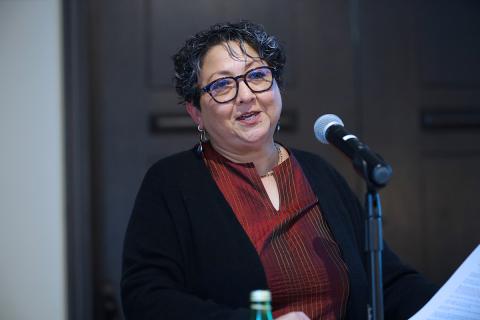
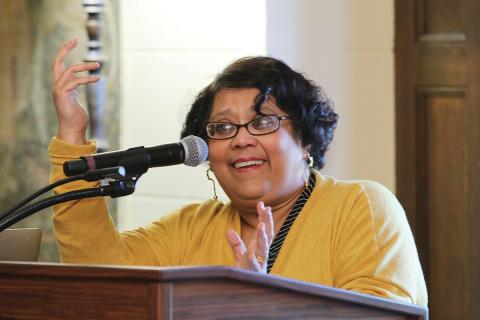
Raka Ray / photo by Jack Liu

Reflecting on the 2022 Acker–Morgen Memorial Lecture

This spring, CSWS resumed the Acker–Morgen Memorial Lecture series after winter weather and pandemic conditions had thwarted the event for the last three years. On May 20, we were thrilled to welcome on campus Dr. Raka Ray, a professor of sociology and South and Southeast Asia studies and dean of social sciences at UC Berkeley. She specializes in gender and feminist theory, domination and inequality, the emerging middle classes, and social movements. Below, political science graduate student Olivia Atkinson offers a personal reflection on Ray’s talk:  

Demonstrators Attend Women's March to Defend Reproductive Rights A demonstrator holds a pro-choice sign during a Women's March in New York on Saturday, Oct. 2, 2021. Women's March and more than 90 other groups organized a national rally to protect women's reproductive rights ahead of the Supreme Court reconvening on October 4 / photo by Stephanie Keith, Bloomberg via Getty Images.

On the Implications of Overturning Roe

On June 24, 2022, in a historic and far-reaching decision, the US Supreme Court officially reversed Roe v. Wade, declaring that the constitutional right to abortion—upheld for nearly a half-century—no longer exists. The majority opinion in Dobbs v. Jackson Women’s Health Organization proposes that the various provisions of the Constitution contain no inherent right to privacy or personal autonomy. Writing for the majority, Justice Samuel Alito stated unequivocally that abortion is a matter to be decided by the states.

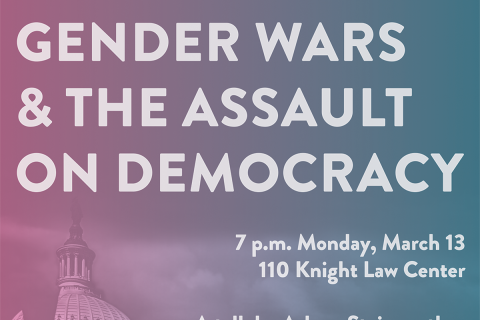
A clip of the poster for Arlene Stein's talk "The Right's Gender Wars and the Assault on Democracy"

Reflections on Gender, Sexuality, and Power

CSWS sponsored three talks during winter and spring 2023. We invited five of our graduate student affiliates below to share some thoughts on the talks’ themes.

February 16: “Queer Career: Sexuality and Work in Modern America”

March 13: “The Right’s Gender Wars and the Assault on Democracy”

April 21: “Just Get on the Pill: The Uneven Burden of Reproductive Politics”

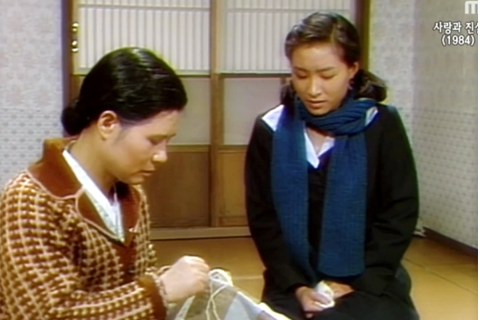
A screen capture of the South Korean television drama "Love and Truth"

Revisiting Korean TV Drama "Love and Truth"

by Jeongon Choi, PhD Candidate, Department of East Asian Languages & Literatures

The market success of South Korean television dramas in Asian countries during the 2000s was termed Hallyu 1.0, and their narrative trend centered on Cinderella stories. So-called candy girl characters who charm aristocratic men with their cheerful and hard-working attitude still define K-drama now, and even though these Cinderella romances usually end up in the acceptance of patriarchal ideology, the candy girl story is not merely a fantasy about longing for upward marriage.