CSWS Annual Review

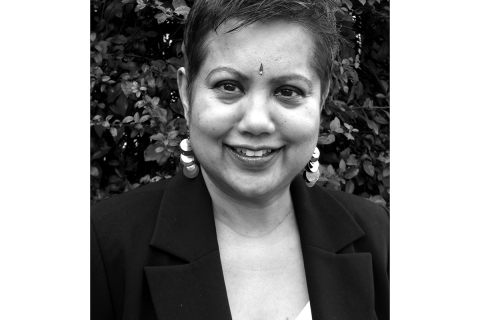
Lamia Karim

Feminism in Bangladesh

Lamia Karim, recently tenured associate professor of anthropology, received CSWS support for her work on feminist legal reform in Bangladesh. The National Science Foundation also funds her research.
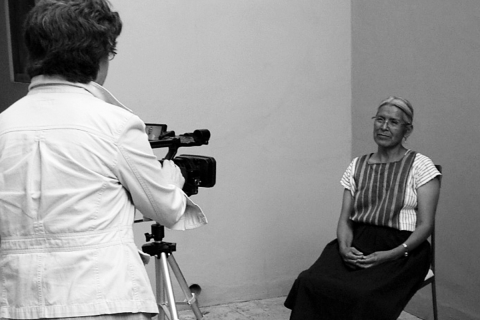
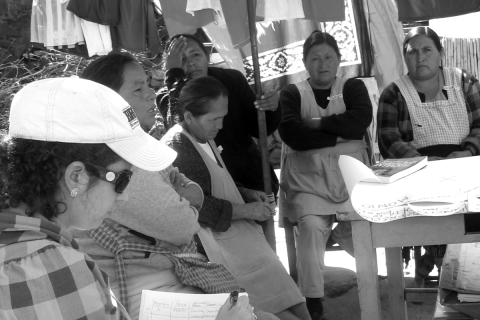
Gabriela Martínez interviews Juana Vásquez Vásquez.

Making Scholarship a Productive Adventure

When members of the CSWS Americas research interest group (RIG) traveled to Oaxaca, Mexico, in 2006, they knew they would be witnessing social protest. But they did not know it would erupt into violence—or flower into a media takeover by women. As scholars of various academic disciplines—including anthropology, history and journalism—they experienced the social uprising through different professional filters. But for each of them, the Oaxaca social movement of 2006 inspired their research and motivated a response.
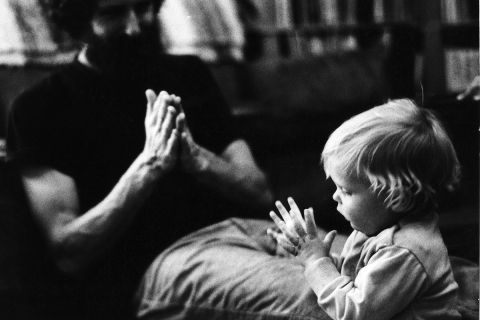
Scott Coltrane as a young father, teaching son Colin “patty cake.”

A Wonderful Journey: An Interview with Scott Coltrane

Q: How would you characterize your research?
I studied with feminists in an era in the ’80s when feminist scholarship was coming of age and being accepted in the academy. I was lucky to be a man interested in gender issues when it was a relatively new thing to do. The theoretical and methodological tools were there. So it was not a hard transition, to be able to apply that lens and these informed theories and methods to the examination of men’s lives. That was a fruitful coincidence of timing.
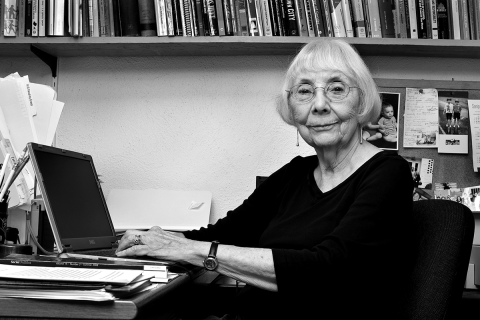
Joan Acker

Being a Part of Radical Change: A Conversation with Joan Acker

Q: You grew up in Indiana—where?
Indianapolis. I went to Shortridge High School, then to DePauw University in Greencastle for one year and couldn’t stand it so I dropped out. The war started and it was much more interesting to work. I worked in a radio station; I was the person who chose the music for the disc jockeys. I had several hundred dollars to spend. What I did was go to the record stores and buy records. That was the end of my career in that regard. Then I moved to New York. I really did not like Indiana; I found it racist, although I did not know much about racism yet.
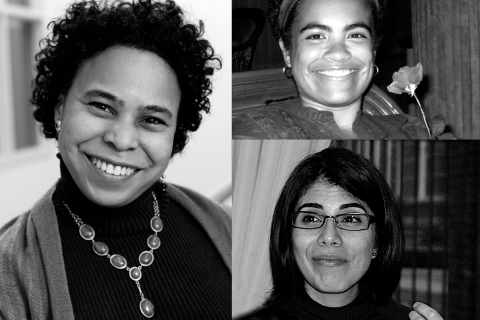
(Left) Michelle McKinley, (Top Right) Tania Triana, (Bottom Right) Priscilla Peña Ovalle

Promoting and Diversifying Leadership

by Lynn Fujiwara, Associate Professor, Women’s and Gender Studies
In March 2008, CSWS was awarded a Ford Foundation grant from the National Council for Research on Women (NCRW). The aim of the grant, “Diversifying the Leadership of Women’s Research Centers,” was to promote the leadership of women of color from historically underrepresented groups in the United States within NCRW and within its women’s research, policy, and advocacy member centers. The project specifically designed for CSWS was to address the current and historical absence of women of color in leadership positions at the center.
Carol Stabile grew up in a Wild West theme park owned by her parents. She is about seven in this photo.

Old Media...New Media

by Carol A. Stabile, Director, CSWS
I suspect that I sound like a dinosaur when I talk to my students about typing my undergraduate honors thesis on a Smith-Corona electric typewriter—a model that boasted a cartridge with built-in correcto-tape. I was reminded of the gap between my students’ experiences of media and mine last year, when I showed my students an episode of the sitcom The Goldbergs from 1951, and Gertrude Berg made a sales pitch for RCA televisions based on the product’s ability to eliminate “snow.”
Alejandra Garcia helps facilitate a focus group session with microfinance clients in Sucre, Bolivia.

Bolivian Entrepreneurs, Water Rights, and Roller Derby

Gender Roles in Rural Entrepreneurship: A Bolivian Experience
Presenter: Alejandra Garcia, master’s student, UO Department of Planning, Public Policy and Management; M.A. Gender and Women Studies, Armstrong Atlantic State University.
The focus of my research is to bring to light the efforts and struggles of indigenous Bolivian women in rural areas. I provide testimony of some of the inequalities along gender lines in Bolivia. In particular, I focus on women’s struggle to become more independent by being entrepreneurs while still being able to be good wives and mothers.
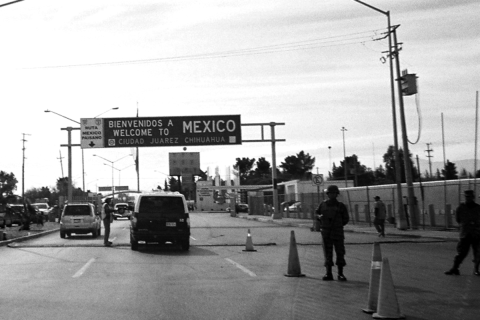
Above: View from Paso del Norte International Bridge, Juárez, Mexico.  Top left: Wall of Black Market bar, El Paso, Texas (photos by René Kladzyk).

Pathways and Fences: Gender, Violence, and Mobility in El Paso, Texas and Ciudad Juárez, Chihuahua

by René Kladzyk, Department of Geography
July 16, 2010: I squeeze into a bar in El Paso that sits near the university, a ten-minute drive from the downtown “Paso del Norte” bridge—a thirty-minute walk. It is a Friday night, and all the kids here are from Juárez. It is hot, loud, and packed—barely room to stand, let alone dance or hold a conversation. My friend Inez and I shout at one another—she too is from Juárez, and seems to know everyone. It’s a big city, but this is a small enough scene, I presume.
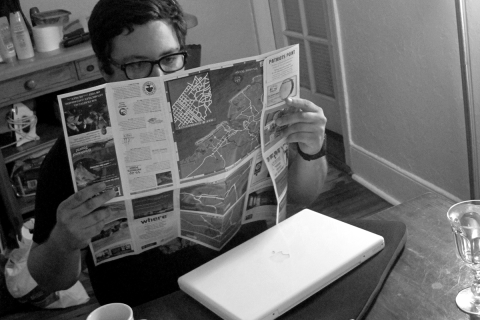
Miriam Abelson reviews maps of her route through the southeastern United States. Below right: A trip bonus proved to be delicious barbecue and country cooking.

Complex Lives: Interviews with Transmen in the Southeastern United States

by Miriam Abelson, Department of Sociology
When I told people of my proposed research project with transgender people in the Southeast I met with disbelief from many quarters. That disbelief stemmed from the idea that there were few, if any, transgender people in the Southeast and that those that lived there must live in such constant fear that they would never expose themselves by consenting to an interview.