CSWS Graduate Student Research Grant

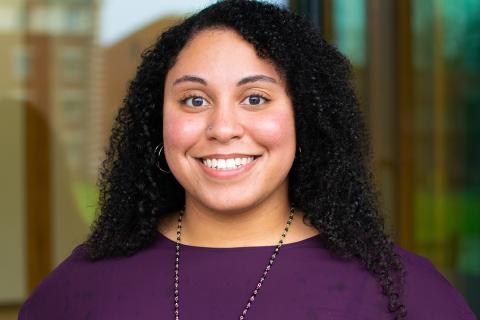
Melissa L. Barnes

Examining Gendered and Racialized Violence Toward the Black Community

by Melissa L. Barnes, PhD Candidate, Department of Psychology The nation held an unofficial day of remembrance for George Floyd on May 25, 2021, one year after he was murdered by a police officer. If we held a day of honor for all of the Black men, women, transgender, and nonbinary folks who have been physically or sexually assaulted by police officers, we would mourn and remember every day of the year. On March 30, we would mourn Mya Hall; July 13 would be Sandra Bland’s day; August 9 would honor Abner Louima; and at least 13 days would be reserved for each of Daniel Holtzclaw’s sexual assault victims.
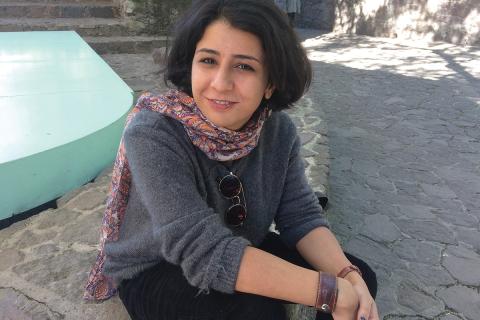
Zeinab Nobowati

Toward a Multi-Directional Feminist Critique of Gender Oppression in the Global South

by Zeinab Nobowati, PhD Candidate, Department of Philosophy

Do Muslim women need freedom? Perhaps at the first glance, most feminists would be inclined to respond with a “yes,” given that most of us believe that all women, and all human beings, need freedom in some sense. In the history of philosophy, especially during modernity, freedom has been defined as one of the most valuable ideals that humans pursue in the hope of overcoming alienating and oppressive social norms and structures and in order to flourish. But when it comes to the question of freedom and emancipation of Muslim women, the issue becomes more complicated because it is a question that has become increasingly politicized in our time.
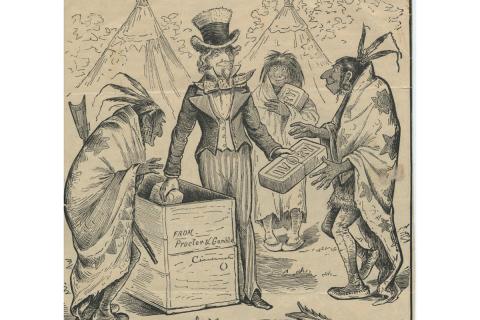
A historical advert depicting a male white settle selling soap to caricatures of Native American men.

A Critique of Whiteness as Cleanliness

By Annalee Ring, PhD Candidate, Department of Philosophy

This research project takes up a genealogical method that unearths taken-for-granted assumptions regard-ing contemporary beliefs and practices surrounding cleanliness. Today cleanliness practices are enacted and are treated as “normal” without considering how they have been shaped by vectors of contingent influences including social and political institutions, technological developments, global politics, and power discrepancies. Further, we surveil and discipline ourselves and one another to enact cleanliness practices that have been normalized.
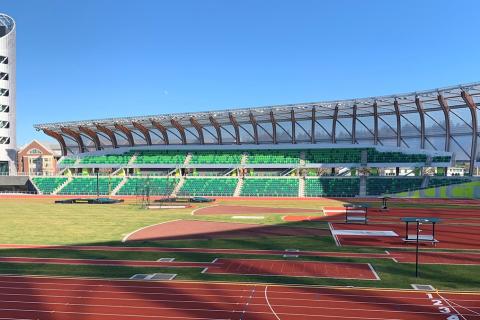
Hayward Field

Collegiate Performances at Historic Hayward Field

by Ola Adeniji, PhD Candidate, Department of Human Physiology

Historic Hayward Field has been home to record-breaking performances set by athletes at many levels. Located on the University of Oregon campus in Eugene, Hayward Field has hosted over two dozen elite and collegiate championship track and field meets. The highly touted 2021 NCAA Track and Field Championships, followed by the rescheduled 2020 US Olympic Track and Field Trials, were both held in June of last year in the newly renovated stadium. This summer brought athletes and track fans across the globe to participate in and witness the 2022 Oregon World Championships, the first held on US soil.
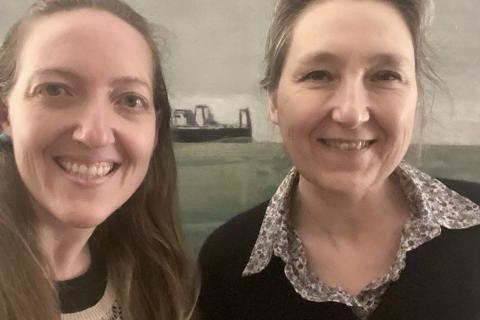
Pictured are Robin Okumu, left, and Marie Darrieussecq / photo provided by Robin Okumu.

Paradise as a Way of Being: Rethinking Relations in Three French Feminist Authors

by Robin Okumu, PhD, Department of Comparative Literature

On January 26, 2022, in the thick of the Omicron wave of COVID-19 in both France and the US, I met French author Marie Darrieussecq for an interview at her home in Paris’ 15th arrondissement. I sat across from her—unmasked—in the very chair at the desk where she does her writing, while she sat cross-legged on a twin bed that nearly filled the rest of the small room. During a delightful hour and a half, we discussed (in French) to what extent we can read utopian “moments” amidst the dystopian realities in her fiction.
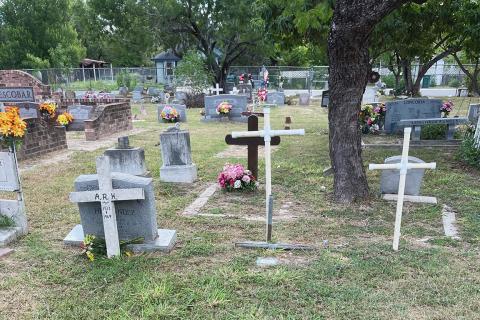
The Hernández family plot in the Guadalupe Cemetary / photo provided by Teresa Hernández-Reed.

Mapping the Decolonial

by Teresa Hernández-Reed, PhD, Department of English

There are few writers who stir in me what Cisneros has across my life, career, and scholarship, and I knew I could not write my dissertation project without her. To that end, the CSWS research grant has made possible the work I engage with in my forthcoming essay, “Mapping the Decolonial,” in the first critical companion to Sandra Cisneros’s oeuvre, ‘¡Ay Tú!’: Critical Essays on the Work and Career of Sandra Cisneros (University of Texas Press). In addition, I pair my reading of her work alongside a community mapping project in Hidalgo County (Texas) of the pioneer Guadalupe Cemetery, which was the first cemetery in South Texas to “permit” the burial of “newcomers,” Mexican immigrants.
Photo by Joojo Cobbinah.

Masculinization of Maternal Reproductive Health in Rural Ghana

by Elinam Balimenuku Amevor PhD, School of Journalism and Communication

In 2015, the United Nations passed the 2030 Agenda, a set of 17 Sustainable Development Goals (SDGs) that provide the framework that all member states have pledged to achieve. Among these is the need for good health and well-being for all regardless of their gender. This has reinforced global equity principles that require that women and men have equal opportunities to realize their health potential.
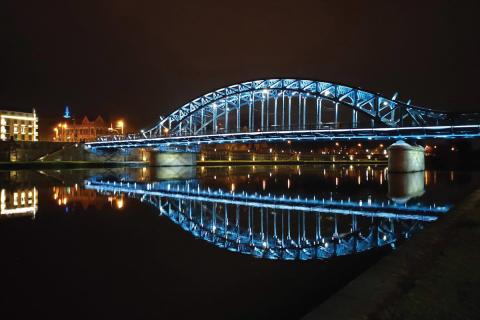
The Vistula River in Cracow, Poland / photo by Jagoda Dulba.

The Danger of a Metaphor: The Female Body and Land in Polish Theatre and Performance

by Anna Dulba-Barnett, PhD Candidate, Department of Theatre Arts

I enrolled in UO’s Department of Theatre Arts in 2018 to study ecodramaturgy under the guidance of Professor Theresa May who coined the term and has significantly contributed to the emerging field. She defines the theoretical concept as “play-making (script development and production) that puts ecological reciprocity and community at the centre of its theatrical and thematic intent.” My PhD dissertation will apply this theoretical frame to the study of dramatic literature and performance from Poland, my home country.