
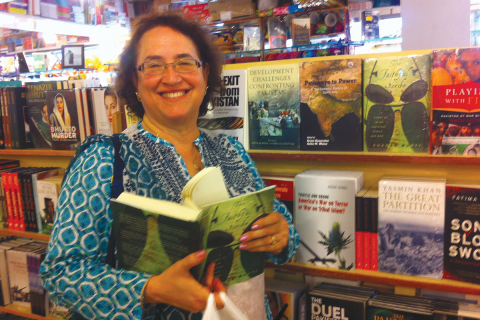
Hasina Gul: A Pakistani Poet Lifts Her Voice Against Violent Extremism
by Anita Weiss, Professor, Department of International Studies

by Anita Weiss, Professor, Department of International Studies

by Reuben Zahler, Associate Professor, Department of History
In January of 1811, María Isabel Ribas found herself in jail, charged with murdering her own baby, one of the most heinous acts imaginable for a Catholic woman. A few days earlier, in her neighborhood of Mérida, Venezuela, locals had found the cadaver of a newborn infant in a field, being eaten by vultures. Officials searched in the area for women who had recently been pregnant, and questioned María. She admitted that the baby was hers but also insisted that she was innocent of murder.

by Xiaobo Su, Associate Professor, Department of Geography

“Nadie sabe lo que existe en la profundidad del mar.” — Cuban-Lukumí proverb
By Alaí Reyes-Santos, Associate Professor, Department of Ethnic Studies
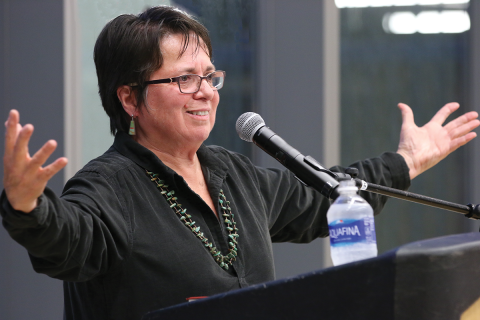
Interviewed by Alice Evans, CSWS Managing Editor; Gabriela Martínez, Associate Professor, School of Journalism and Communication; and Dena Zaldúa Frazier, CSWS Operations Manager
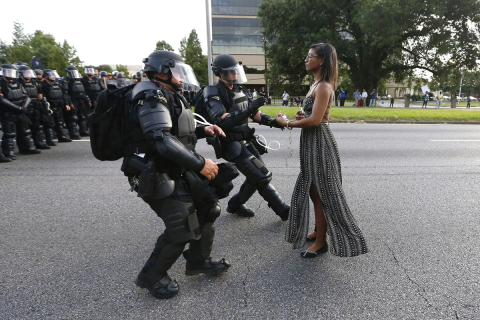
by Michelle McKinley, Director, CSWS, and Dena Zaldúa Frazier, Operations Manager, CSWS
What a year…in many ways for CSWS and for the UO campus community as a whole, this past year was the best of times and the worst of times.
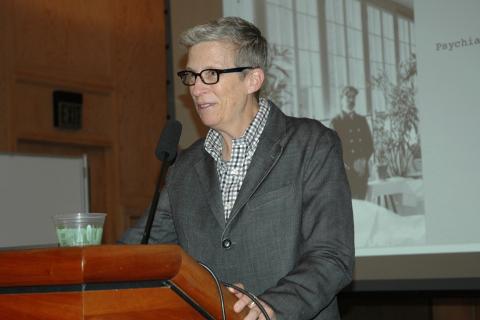
Coauthored by Kenneth Surles, Anniston Ward, and Ryan Murphy

Commentary presented by Miriam Gershow, Novelist & Associate Director of Composition, Department of English
I come to The Moor’s Account as a novelist, so my expertise is in fiction writing. What I’m most interested in is the part of the story that was not shaped by the historical record but instead came straight from Laila Lalami’s imagination—Mustafa’s back story and characterization, and how it undergirds the larger structure of the book. In this scene, we have the start of a series of choices that will lead to Mustafa’s slavery. We have a character who turns away from family and tradition and spirituality.
Reported by Alice Evans

by Katie Warden, PhD candidate, Department of Sociology