

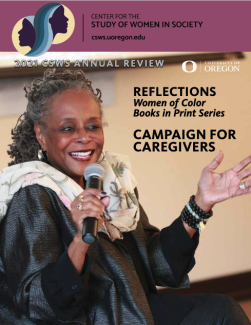
Features:
- A Letter from the Past Director by Michelle McKinley, Bernard B. Kliks Professor of Law
- New Special Project Advocates for Institutional Change by Jenée Wilde, Dissemination Specialist, CSWS
- Spotlight on CSWS Affiliate Major Field Awards
- Gyoung-Ah Lee to Lead WOC Project by Jenée Wilde, Dissemination Specialist, CSWS
- An Interview with Sangita Gopal by Jenée Wilde, Dissemination Specialist, CSWS
- Reflections: UO Graduate Students Share How Works by WOC Faculty Changed Them
Faculty Research:
- Oral History Website Preserves Stories from Eugene’s Lesbian Community by Judith Raiskin, Associate Professor, Department of Women’s, Gender, and Sexuality Studies
- #ForeverEssential: What Does it Mean to be a Low-wage Essential Worker in the Age of COVID-19? by Lina Stepick, Lola Loustaunau, Larissa Petrucci, and Ellen Scott
Graduate Student Research:
- M(other)work of Survival and the Pandemic as Teacher by Cristina Faiver-Serna, Jane Grant Fellow, Department of Geography
- “My Stealthy Freedom”: Feminist Resistance through Social Media in Iran by Parichehr Kazemi, PhD Candidate, Department of Political Science
- Tempos of Zoom Ethnography: Singing with a Women’s Chorus in the Pandemic by Molly McBride, PhD Candidate, Department of Anthropology
- Breaking the Celluloid Frame: The Women at the Margins of Disney Animation by Stephanie Mastrostefano, PhD Candidate, Department of English
- “Soy mujer, latina e inmigrante”: An Intersectional Study of Linguistic Capital among Latina Women Immigrants in Oregon by Lara Boyero Agudo, PhD Candidate, Department of Romance Languages
- El Noa Noa: Strategies of Love and Care at the U.S.–México Border by Polet Campos-Melchor, PhD Candidate, Department of Anthropology
- Urgent Pauses: A Reflection on My Renewed Commitment to Rigorous Research by Katherine M. Huber, PhD Candidate, Department of English
Highlights from the Academic Year:
- News & Updates
- 2021-22 CSWS Research Grant Award Winners
- Charise Cheney Named Black Studies Director
- Thank You to CSWS Donors
- Looking at Books
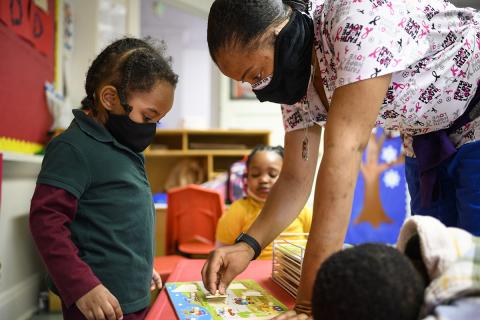
A Letter from the Past Director
Dear Friends,
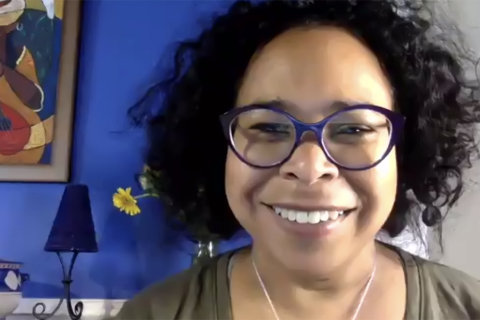
New Special Project Advocates for Institutional Change: CSWS Leads an Effort to Redress Pandemic Impacts for Faculty who are Caregivers
by Jenée Wilde, Senior Instructor, Department of English, CSWS Dissemination Specialist
Last year, in the early stages of pandemic lockdown, then-CSWS director and law professor Michelle McKinley began receiving panicked emails from faculty friends and Center affiliates who are caregivers. With 4J schools and childcare facilities shut down, as well as shortages in long-term elder care services, how were they supposed to fulfill their teaching and research commitments at the university while also meeting the labor-intensive care needs of others?
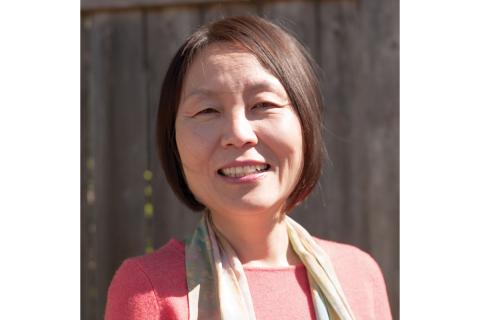
Gyoung-Ah Lee to Lead WOC Project: Special Initiative Enters 16th Year of Supporting Women of Color Faculty
by Jenée Wilde, Senior Instructor, Department of English, CSWS Dissemination Specialist
Anthropology professor Gyoung-Ah Lee has stepped up to lead the Women of Color (WOC) Project at CSWS—a role formerly held by Interim Director Sangita Gopal, associate professor of cinema studies.
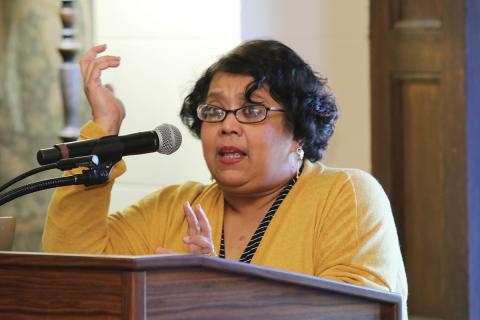
An Interview with Sangita Gopal: Interim Director Seeks to Strengthen CSWS Infrastructure
Interview by Jenée Wilde, Senior Instructor, Department of English, CSWS Dissemination Specialist
With a background in comparative media studies and postcolonial theory, Associate Professor Sangita Gopal came to the University of Oregon in 2004 to teach cinema studies in the Department of English. Over time she saw the popular program grow from an English concentration into a unique tri-school major, then into its own department housed in the College of Arts and Sciences.
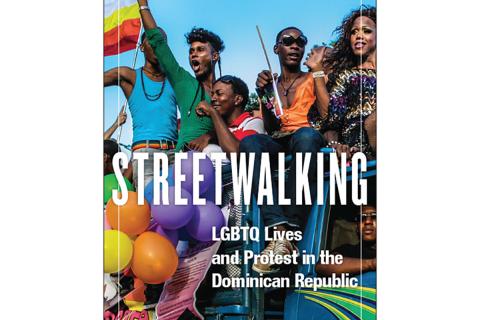
Reflections: UO Graduate Students Share How Works by WOC Faculty Changed Them
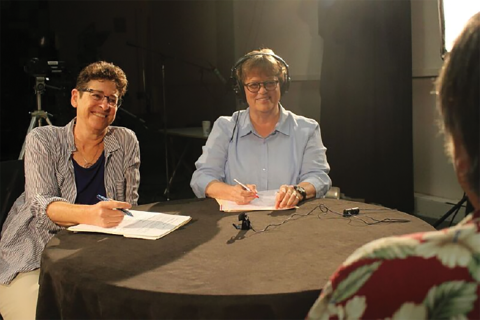
Oral History Website Preserves Stories from Eugene's Lesbian Community
by Judith Raiskin, Associate Professor, Department of Women’s, Gender, and Sexuality Studies
The Eugene Lesbian History Project is a community-based, digital humanities project that preserves and shares the unique history of the lesbian community in Eugene, Oregon. The project includes filmed oral histories with 83 narrators, searchable transcriptions, a digital exhibit that curates and contextualizes the interviews, and a forthcoming documentary film. I am grateful to CSWS for funding the website Outliers and Outlaws that serves as a landing page for all the aspects of this project.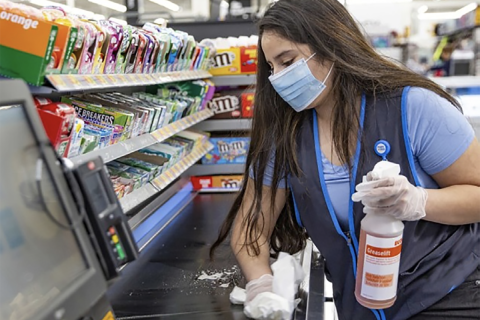
#ForeverEssential: What does it mean to be a low-wage essential worker in the age of COVID-19?
by Lina Stepick, Lola Loustaunau, Larissa Petrucci, and Ellen Scott
Despite the continuing threat of COVID-19, and after token efforts such as “hazard pay” to recognize the threat to frontline workers, life in grocery and other retail stores has returned to a new normal of work during a pandemic. Work continues to be dangerous for “essential workers.”

M(other)work of Survival and the Pandemic as Teacher
by Cristina Faiver-Serna, MPH, PhD, Department of Geography
One spring morning in 2011, I left my home in the Los Angeles Harbor region to drive to a community meeting in Long Beach, California. I was to present on the “Bridge to Health” program, a promotora de salud-led asthma education program funded by the Port of Long Beach. Merging onto the 710 freeway my car became sandwiched between big-rig diesel trucks hauling cargo from the Port of Long Beach. The 710 freeway is the main truck route from the Port to inland distribution centers in San Bernardino County. Together, with the Port of Los Angeles, more than 40 percent of goods imported into the continental U.S. come by way of the Los Angeles Harbor.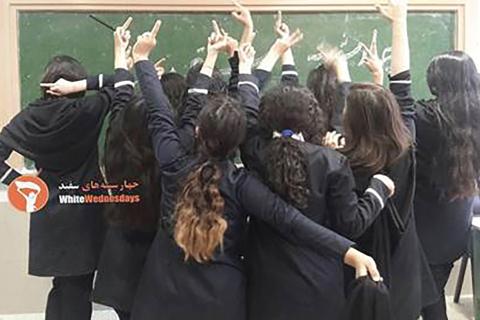
“My Stealthy Freedom” Feminist Resistance Through Social Media in Iran
by Parichehr Kazemi, PhD Candidate, Department of Political Science
In 2014, Masih Alinejad, an exiled Iranian journalist, posted on Facebook an image of herself running through a London street with her curly locks lifted in the air, captioning it: “When I run and feel the wind in my hair, I am reminded that I come from a country which kept my hair hostage for thirty years” (Mohseni, 2015). Little did Alinejad know at the time, this small, subversive act to reclaim agency in her new home would pave the way for thousands of Iranian women to do the same, but in the context of a regime bent on restricting them at every turn.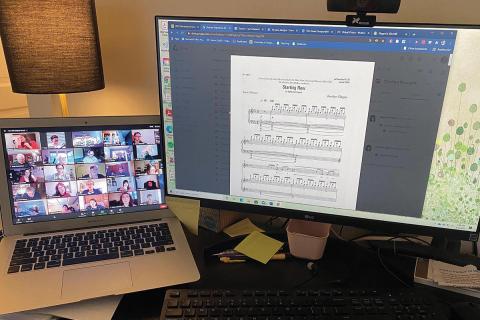
Tempos of Zoom Ethnography: Singing with a Women’s Chorus in the Pandemic
by Molly McBride, PhD Candidate Department of Anthropology
My research with Sistrum, a women’s chorus from Lansing, Michigan, unfolded in surprising ways over the past year. Supported by a CSWS Graduate Student Research Grant, I had originally proposed to look at the sexual politics of the chorus: how gender, race, sexual orientation, and class are performed in the chorus, both at an individual level and at a group level, as the chorus brings together many voices into one. With the onset of the COVID-19 pandemic, it was difficult to reconceptualize my project. Luckily, Sistrum pivoted to Zoom rehearsals, so I, too, pivoted to digital ethnography.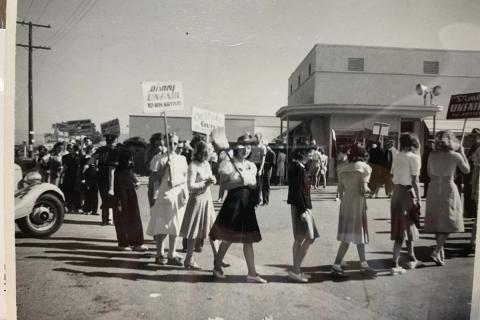
Breaking the Celluloid Frame: The Women at the Margins of Disney Animation
by Stephanie Mastrostefano, PhD Candidate, Department of English
“Soy mujer, latina e inmigrante”: An Intersectional Study of Linguistic Capital among Latina Women Immigrants in Oregon
by Lara Boyero Agudo, PhD Candidate, Department of Romance Languages
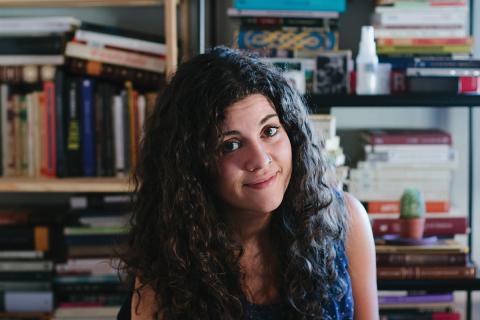
Oregon’s Latino population has kept growing during the last three decades. According to the Migration Policy Institute, the percentage of Latinx immigrants doubled from 25.8% in 1990 to 42% in 2017. Despite Oregon’s multiculturalism, there is a political and cultural environment where xenophobia has been accepted, and there is a tendency to dehumanization that creates isolation and fear among the Latinx community.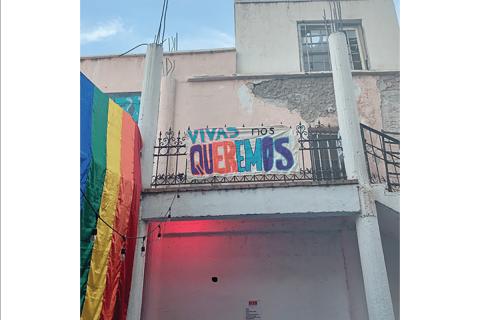
El Noa Noa: Strategies of Love and Care at the U.S.–México Border
by Polet Campos-Melchor , PhD Candidate, Department of Anthropology
The title, “El Noa Noa,” was inspired by Juan Gabriel’s nod to an infamous bar in Ciudad Juarez that burned down in 2004. The bar once hosted queer artists and was a reminder of the music and spirit of Juan Gabriel, the angel of the city. After my 2019 summer fieldwork at Respetttrans, a trans asylum seeker shelter in Ciudad Juarez, I was inspired to celebrate the lives of trans women through my research and practice.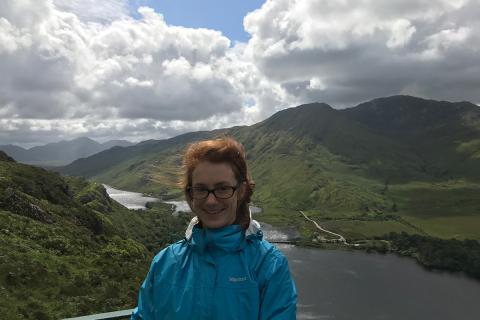
Urgent Pauses: A Reflection on My Renewed Commitment to Rigorous Research
By Katherine M. Huber, PhD Candidate, Department of English
COVID-19 confronted us all with an uncomfortable present. The fear for the health and safety of family and colleagues, the inability to make plans in the midst of ongoing economic and political uncertainty, shifting safety guidelines, racial and income disparity in healthcare, and imposed isolation all brought the immense injustices pervasive in U.S. society into sharp relief. The national uprisings and resurgence of the Black Lives Matter movement that followed the murders of George Floyd and Breonna Taylor made the meticulous work of research seem both urgently necessary and totally out of touch.