

Features:
- On the Implications of Overturning Roe
- A Year in Review by Sangita Gopal
- Reflecting on the 2022 Acker–Morgen Lecture by Olivia Atkinson, PhD Student, Political Science
- CSWS Expands Support for Graduate Students by Jenée Wilde, Senior Instructor, Department of English
- Catching Up with Baran Germen by Jenée Wilde, Senior Instructor, Department of English
Faculty Research:
- Women Defending the Theatre in Early Modern Europe by Corinne Bayerl, Senior Career Instructor, Clark Honors College
- Resisting and Reclaiming: Housing Occupations by Homeless Mothers in Three US Cities by Claire Herbert, PhD, and Amanda Ricketts, MA, Department of Sociology
Graduate Student Research:
- Viral Bodies: AIDS and Other Contagions in Latin American Narrative by Jon Dell Jaramillo, PhD Candidate, Department of Romance Languages
- Informal Labor Blues: Gendered Effects of COVID-19 and Beyond on Backward Caste Women in India by Malvya Chintakindi, PhD Candidate, Department of Anthropology
- The Danger of a Metaphor: The Female Body and Land in Polish Theatre and Performance by Anna Dulba-Barnett, PhD Candidate , Department of Theatre Arts
- Masculinization of Maternal Reproductive Health in Rural Ghana by Elinam Balimenuku Amevor, PhD, School of Journalism and Communication
- Queering Heteronormative Desire through Vocality by Aidan Pang, PhD, Department of English
- Mapping the Decolonial by Teresa Hernández-Reed, PhD, Department of English
- Paradise as a Way of Being: Rethinking Relations in Three French Feminist Authors by Robin Okumu, PhD, Department of Comparative Literature
- Collegiate Performances at Historic Hayward Field by O Adeniji, PhD Candidate, Department of Human Physiology
- A Critique of Whiteness as Cleanliness by Annalee Ring, PhD Candidate, Department of Philosophy
- Pandemic Health Consequences for Child Welfare-Involved Women Caregivers by Sarah R. Horn, PhD Candidate, Department of Psychology
- Toward a Multi-Directional Feminist Critique of Gender Oppression in the Global South by Zeinab Nobowati, PhD Candidate, Department of Philosophy
- Examining Gendered and Racialized Violence Toward the Black Community by Melissa L. Barnes, PhD Candidate, Department of Psychology
- Body Mapping: A Decolonial Methodology for Inter-generational Healing among GuateMaya Feminist Groups by Carla Macal, PhD Candidate, Department of Geography
Highlights from the Academic Year:
- News & Updates
- 2021–22 CSWS Research Grant Award Winners
- Balancing Work and Caregiving Teach-in
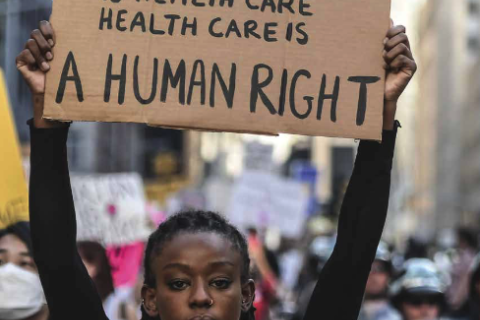
On the Implications of Overturning Roe
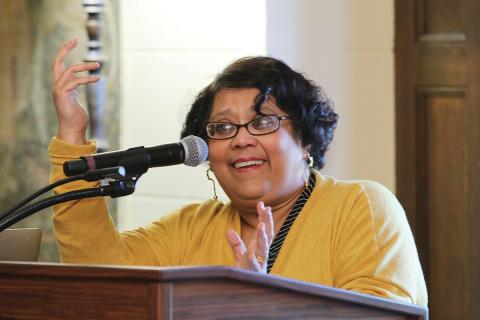
A Year in Review
by Sangita Gopal, CSWS Director

Reflecting on the 2022 Acker–Morgen Memorial Lecture

CSWS Expands Support for Graduate Students
by Jenée Wilde, Senior Instructor, Department of English
“One of the things that became clear during the pandemic is that graduate students were the most affected by lockdowns, but the institution made the least room for addressing how they were affected,” says CSWS Director Sangita Gopal. “Faculty could take a break from research, but graduate students didn’t have that leisure.”

Catching up with Baran Germen

Women Defending the Theatre in Early Modern Europe
by Corinne Bayerl, Senior Career Instructor, Clark Honors College
With the support of a Center for the Study of Women in Society faculty grant, I was able to devote one month in summer 2021 to working on a chapter of a book manuscript on transnational debates over the legitimacy of theatre in Early Modern Europe. While the book as a whole examines the conflicts between supporters and opponents of the theatre across national boundaries and confessional divides, this chapter deals specifically with the role of female theatre practitioners who took on a leading role in the defense of public performances.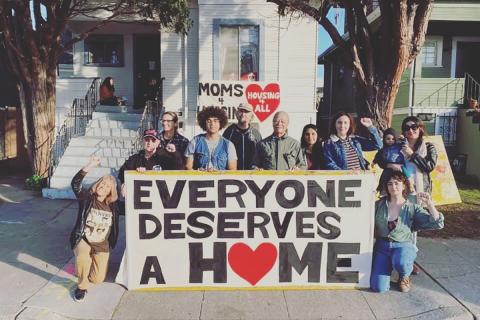
Resisting and Reclaiming: Housing Occupations by Homeless Mothers in Three US Cities
by Claire Herbert, PhD, and Amanda Ricketts, MA, Department of Sociology
Amidst growing economic inequality and rising housing costs in the US, more people are rent-burdened, homeless, or living in over-crowded, substandard, or unstable conditions. This crisis cleaves along pervasive axes of inequality, disproportionately impacting the well-being of women of color and their children, leading to the feminization of homelessness and other housing problems (Bullock et al. 2020; Desmond 2016). Research also highlights the way mothers, and impoverished Black communities, navigate various obstacles to survive and thrive, using informal strategies and networks, or by engaging in what scholars call “activist mothering” (Pittman and Oakley 2018).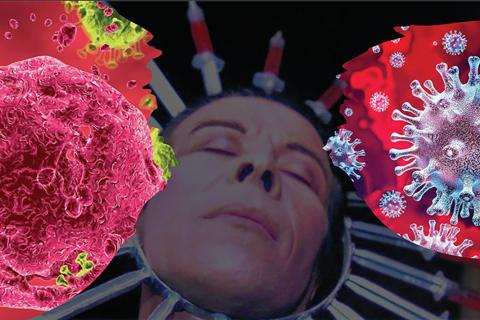
Viral Bodies: AIDS and Other Contagions in Latin American Narrative
by Jon Dell Jaramillo, PhD Candidate Department of Romance Languages
My dissertation analyzes examples of viral bodies which materialize in the works of three Latin American authors who wrote about HIV/AIDS in the 1990s: Reinaldo Arenas (Cuba), Pedro Lemebel (Chile), and Pablo Pérez (Argentina). In many ways, my dissertation responds to the Marxist legal sociologist Boaventura de Sousa Santos, who in his book La cruel pedagogía del virus (2020) calls for new strategies of contamination to overcome pandemics, natural disasters, financial collapses, the triumphant resurgence of authoritarian exceptionalism, and the technical circumvallation of patriarchal capitalist power that now leads the world toward catastrophe—strategies that enter the lives of citizens “por la puerta trasera” (14).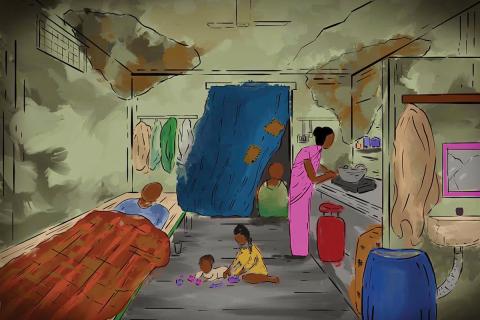
Informal Labor Blues: Gendered Effects of COVID-19 and Beyond on Backward Caste Women in India
by Malvya Chintakindi, PhD Candidate, Department of Anthropology
These quotes illustrate the lived experiences of women I have worked with in the past two years. They belong to backward caste communities—engaged in informal labor economy working jobs as manual scavengers, domestic help, construction labor, cleaners—in India. They constitute a whopping 90 percent of India’s working population, neither regulated nor protected by the state. My research delves into the short-term and potential long-term effects of COVID-19 on women belonging to backward castes engaged in informal labor work in the city of Hyderabad, state of Telangana, India.
The Danger of a Metaphor: The Female Body and Land in Polish Theatre and Performance
by Anna Dulba-Barnett, PhD Candidate, Department of Theatre Arts
I enrolled in UO’s Department of Theatre Arts in 2018 to study ecodramaturgy under the guidance of Professor Theresa May who coined the term and has significantly contributed to the emerging field. She defines the theoretical concept as “play-making (script development and production) that puts ecological reciprocity and community at the centre of its theatrical and thematic intent.” My PhD dissertation will apply this theoretical frame to the study of dramatic literature and performance from Poland, my home country.
Masculinization of Maternal Reproductive Health in Rural Ghana
by Elinam Balimenuku Amevor PhD, School of Journalism and Communication
In 2015, the United Nations passed the 2030 Agenda, a set of 17 Sustainable Development Goals (SDGs) that provide the framework that all member states have pledged to achieve. Among these is the need for good health and well-being for all regardless of their gender. This has reinforced global equity principles that require that women and men have equal opportunities to realize their health potential.
Queering Heteronormative Desire through Vocality
by Aidan Pang, PhD, Department of English
Mapping the Decolonial
by Teresa Hernández-Reed, PhD, Department of English
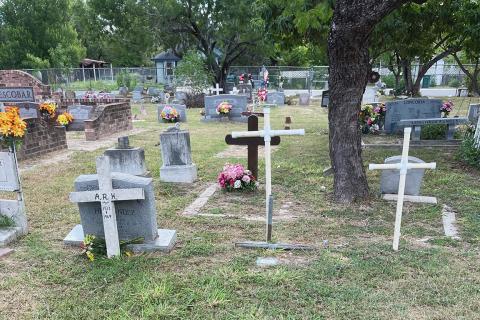
There are few writers who stir in me what Cisneros has across my life, career, and scholarship, and I knew I could not write my dissertation project without her. To that end, the CSWS research grant has made possible the work I engage with in my forthcoming essay, “Mapping the Decolonial,” in the first critical companion to Sandra Cisneros’s oeuvre, ‘¡Ay Tú!’: Critical Essays on the Work and Career of Sandra Cisneros (University of Texas Press). In addition, I pair my reading of her work alongside a community mapping project in Hidalgo County (Texas) of the pioneer Guadalupe Cemetery, which was the first cemetery in South Texas to “permit” the burial of “newcomers,” Mexican immigrants.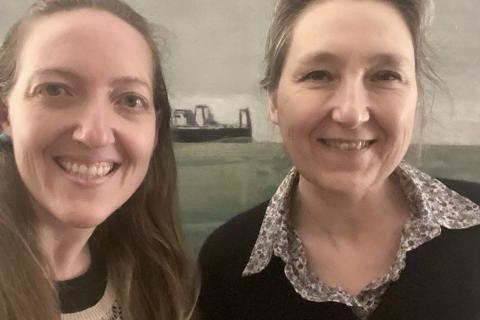
Paradise as a Way of Being: Rethinking Relations in Three French Feminist Authors
by Robin Okumu, PhD, Department of Comparative Literature
On January 26, 2022, in the thick of the Omicron wave of COVID-19 in both France and the US, I met French author Marie Darrieussecq for an interview at her home in Paris’ 15th arrondissement. I sat across from her—unmasked—in the very chair at the desk where she does her writing, while she sat cross-legged on a twin bed that nearly filled the rest of the small room. During a delightful hour and a half, we discussed (in French) to what extent we can read utopian “moments” amidst the dystopian realities in her fiction.
Collegiate Performances at Historic Hayward Field
by Ola Adeniji, PhD Candidate, Department of Human Physiology
Historic Hayward Field has been home to record-breaking performances set by athletes at many levels. Located on the University of Oregon campus in Eugene, Hayward Field has hosted over two dozen elite and collegiate championship track and field meets. The highly touted 2021 NCAA Track and Field Championships, followed by the rescheduled 2020 US Olympic Track and Field Trials, were both held in June of last year in the newly renovated stadium. This summer brought athletes and track fans across the globe to participate in and witness the 2022 Oregon World Championships, the first held on US soil.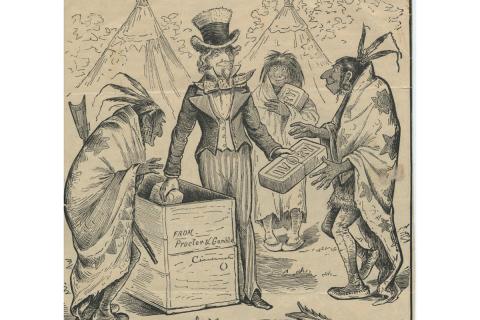
A Critique of Whiteness as Cleanliness
By Annalee Ring, PhD Candidate, Department of Philosophy
This research project takes up a genealogical method that unearths taken-for-granted assumptions regard-ing contemporary beliefs and practices surrounding cleanliness. Today cleanliness practices are enacted and are treated as “normal” without considering how they have been shaped by vectors of contingent influences including social and political institutions, technological developments, global politics, and power discrepancies. Further, we surveil and discipline ourselves and one another to enact cleanliness practices that have been normalized.
Pandemic Health Consequences for Child Welfare-Involved Women Caregivers
by Sarah R. Horn, PhD Candidate, Department of Psychology
Toward a Multi-Directional Feminist Critique of Gender Oppression in the Global South
by Zeinab Nobowati, PhD Candidate, Department of Philosophy
Do Muslim women need freedom? Perhaps at the first glance, most feminists would be inclined to respond with a “yes,” given that most of us believe that all women, and all human beings, need freedom in some sense. In the history of philosophy, especially during modernity, freedom has been defined as one of the most valuable ideals that humans pursue in the hope of overcoming alienating and oppressive social norms and structures and in order to flourish. But when it comes to the question of freedom and emancipation of Muslim women, the issue becomes more complicated because it is a question that has become increasingly politicized in our time.
Examining Gendered and Racialized Violence Toward the Black Community
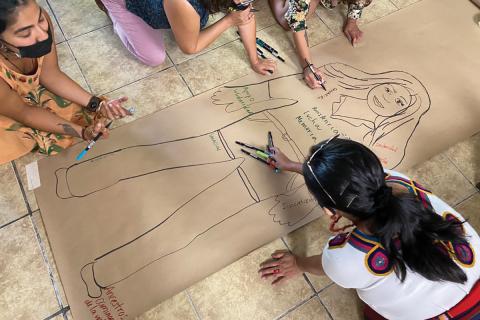
Body Mapping A Decolonial Methodology for Intergenerational Healing among GuateMaya Feminist Groups
by Carla Macal, PhD Candidate, Department of Geography