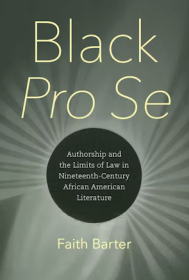
"Black thinkers in the antebellum United States grappled with what it meant to inhabit a place, a history, and a violent legal regime. In newspapers and pamphlets, political speeches, and fiction, Black writers persistently imagined alternative and liberatory legal futures. In reading these writers as architects of legal possibility, Faith Barter mobilizes the coincidental intimacy of prose and the legal term pro se, which refers to litigants who represent themselves in court. The book studies multiple literary genres—short stories, novels, freedom narratives, speeches, confessions, periodicals, and pamphlets—alongside legal historical treatises, trial transcripts, judicial opinions, and statutes."